How to Read “Nut-Free” Labels Like a Pro (So You Can Shop and Snack With Confidence)
Jan 11, 2026
When you or your child lives with a nut allergy, a quick grocery run can feel like detective work. “Nut-free” logos, allergy warnings, and tiny ingredient text all matter, and one confusing label can be the difference between a safe snack and a serious reaction.
This guide walks you through exactly how to read nut-free labels like a pro, using real-world examples from clearly labeled products such as No Nuts! snack bars. You’ll learn what to trust, what to question, and how to choose products that actually match your safety needs—at home, at school, and on the go.
Key Takeaways
| Question | Short Answer (What You Should Know) |
|---|---|
| What does “nut-free” really mean on a package? | It should mean no peanuts or tree nuts as ingredients, and ideally a statement about a nut-free facility, like the one highlighted across the No Nuts! nut-free snacks collection. |
| Is “made in a 100% nut-free facility” safer than “may contain nuts”? | Yes. “100% nut-free facility” drastically reduces cross-contact risk. Warnings like “may contain nuts” or “processed on shared equipment” are red flags for those with serious allergies. |
| Where should I look first on a label? | Start with the allergen statement under the ingredients list, then scan for any nut names in the ingredients and any advisory phrases like “may contain peanuts.” |
| Are school-safe or camp-safe snacks labeled differently? | Often, yes. Some brands clearly flag “school-safe” and nut-free facility information on packs and collection pages, as seen in the No Nuts! school-safe variety pack. |
| Do “nut-free” bars still offer good nutrition? | Many do. For example, No Nuts! bars provide around 12g protein and up to 10g fiber per bar, as shown on their individual product pages like the Blueberry & Vanilla bar. |
| Where can I check a brand’s detailed ingredient and allergen policies? | Most reputable brands have a dedicated ingredients or FAQ page, like the No Nuts! ingredients page and their allergy-focused FAQ. |
| Is a subscription or bulk case helpful for nut-free households? | If you find a trusted brand, yes. Some, like No Nuts!, even explain subscription details clearly on pages such as how subscriptions work, so you can keep safe snacks on hand consistently. |
1. What “Nut-Free” Really Means (and Why Wording Matters)
Not all “nut-free” labels mean the same thing. Some refer only to ingredients, while others cover ingredients and the manufacturing environment. That difference is critical for anyone managing a serious peanut or tree nut allergy.
Ideally, you want wording that confirms both: no nuts in the recipe and no nuts in the facility. Products like the No Nuts! bars repeatedly state they are made in a 100% nut-free facility, which significantly lowers cross-contact risk compared to brands that just leave nuts out of the ingredient list.

Key Phrases to Look For
- “100% nut-free facility” – best for severe allergies and school-safe snacks.
- “Nut-free” + allergen statement – check that both peanuts and tree nuts are excluded.
- “May contain nuts” / “processed on shared equipment” – usually avoid if you need strict nut-free.
Always read beyond the front-of-pack claim. The detailed allergen statement and ingredient list on the back or side are where the real safety information lives.
2. How to Scan Ingredient Lists for Hidden Nuts
Once a package looks promising, move straight to the ingredients list. This is where you confirm that there are truly no peanuts or tree nuts by name, and no vague “nut” ingredients that can hide allergens.
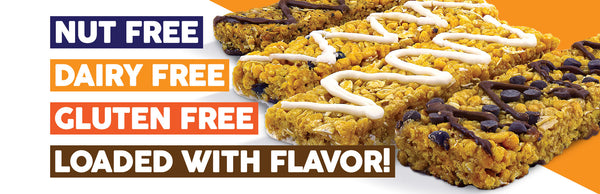
Nut-free brands often make this easier. For example, No Nuts! bars highlight that they are nut-free, dairy-free, egg-free, and gluten-free, then show a clear, readable ingredient list and separate “Nutrition Facts” panel on every flavor’s page.


Common Nut Terms to Avoid
- Peanut, peanut butter, peanut flour, groundnut
- Tree nuts like almond, walnut, pecan, cashew, pistachio, hazelnut, macadamia
- Nut oils (for example, almond oil, hazelnut oil)
In contrast, safe bars like No Nuts! use plant-based protein sources and flavor components that are clearly identified as nut-free. The absence of nut terms should match a visible “nut-free” or “nut-free facility” claim.
3. Decoding Allergen Statements and “May Contain” Warnings
After you’ve checked the main ingredients, move your eyes down to the allergen statement. In many countries, this line starts with “Contains:” and may also include statements like “May contain” or “Manufactured on equipment that also processes…”
Nut-free snack lines that are designed for allergy-aware families will typically avoid those advisory warnings for nuts altogether. For example, No Nuts! materials repeatedly emphasize their bars are produced in a 100% NUT-FREE facility, which is very different from “may contain nuts.”

How to Interpret the Wording
| Label Phrase | What It Usually Means for Nut Allergies |
|---|---|
| “Contains: [other allergens], not nuts” | No nuts used as major allergens, but you still need to know the facility situation. |
| “Made in a 100% nut-free facility” | Best choice; cross-contact with nuts is actively controlled and prevented. |
| “May contain peanuts/tree nuts” | Not reliable for strict nut-free needs; there is some level of risk. |
| “Processed on equipment that also processes nuts” | Higher cross-contact risk; usually avoid for severe nut allergies. |
When in doubt, choose products that combine clear ingredient lists with confident, specific allergen statements—never vague or incomplete wording.
4. Using No Nuts! Chocolate Chip as a Case Study in Clear Nut-Free Labeling
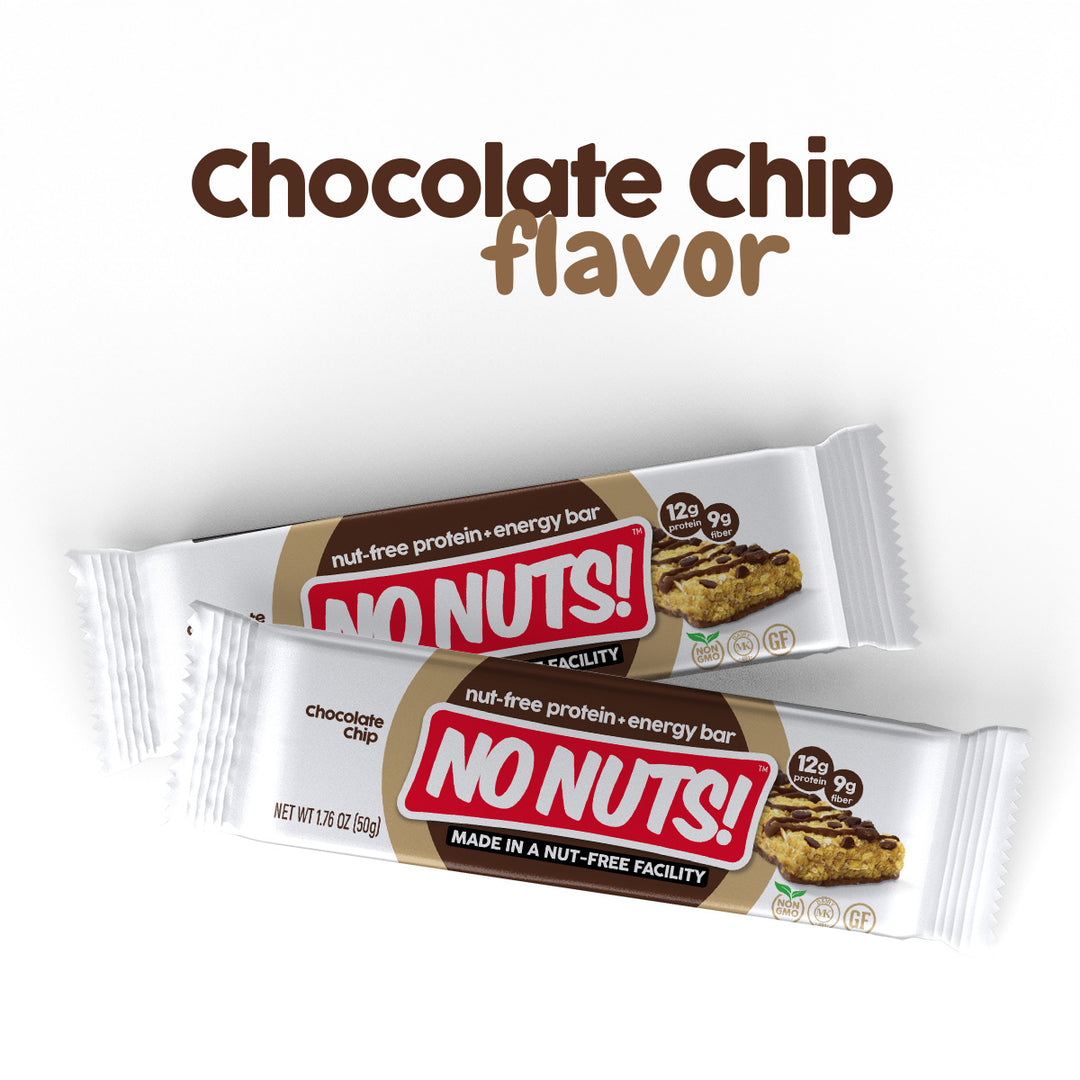
One of the best ways to learn label-reading is to study a straightforward example. The No Nuts! Chocolate Chip Snack Bars are marketed as nut-free, dairy-free, and school-safe, and the information layout makes that easy to verify.
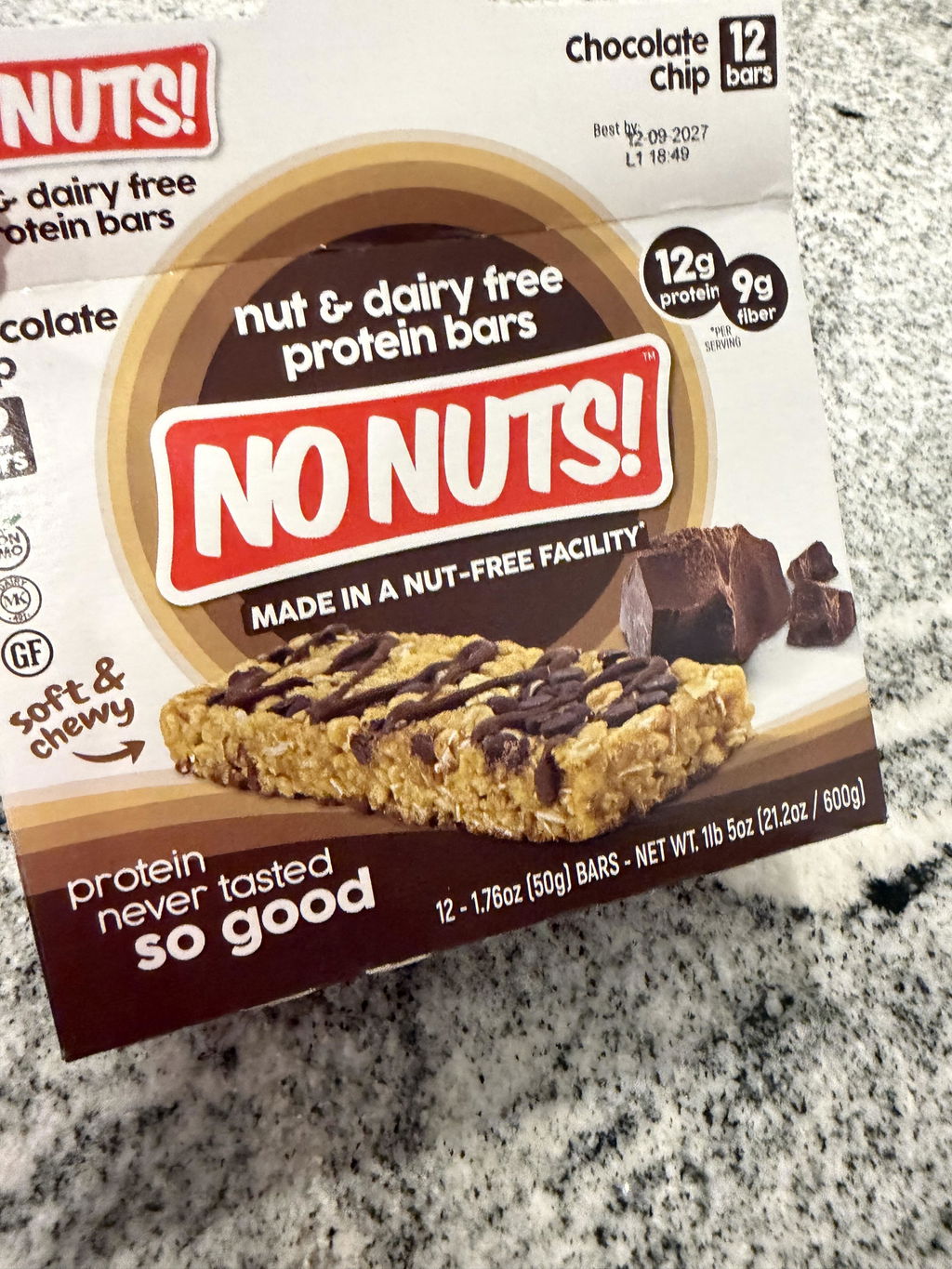
On the product page, you’ll see strong front-of-pack claims like “Nut Free,” followed by detailed nutrition and ingredient information. The bar offers 12g protein and 9g fiber, and a 12-bar pack is priced at $32.99 (or $29.69 with subscribe & save), giving you clear value details alongside safety information.

Label Features Worth Noting
- Bold nut-free claim right near the flavor name.
- Callouts like NO DAIRY & NO EGGS, NON-GMO, GLUTEN-FREE grouped together so you can quickly check other allergen needs.
- A dedicated “Nutrition Facts” panel and product photos that show the back-of-pack panel clearly.
These layout choices reduce confusion. Once you get used to reading a label like this, you’ll quickly spot when other products leave out important allergen details.
5. Comparing Nut-Free Flavors: Chocolate Chip vs. Blueberry & Vanilla vs. Caramel Mocha
Reading labels across a whole line of nut-free snacks helps you see patterns. No Nuts! offers multiple flavors that keep the same allergen standards but vary in taste, sweetness, and nutrition.
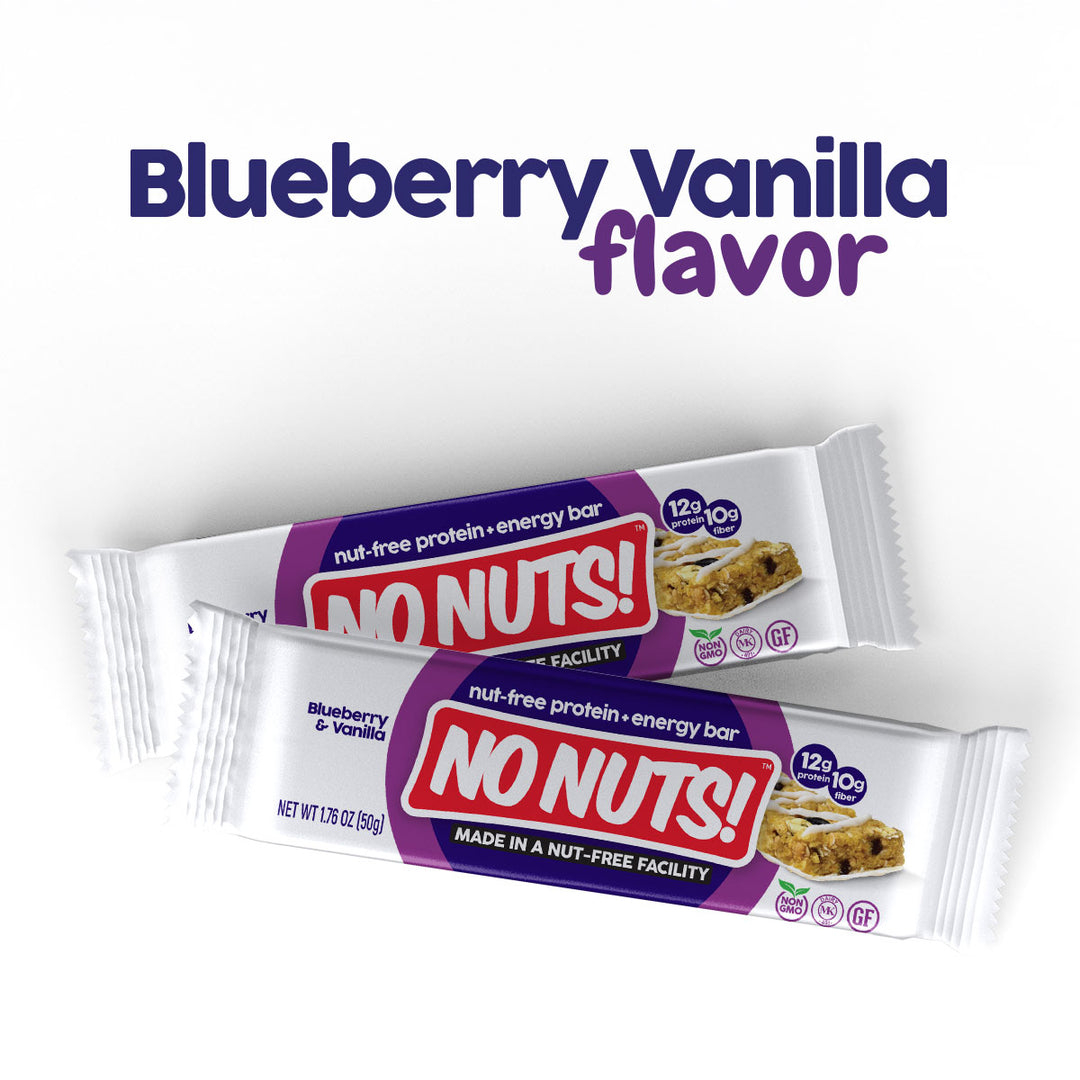
For example, the Blueberry & Vanilla Snack Bars emphasize a fruity profile with a vanilla-coated bottom, while the Chocolate Caramel Mocha Snack Bars lean into coffeehouse flavors with caramel and mocha espresso notes—all still nut-free and made in the same nut-free facility.
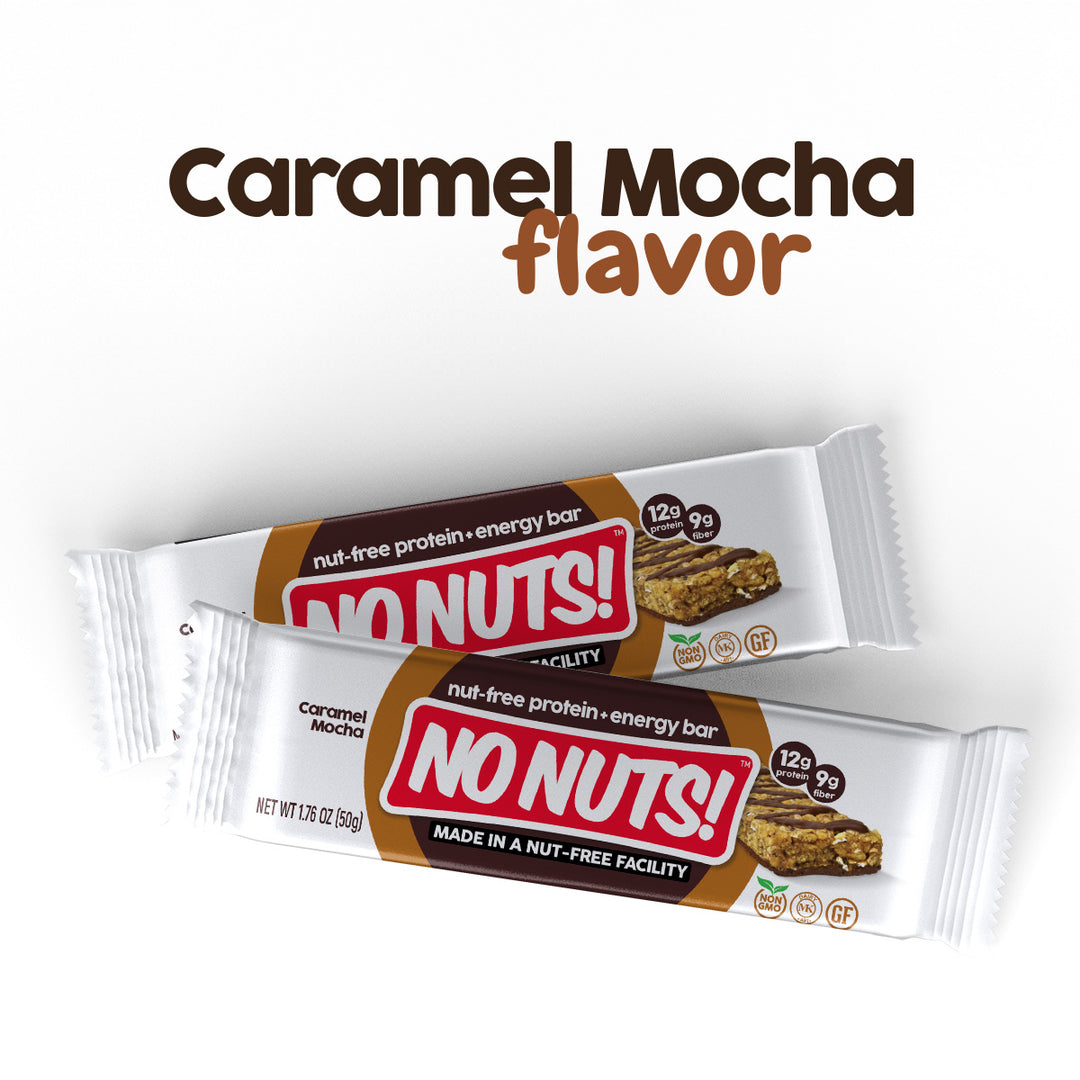
Flavor & Nutrition Snapshot
| Flavor | Key Taste Notes | Protein / Fiber (per bar) | 12-Bar Pack Price | Allergen Highlights |
|---|---|---|---|---|
| Chocolate Chip | Classic cookie-like, chewy and chocolatey | 12g protein, 9g fiber | $32.99 (or $29.69 subscribe) | Nut-free, dairy-free, egg-free, gluten-free |
| Blueberry & Vanilla | Fresh blueberry with a vanilla-coated bottom | 12g protein, 10g fiber | $32.99 (or $29.69 subscribe) | Made in a 100% nut-free facility; gluten- and dairy-free |
| Chocolate Caramel Mocha | Smooth caramel with mocha espresso on a chocolate base | 12g protein (fiber also present) | $32.99 (or $29.69 subscribe) | Nut-free, plant-based, dairy-free, gluten-free |
Reading this type of comparison lets you weigh taste, protein, fiber, and price without ever compromising on allergen safety. Every flavor in the line keeps the same nut-free manufacturing standards; you only have to decide which taste profile suits your family.
6. Reading Variety Pack and Sampler Labels Without Getting Confused
Variety packs are convenient, but their labels can be more complex. You need to be sure that every flavor inside meets your nut-free requirements, not just one highlighted flavor.
The No Nuts! Variety Pack clearly lists its four flavors—Chocolate Chip, Cinnamon Roll, Blueberry & Vanilla, and Caramel Mocha—along with nut-free, dairy-free, gluten-free, and egg-free claims. The pack price is $32.99 (or $29.69 on subscription), and you can verify safety through the shared nutrition and nut-free facility messaging.


Sampler and Variety Tips
- Check for a global allergen statement that applies to the entire box, not just one flavor.
- Make sure flavors listed on the front (like Cinnamon Roll or Caramel Mocha) all follow the same nut-free facility standard.
- Look for nutrition panels or icons that confirm every bar is nut-free, not just “most” of them.
The No Nuts! 4-Pack Sampler (priced at $14.99) is a good example of this done right: it invites you to “Try All 4 Flavors in One Convenient 4-Pack – Always NUT-FREE!” and repeats the dairy-free and gluten-free claims, so you know the whole sampler meets the same criteria.
7. Spotting School-Safe and Camp-Safe Nut-Free Snack Labels
Many schools, camps, and childcare centers now have nut-free policies. That means your labels need to satisfy their requirements as well as your personal safety standards.
Packages and collection pages that explicitly say “school-safe,” like the No Nuts! variety-pack collection aimed at school-safe nut-free snacking, help you quickly match what’s in your pantry to what’s allowed on campus or at camp.


What Makes a Snack “School-Safe”?
- Clear “nut-free” and/or “peanut and tree nut free” labeling.
- Ideally, a 100% nut-free facility statement.
- No advisory statements like “may contain peanuts.”
- Brand transparency through FAQs and safety pages schools can review.
When sending snacks in shared environments, it’s safest to choose brands that build nut-free status into their identity—not just as a single product variant.
8. Understanding Multi-Allergen Claims: Gluten-Free, Dairy-Free, and Vegan Alongside Nut-Free
Households dealing with nut allergies often juggle other dietary needs too: celiac disease, lactose intolerance, egg allergies, or vegan preferences. Reading labels across all these categories can feel overwhelming unless brands clearly signpost them.
Many nut-free lines, including No Nuts! bars, highlight multiple attributes together—like Nut Free, Dairy-Free & Gluten-Free, Vegan & Non-GMO. This grouping makes it much faster to confirm a product fits your combined requirements.


How to Read Multiple Icons at Once
- Nut-free icon – your non-negotiable if you’re managing nut allergies.
- Gluten-free / dairy-free / egg-free – good for additional allergies and intolerances.
- Vegan, Non-GMO – extra values that don’t affect nut safety but may matter for lifestyle or ethics.
Always confirm that these icons align with a trustworthy written allergen statement. Icons alone are not enough; they should complement, not replace, clear wording about allergens and manufacturing practices.
9. Using Brand Resources: Ingredients Pages, FAQs, and Media Kits
When you want to go deeper than the package, look for a brand’s dedicated allergen or ingredient pages. Reputable nut-free brands document how they source, test, and manufacture their products.
For instance, a brand may offer an ingredients overview, detailed FAQs on allergens, and even visual media kits showing every side of the packaging—including the back-of-box where nut-free facility statements and nutrition panels live.


Why These Extras Matter
- They show transparency—you can see more than just a cropped front label.
- They support schools, camps, and caregivers who need documentation about nut-free status.
- They give you confidence that “nut-free” is a core part of the brand, not an afterthought.
If a brand offers detailed visual packaging in a media kit, use it as a training tool: practice finding the allergen statement, nutrition facts, and certification icons on each side of the box.
10. Shopping Smart: Comparing Nut-Free Options by Price, Protein, and Convenience
Once you’ve confirmed a product is truly nut-free, you can compare options on value and nutrition. Look at grams of protein and fiber per serving, pack size, and price per bar.
For example, most No Nuts! 12-bar packs are $32.99 at full price with 12g of protein per bar, while the 4-pack Sampler at $14.99 is a lower-risk way to try all four nut-free flavors before committing to a full case.


Quick Comparison: Packs and Samplers
| Product | What You Get | Price | Nut-Free Highlights |
|---|---|---|---|
| Single-Flavor 12-Bar Packs (e.g., Chocolate Chip, Blueberry & Vanilla, Caramel Mocha) | 12 bars of one flavor, each with ~12g protein | $32.99 (or $29.69 with subscription) | 100% nut-free facility, also dairy- and gluten-free |
| No Nuts! Variety Pack | 12 bars: mix of Chocolate Chip, Cinnamon Roll, Blueberry & Vanilla, Caramel Mocha | $32.99 (or $29.69 subscribe) | All four flavors nut-free; school-safe labeling |
| No Nuts! 4-Pack Sampler | 4 bars, one of each flavor | $14.99 | Nut-free, dairy-free, gluten-free; great trial option |
By practicing these comparisons on clear products, you’ll build habits that carry over to any store shelf—even when labels are less obvious or more confusing.
Conclusion
Reading nut-free labels like a pro comes down to a consistent process: check the front claim, verify the ingredients, study the allergen statement, and confirm the manufacturing environment. When you find brands that make this information clear—like those produced in a 100% nut-free facility—shopping and packing lunches becomes much less stressful.
Use the examples in this guide as a template the next time you’re in the aisle or browsing online. With a practiced eye, you’ll be able to spot true nut-free products quickly, weigh nutrition and price confidently, and keep your family safer at home, at school, and everywhere in between.