Allergen-Conscious Snack Decisions for Shared Settings: A Practical Guide
Sep 23, 2026
Allergen-Conscious Snack Decisions for Shared Settings start with one simple step: ask the people who will be eating what they need to avoid. With clear communication, careful label checks, and thoughtful serving, shared snacks can feel safer and more welcoming for everyone.
Key Takeaways
| Question | Practical answer |
|---|---|
| What should we do before choosing snacks? | Ask families, guests, or the school about specific food allergies, cross-contact concerns, and relevant food policies. |
| What are some allergy-friendly snacks? | Options such as whole fruit, vegetables, and individually wrapped snacks can work when their ingredients suit the people attending. |
| How do we check packaged snacks? | Read the ingredient list and allergen declaration each time, including any precautionary allergen labeling. |
| How do we reduce cross-contact? | Wash hands and surfaces, keep foods separate, and use dedicated serving utensils. |
| Can one snack be safe for everyone? | No. Allergy-friendly describes a product generally, not its suitability for each person’s specific allergies. |
| Where can we find nut-free options? | Browse the No Nuts! nut-free snack collection or, for recurring group needs, the wholesale snack-bar collection. |
Start by asking about food allergies and group policies
The best snack plan begins with a direct, private conversation. Ask the school, host, or families which allergens must be avoided, whether there are concerns about cross-contact, and what rules apply to food brought into the setting.
Food allergies are not always visible, and a familiar snack can still be unsuitable for someone in the group. About 1 in 13 children has a food allergy, roughly 2 students per classroom, according to FARE. That makes clear communication part of everyday inclusion, not an extra step.
Use a simple coordination process so no one has to guess:
- Ask early. Invite families or attendees to share relevant food allergies and any specific guidance for choosing or serving food.
- Confirm details privately. Check that you understand which ingredients and cross-contact risks matter to that person.
- Share the proposed snack. Provide the product name and ingredient information to the appropriate family, school contact, or host.
- Communicate the final plan. Tell the adults who will buy, prepare, and serve the snack what was chosen and how it should be handled.
Ask about the school food policy, too. Some settings restrict certain foods or require snacks to stay in original packaging, and the school’s procedures should guide your choices.
Check the ingredient list, allergen declaration, and warning statements
For allergen-conscious snack decisions for shared settings, check the package every time you buy or serve a snack. Brands can change recipes or manufacturing practices, so a label you read before may not describe the product in your hand today.
In the United States, the nine major food allergens are milk, eggs, fish, crustacean shellfish, tree nuts, peanuts, wheat, soybeans, and sesame. The ingredient list and allergen declaration help identify these allergens, but a person’s allergy guidance may cover other ingredients as well.
Allergen lists may differ across regions.
Do not treat “allergen-free” or “allergy-friendly” as a promise that a snack works for every person. Those terms do not replace the individual’s guidance or a careful review of ingredients and precautionary allergen labeling.
- Read the full ingredient list, not only the front-of-pack claims.
- Look for the allergen declaration and any precautionary statement, such as “may contain.”
- Ask the person or family how to interpret a precautionary statement for their specific allergy. It does not, by itself, tell you whether the product is suitable for that person.
- If the label is unclear or the snack cannot be confirmed as suitable, choose a different option or serve an approved alternative.
Do not remove visible pieces of an allergen from a food and serve what remains. The food may have contacted the ingredient throughout, even when you can no longer see it.
Choose allergy-friendly snacks that suit the people attending
Good shared snack ideas can be simple: whole fruit, washed vegetables, or individually packaged snacks with ingredients that fit the group’s needs. There is no single snack that is automatically safe for everyone, so treat each choice as a match between a specific food and a specific person.


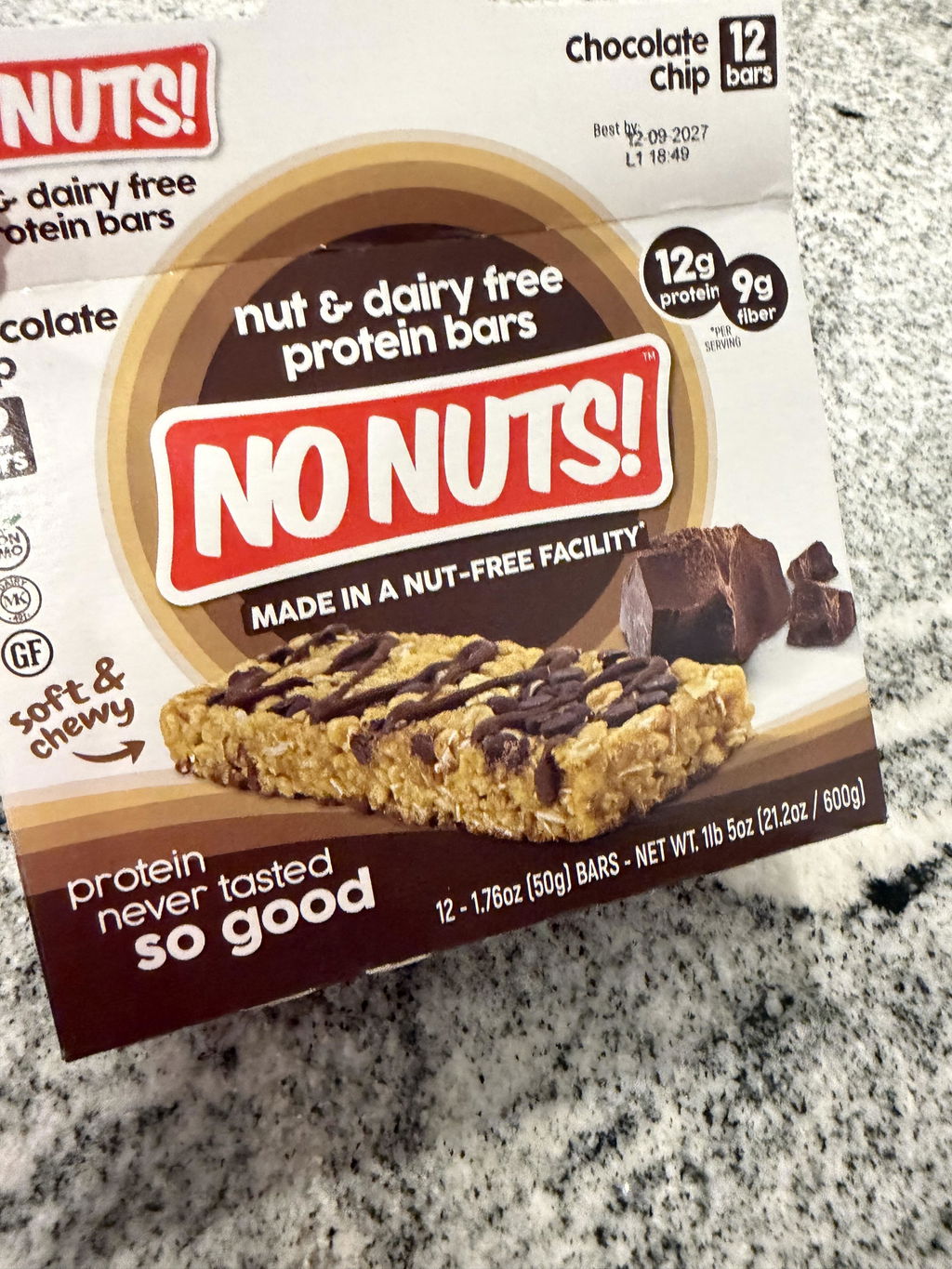
When a nut-free option fits the attendees' needs, No Nuts! offers a variety pack with Chocolate Chip, Blueberry Vanilla, Caramel Mocha, and Cinnamon Roll bars, made in a dedicated nut-free facility.
The Chocolate Chip Snack Bars come in 12-bar packs and are nut-free, dairy-free, egg-free, plant-based, and made in a nut-free facility. As with any snack, check the ingredient list against each person's allergies.
Graham crackers, granola bars, and protein bars can also be group snack options when their ingredient lists fit the people attending. An allergy-friendly graham cracker or an allergy-friendly protein bar is still a product to assess, not a universal safe choice. The same care applies to dairy-free snacks: dairy-free does not mean free from every allergen.
Choose between homemade and packaged snacks
Packaged snacks keep their ingredient information close at hand and can be served in individual portions. Homemade snacks may let you tailor ingredients, but they require careful ingredient checks and clean preparation from start to finish.


The Blueberry & Vanilla Snack Bars and Cinnamon Roll Snack Bars each come in 12-bar packs. Both are nut-free, dairy-free, and made in a dedicated nut-free facility.
| Choice | Helpful for | Plan for |
|---|---|---|
| Packaged snacks | Quick serving, individual portions, and keeping the ingredient list with the food | Reading the current package label and preserving the wrapper information |
| Homemade snacks | Choosing a recipe and ingredients for a particular group | Checking every ingredient and preventing contact with other foods, utensils, and surfaces |
Whichever option you choose, keep the package or recipe information available for the adults responsible for serving. Avoid transferring food into unmarked containers that make ingredients harder to identify.
Prevent cross-contact during preparation and serving
Cross-contact happens when an allergen unintentionally transfers to a food that does not contain it as an ingredient. A clean serving plan helps protect the snack choice you have already made.
- Wash hands with soap and water before handling food and between different foods. Clean hands again after eating or touching shared surfaces.
- Use clean preparation surfaces and tools. Wash counters, boards, knives, and containers before use, and keep ingredients separate while preparing snacks.
- Set out dedicated utensils. Give each food its own serving spoon or tongs, and do not move utensils from one dish to another.
- Keep foods covered and separate. Place each snack in its own container and identify it with its ingredients.
- Serve individually packaged food unopened when that is part of the person’s guidance or the group plan.
Do not rely on removing crumbs or wiping a surface quickly. Clean hands, equipment, and serving areas between foods, then keep prepared snacks protected until they are served.
Stock shared snacks for schools, camps, and workplaces
For a setting that serves snacks regularly, individually wrapped bars can make storage and distribution more consistent. Keep a clear snack policy, store products together with their packaging, and give staff a straightforward process for checking and serving them.


The 192-bar Chewy Chocolate Chip Snack Bars case comes individually wrapped in eight boxes of 24. The bars are made without the 9 major U.S. allergens, are gluten-free, and are made in a nut-free facility.
With 72 individually wrapped bars in six boxes of 12, the Cinnamon Roll Protein Bars case is a simple way to stock up. The bars are nut-free, dairy-free, egg-free, gluten-free, and made in a dedicated nut-free facility.
A clear nut-free policy, combined with curated snacks, gives staff a consistent foundation to work from and gives parents a reason to relax a little when the bus leaves. Keep the responsibility with the adults, and share the final snack plan with anyone who will prepare, serve, or supervise food.
Make shared snacks inclusive without singling anyone out
Inclusion means planning with children and families, not asking a child with allergies to judge whether a food is safe. Adults should handle label checks, serving arrangements, and communication, while children can join in choosing flavors and enjoying the group snack.


Offering familiar flavors alongside a clear, consistent serving routine can help everyone take part without drawing attention to one child’s needs. Chocolate Chip and Caramel Mocha are two flavors available in individually wrapped cases for group settings.
Set a simple rule for food sharing: children eat only the snack given to them, and they do not trade food, drinks, or utensils. Explain the rule to the whole group as a routine that keeps snack time organized and comfortable for everyone.
Know what to do if a snack cannot be confirmed
If you cannot establish that a snack suits the people attending, do not serve it as a shared option. Ask the family or school contact for an approved alternative, or choose a clearly identified option that they have confirmed is appropriate.
Before the event, identify the responsible adults and review the person’s established allergy emergency plan with the appropriate school or family contact. If someone shows signs of an allergic reaction, notify the responsible adult immediately and follow that person’s emergency plan; use prescribed emergency medication and contact emergency services as directed by the plan.
Allergen-conscious snack decisions for shared settings work best when communication, food handling, and emergency responsibilities are clear before snack time begins.
Frequently Asked Questions
What should I do if a child has a new or newly disclosed food allergy?
Pause serving food until the family and designated staff provide guidance, then share it with the adults responsible for food and supervision.
Can children with food allergies help choose snacks?
Yes—children can share their flavor preferences, while adults make the final safety decisions.
Is hand sanitizer enough after handling food?
No; wash with soap and water before handling another snack.
What should I do if a snack has already been served and I notice an allergen?
Stop serving it and alert the responsible adults; removing the visible allergen does not make the rest suitable to serve.
How should we handle unopened packaged snacks left after an event?
Store unopened snacks separately from opened or unidentified food.
What should adults do if someone shows signs of anaphylaxis during snack time?
Act immediately according to the person’s plan and get emergency help.
Conclusion
Allergen-Conscious Snack Decisions for Shared Settings are built on asking, checking, preparing carefully, and serving with a clear plan. When adults take responsibility for food safety and children can enjoy the same welcoming snack routine, shared eating becomes safer, simpler, and more inclusive.
A note on allergies: This article is general information, not medical advice. Ingredients and facility practices can change, so always read the full label and allergen statement before eating any food, and talk with your doctor or allergist about your own needs.
No Nuts! protein bars (Chocolate Chip, Blueberry & Vanilla, Caramel Mocha and Cinnamon Roll) are made in a nut-free facility, and every ingredient is listed on our ingredients page. Our Chewy Chocolate Chip Granola Bars are made without the 9 major U.S. allergens (including soy); the facility also processes coconut.