A Camping Snack Checklist for Packing Individually Wrapped Protein Bars
Sep 22, 2026
A camping snack checklist for packing individually wrapped protein bars can make trail breaks easier to plan, share, and clean up. We’ll help you choose bars for the weather, balance them with other portable camping snacks, and keep each day’s food protected and easy to reach.
Key Takeaways
| Camping snack question | Quick answer |
|---|---|
| What makes a snack suitable for camping? | Choose shelf-stable food that travels well, fits the day’s activity, and can be stored securely. |
| What are some good protein snacks to pack? | Individually wrapped protein bars, jerky, and trail mix can provide easy options. For shared snacks, choose trail mix and other foods that fit everyone’s dietary needs. |
| How do I keep protein bars from melting or getting crushed? | Keep chocolate-coated bars shaded, and store bars in a rigid-sided container or padded section of your pack. |
| How should I organize snacks for a multi-day trip? | Set aside each day’s portions by person and activity, then keep the remaining supply together in secure storage. |
| How can I pack for campers with allergies? | Read the ingredient and allergen information for every snack, keep restricted foods separate, and avoid sharing that could transfer crumbs. |
| Where can I find individually wrapped options made for nut-free snacking? | Explore our nut-free protein bar options for individually wrapped bars made in a dedicated nut-free facility. |
Choose bars that can handle the trail
The best protein bars for camping are shelf-stable, individually wrapped, and sturdy enough to travel in a pack. Their wrappers make portions easy to grab without taking up cooler space, while the bar’s texture and coating affect how well it handles heat, cold, and pressure.
To keep protein bars from melting, choose bars without easily melted coatings or soft fillings for hot-weather hikes. If you bring a chocolate-coated bar, keep it shaded and insulated from direct sun; in cold conditions, a chewy bar may firm up, so tuck one where you can reach and handle it easily.
Heat can affect more than a coating: keep the whole pouch out of sustained heat, such as a hot vehicle. Shading the coating alone may not protect soft fillings or the rest of a bar from warming.


The range in the card is context, not a target for every camper or a measure of how well a bar will travel. Compare the package’s serving information and ingredient list with your needs, then judge heat tolerance, texture, and wrapper condition separately.
For rough packs, choose a firmer bar that is less likely to crumble, and place soft or delicate bars where gear will not press on them. The right choice depends on the route, forecast, and how your group will carry its food.
Build a mix of sweet, savory, and no-cook snacks
Good protein snacks for camping include bars, jerky, and trail mix, while crackers and whole fruit add savory crunch or a lighter, refreshing bite. Choose trail mix, nuts, and nut butter packets only when their ingredients work for everyone sharing the food.
Make shelf-stable snacks the foundation of your supply, then use cooler packing for yogurt, cut produce, and other perishables. Crackers, jerky, and individually wrapped bars are easy no-cook options.
For snacks from a larger bag, portion the amount you expect to eat on the outing into a small sealed pouch and keep the main bag closed. This limits repeated handling and leaves fewer crumbs or exposed leftovers to manage. Individually wrapped bars are easier to hand out during a moving break; a shared bag can mean less individual packaging, but is easier to manage when the group can stop, reseal it, and collect crumbs.
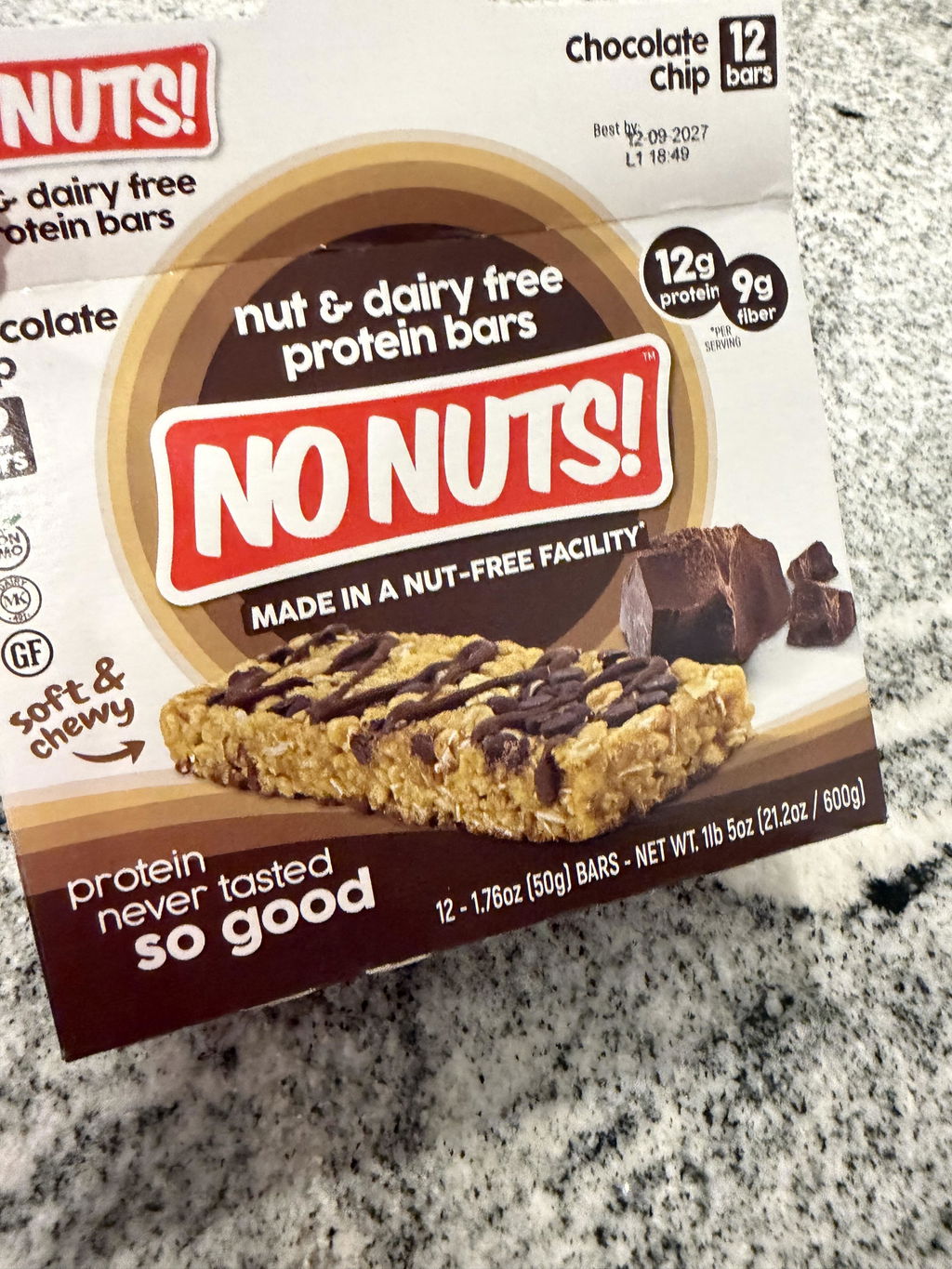
For groups, packing more than one flavor or texture gives campers a choice and helps avoid relying on one snack that not everyone can eat. The No Nuts! Variety Pack is a 12-pack of individually wrapped, shelf-stable bars in Chocolate Chip, Cinnamon Roll, Blueberry & Vanilla, and Caramel Mocha; its mix of flavors makes it a practical way to offer options while keeping portions simple.


When allergies are part of the plan, shared snacks need extra care. A dedicated nut-free facility can be an important part of an allergy-aware choice, alongside reading ingredient and allergen information for every food you pack. A facility claim alone does not establish suitability for every individual allergy.
Pack a bar-specific checklist for each day
Count bars by camper and day, then move the day’s portion into an easy-to-reach pocket or small snack pouch. This keeps trail snacks handy while the rest of the supply stays protected.
Before packing, check that each wrapper is intact. Put a damaged or opened bar in a sealed food bag rather than letting it move loose among clean gear.


Keep the reserve together in a rigid-sided container or a padded part of your pack. That buffer helps prevent crushing and keeps the bars away from wet clothing, water bottles, and other damp gear.
- Count each camper’s bars for the planned trip days.
- Set aside the current day’s portion in a reachable pouch or pocket.
- Check every wrapper for damage before packing.
- Protect the remaining bars from pressure and moisture.
- Bring a dedicated bag for used wrappers and crumbs.
Individual wrappers make portion control and sharing easier, but they also create waste. Keep a small waste bag with the snacks so every wrapper travels back out with you.
Plan portions around people and activities
A simple inventory can list each person, their snack options, and the day or activity assigned to each portion. Refill the day pouch from the main supply so the group can see what is ready without unpacking everything.
For children, include snacks they can open without help and eat comfortably during a break. Avoid foods that are difficult to manage while walking or that pose a choking risk for younger campers.
For allergy-aware packing, review the ingredients and allergen information on every snack, keep restricted foods separate, and prevent sharing that could transfer crumbs. These small routines help everyone take part in inclusive eating.
If you want to learn what different campers prefer before organizing a larger supply, the No Nuts! Variety Pack includes three bars of each flavor, individually wrapped and shelf-stable, with 12g of protein and up to 10g of fiber per bar.

Store food securely at camp
Use the campsite’s required food-storage system for bars and other food, such as a bear-resistant container or locker where required. Never leave snacks in a tent, where food and wrappers can attract wildlife.
Keep the day’s snack pouch handy during activities, then return it to secure food storage when you are done.
After a snack break, return unused bars to secure storage and seal opened foods in a food bag. Collect wrappers, crumbs, and food scraps as you go, and pack them out instead of leaving them at the campsite.
Individually wrapped bars help keep portions separate, but the wrapper does not replace proper food storage. Keep the pouch accessible while you are using it, then put it away with the rest of the food.
Do a final packing check before leaving
Before setting out, compare your snack supply with the trip plan and confirm that you have both the day’s accessible portion and the secured reserve. Check the wrappers and make sure bars are protected from heat, moisture, and pressure in the pack.
- Confirm the bar and snack count for each camper and planned activity.
- Check that the day pouch is easy to reach and the reserve is protected.
- Make a food-storage plan for camp and account for cooler space for perishables.
- Pack a bag for wrappers, crumbs, and food scraps.
- Separate restricted snacks and keep each camper’s portions identifiable.
A little organization before departure means fewer loose snacks, less rummaging, and a clearer plan for keeping food secure throughout the trip.
Frequently Asked Questions
How many protein bars should I pack per person per day?
There is no single number that suits every camper, because trip length, meal plans, and activity levels differ. Use your planned snack breaks to estimate how many bars you want available, and decide separately whether to carry an extra for delays. As a practical starting point, assign one bar per person to each planned bar-based snack break, and choose fruit, crackers, or another option for breaks where you want variety.
Can protein bars replace a meal on a camping trip?
A protein bar can be a convenient backup when a meal is delayed, but one bar is not a reliable substitute for a balanced meal on a demanding trip. Plan satisfying meals and use bars as snacks or supplemental food.
What should I do if a protein bar wrapper is torn?
If the bar has been exposed to dirt, moisture, or anything that could contaminate it, discard it rather than eating it. If you know the tear happened in a clean setting, keep the bar contained and eat it promptly.
Are protein bars useful as emergency food on a hike?
Yes, a shelf-stable bar can be a compact backup when a hike takes longer than planned. Keep emergency food separate from your everyday snack supply so you can account for it during your return check.
How can I tell if a protein bar has enough protein for my camping snack?
Compare the grams of protein per serving on the nutrition label with the amount you want from that snack. Also consider the rest of the label, including calories and carbohydrates, to see how the bar fits with your planned food for the day.
Conclusion
A Camping Snack Checklist for Packing Individually Wrapped Protein Bars should account for weather, texture, portions, dietary needs, and secure food storage. Choose shelf-stable bars that suit the trip, balance them with other portable snacks, and pack out every wrapper and crumb so your camp stays clean and welcoming for everyone.
A note on allergies: This article is general information, not medical advice. Ingredients and facility practices can change, so always read the full label and allergen statement before eating any food, and talk with your doctor or allergist about your own needs.
No Nuts! protein bars (Chocolate Chip, Blueberry & Vanilla, Caramel Mocha and Cinnamon Roll) are made in a nut-free facility, and every ingredient is listed on our ingredients page. Our Chewy Chocolate Chip Granola Bars are made without the 9 major U.S. allergens (including soy); the facility also processes coconut.