What Foods Contain Almond Flour? Complete List for 2026
Jul 14, 2026
If you're trying to figure out what foods contain almond flour, the honest answer is: more than you'd expect. The almond ingredient market, including flour, milk, and paste, is projected to reach $11.8 billion in 2025 alone, and that growth keeps rolling into 2026 as almond flour shows up in everything from bakery aisles to protein bars.
We put together this complete list so you know exactly where almond flour hides in the grocery store, and what to reach for instead if you or your family need to avoid tree nuts entirely.
Key Takeaways
| Question | Quick Answer |
|---|---|
| What foods contain almond flour most often? | Baked goods, keto breads, gluten-free crackers, granola, macarons, and protein bars |
| Is almond flour dairy-free? | Yes, almond flour itself is naturally dairy-free, though finished products may add dairy |
| Can I find nut-free snack bars without almond flour? | Yes, brands like nut-free snack bars from No Nuts! use zero almond flour or tree nuts |
| Why is almond flour in so many keto products? | It's naturally low-carb and high-fat, matching keto and paleo diet needs |
| Where do most almonds come from? | California produces over 80% of the world's almond supply |
| What should I check on ingredient labels? | Look for "almond flour," "almond meal," or "ground almonds" listed under ingredients |
| Are there nut-free snack alternatives for school lunches? | Yes, school-safe snack bars made in 100% nut-free facilities exist |
What Foods Contain Almond Flour? A Quick Answer
Almond flour is ground from blanched almonds, and it's become one of the most popular wheat flour substitutes on the market.
Almonds now rank as the #1 nut used in the global bakery category, which explains why almond flour keeps popping up in so many packaged foods. So when people ask what foods contain almond flour, the honest answer covers a huge range of categories, not just niche health food items.
Baked Goods That Contain Almond Flour
Baked goods are the biggest category by far.
Here's where almond flour typically shows up on grocery store shelves:
- Cakes, cupcakes, and muffins marketed as "gluten-free" or "grain-free"
- Cookies, especially macarons, which rely almost entirely on almond flour
- Quick breads, banana bread, and zucchini bread mixes
- Pie crusts and tart shells labeled paleo or keto
- Pancake and waffle mixes in the health food aisle
Bakers love almond flour because both fats and sugar can often be reduced by roughly 25% in a recipe, since the flour brings its own natural moisture and sweetness to the table.
Keto and Gluten-Free Foods Made with Almond Flour
Coeliac disease affects roughly 1% of the U.S. population, and that number drives massive demand for gluten-free substitutes like almond flour.
The gluten-free food market is expected to reach $33.59 billion by 2034, and almond flour holds the largest single share within the flour category of that market. Keto shoppers rely on it too.
The keto flour segment, dominated almost entirely by almond flour applications, was valued at $185 million in 2024. You'll commonly find almond flour in:
- Keto bread and bagels
- Low-carb tortillas and wraps
- Grain-free crackers and crisps
- Pizza crusts labeled "cauliflower and almond flour"
- Protein pancake mixes
Snacks and Bars Where Almond Flour Hides
This is the category most people miss when scanning labels.
Granola bars, protein bars, energy bites, and trail mix clusters frequently use almond flour as a binder or base ingredient. Even some "healthy" cookie snacks marketed toward fitness audiences rely on it heavily.
Almond flour and almond meal contain an average of 51g of total fat per 100g, which makes them useful for the high-fat requirements of keto snack formulas. If you have a tree nut allergy, this is exactly why reading the label on every single snack bar matters, since almond flour doesn't always announce itself on the front of the package.
Nut-Free Snack Bars: The Almond-Free Alternative
If almond flour is a problem for your household, the good news is that nut-free snack bar options have expanded a lot heading into 2026.
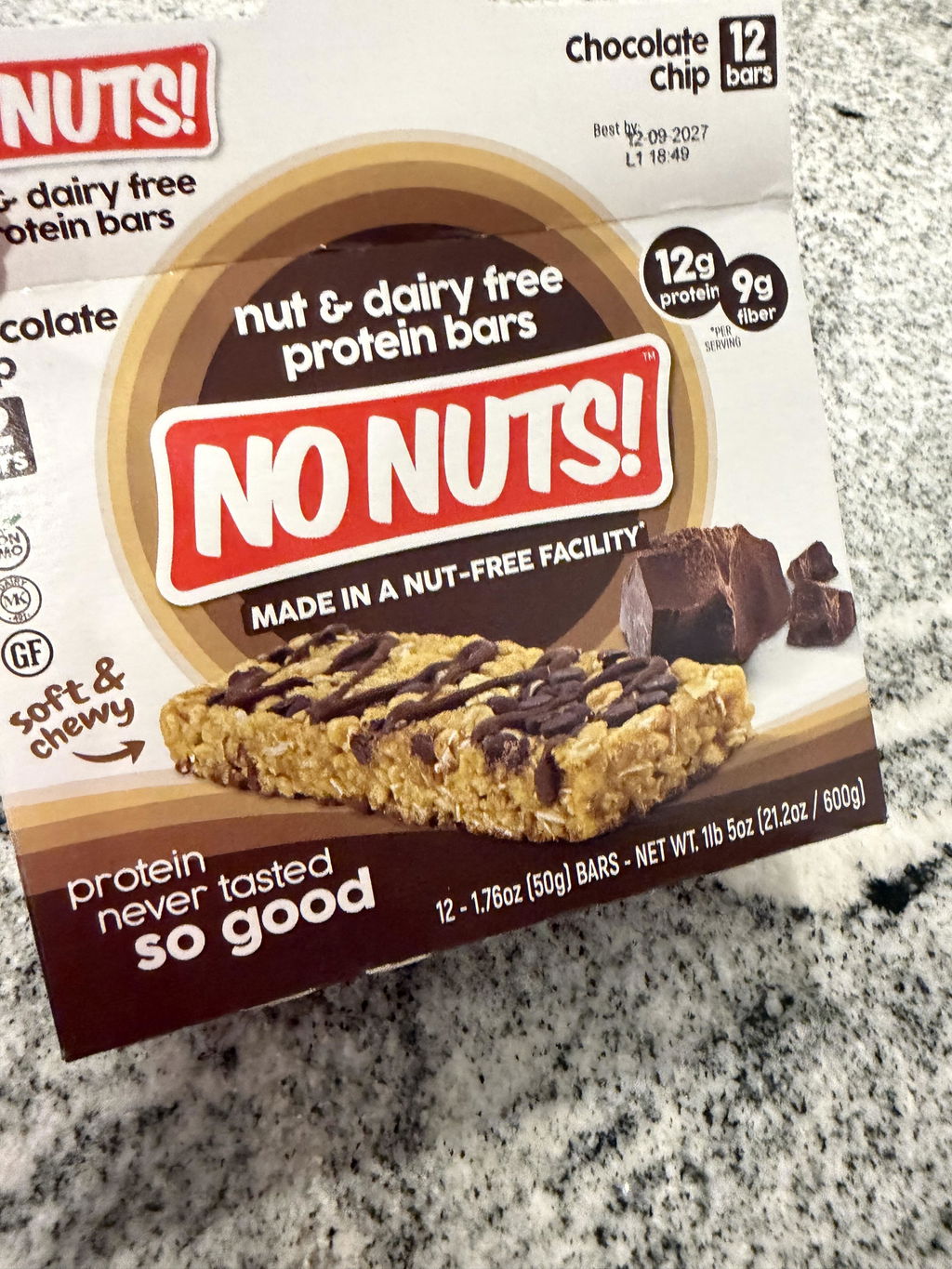
We make our entire lineup of No Nuts! snack bars in a 100% nut-free facility, with zero almond flour, almond meal, or any tree nut ingredient anywhere in the formula. Every bar is also dairy-free and gluten-free, so it covers multiple allergy concerns at once instead of just one.
Each bar delivers 12g of protein and 9g of fiber, which puts it in a similar nutritional range to almond-flour-based protein bars, minus the allergen risk.
No Nuts! Bars: The Nut-Free, Dairy-Free Snack Lineup
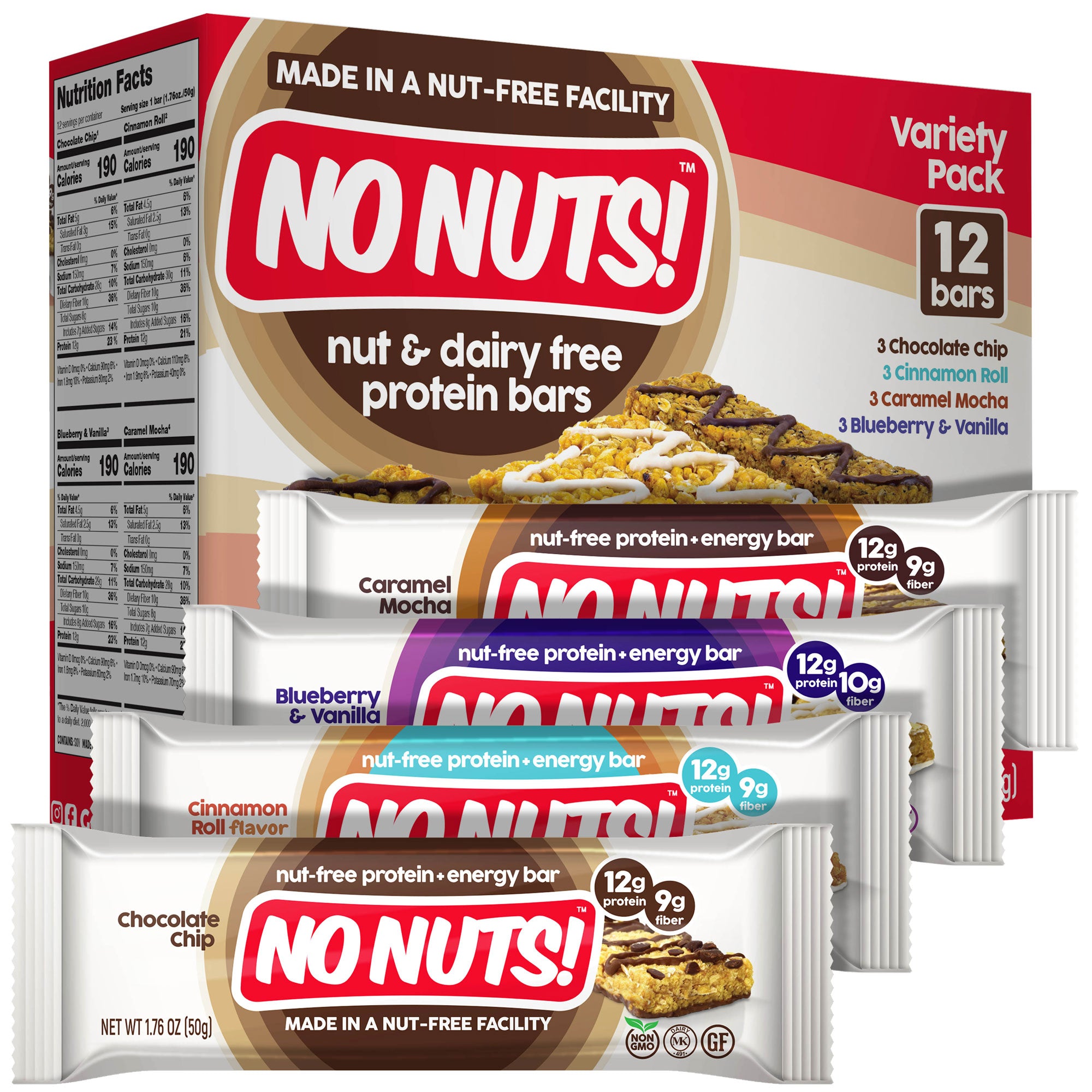
We currently offer four core flavors, plus a variety pack and a sampler for anyone who wants to try before committing to a full case.
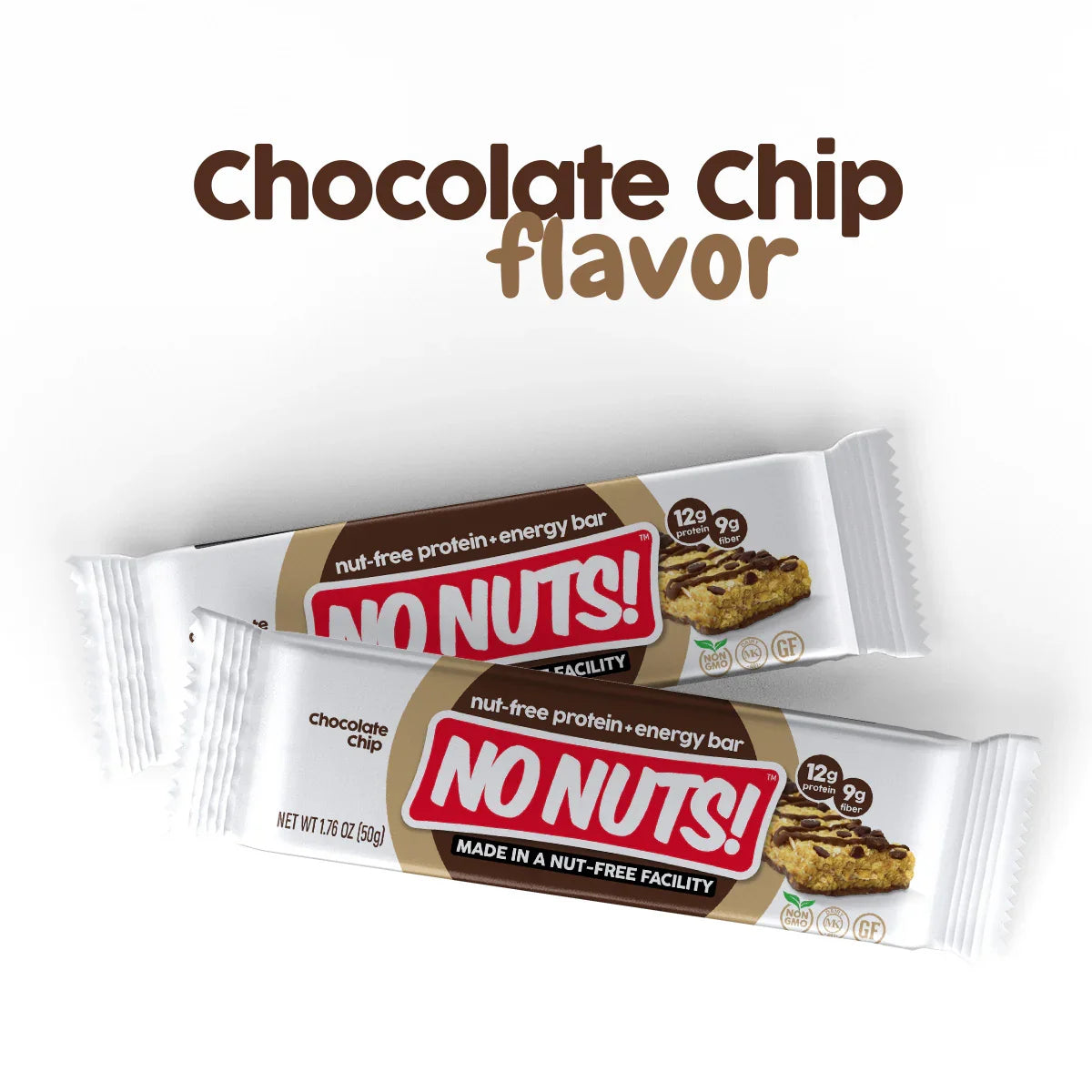
No Nuts! Chocolate Chip Snack Bars ($32.99) pack 12g protein and 9g fiber into a classic flavor that's school-safe and made without a trace of almond flour.
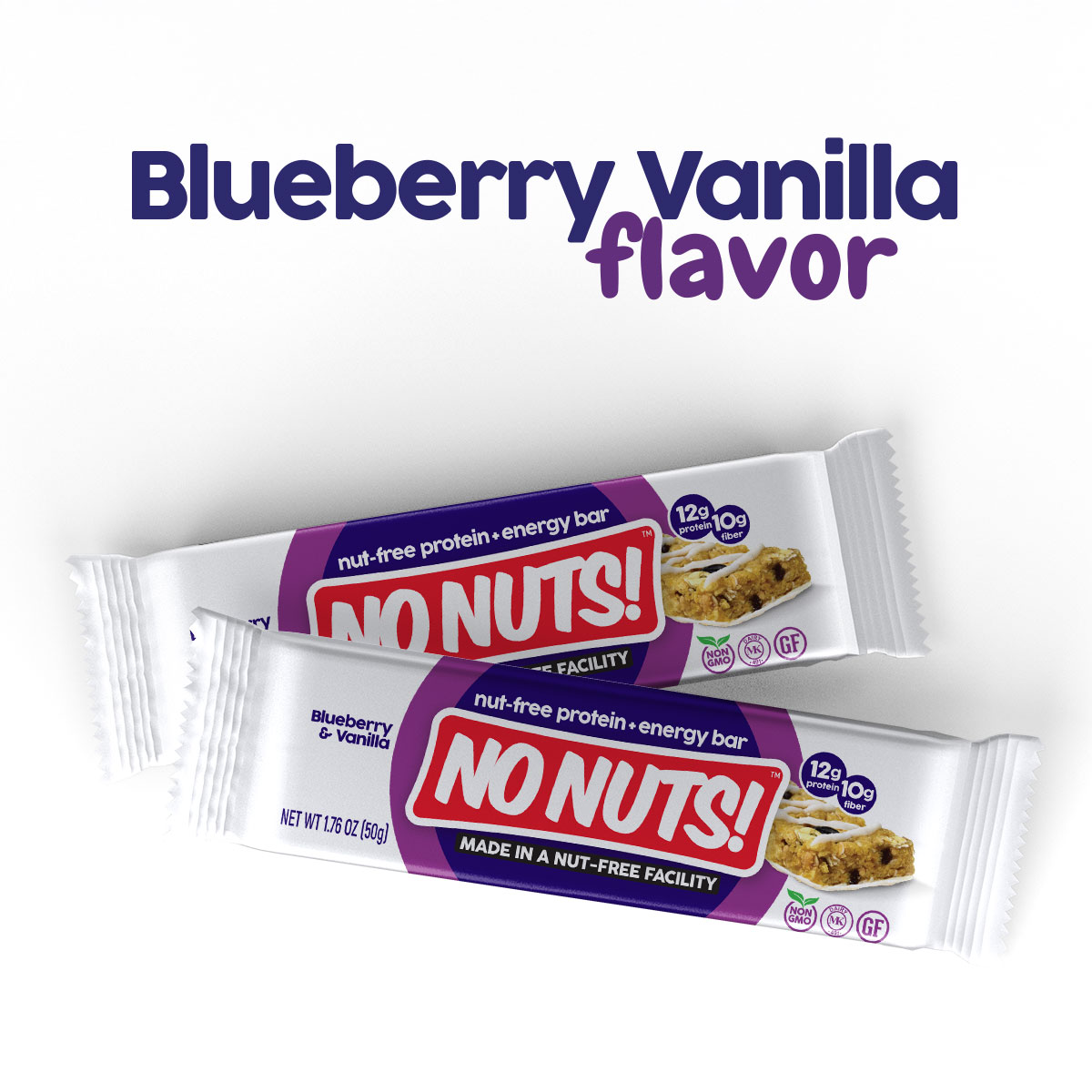
No Nuts! Blueberry Vanilla Snack Bars ($32.99) offer the same nut-free, dairy-free profile with a fruitier twist.
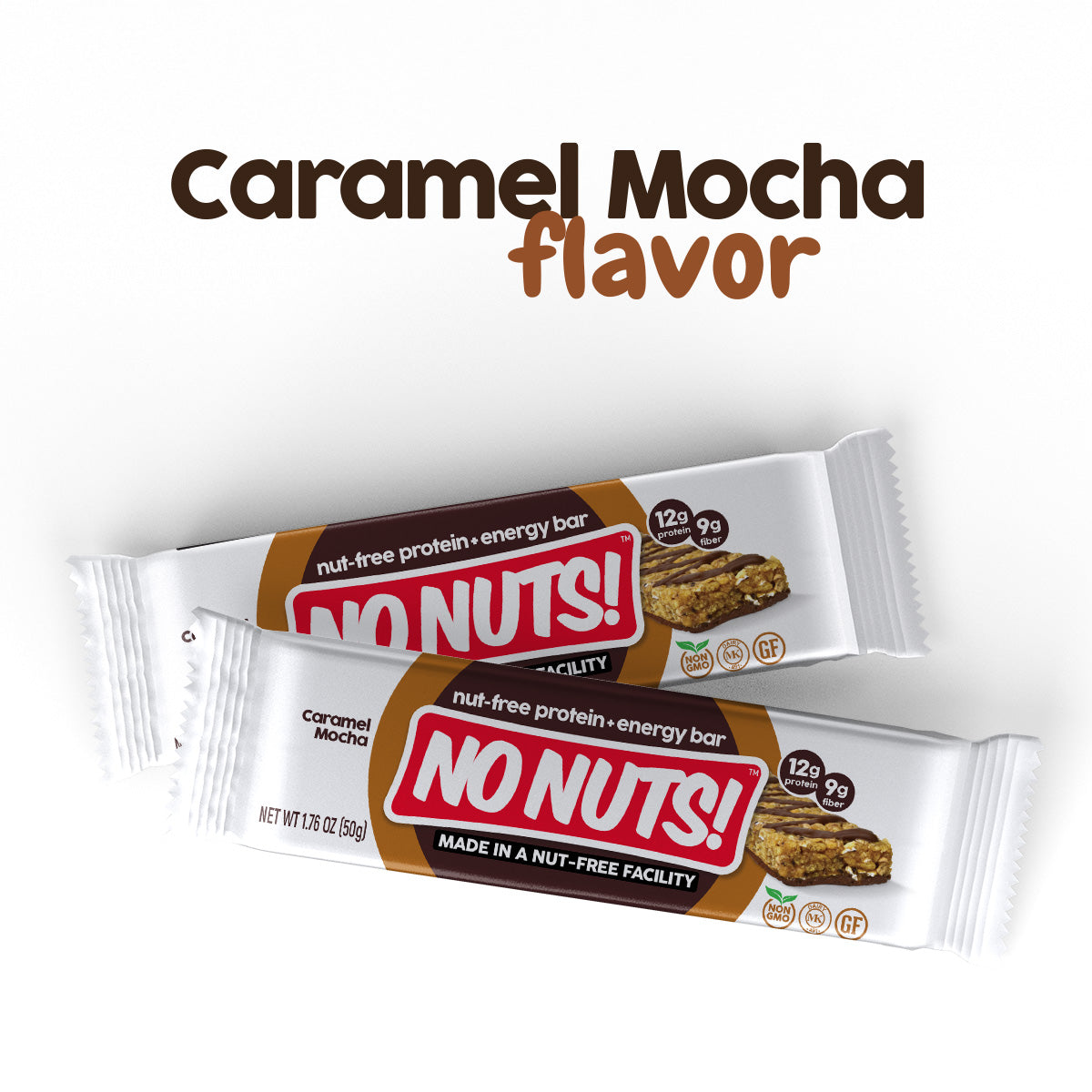
No Nuts! Caramel Mocha Snack Bars ($32.99) are also vegan-friendly, gluten-free, and made in the same 100% nut-free facility as every other flavor we produce.
If you can't pick just one flavor, the No Nuts! Variety Pack bundles all four flavors, including Cinnamon Roll, into a single 12-pack for $32.99.
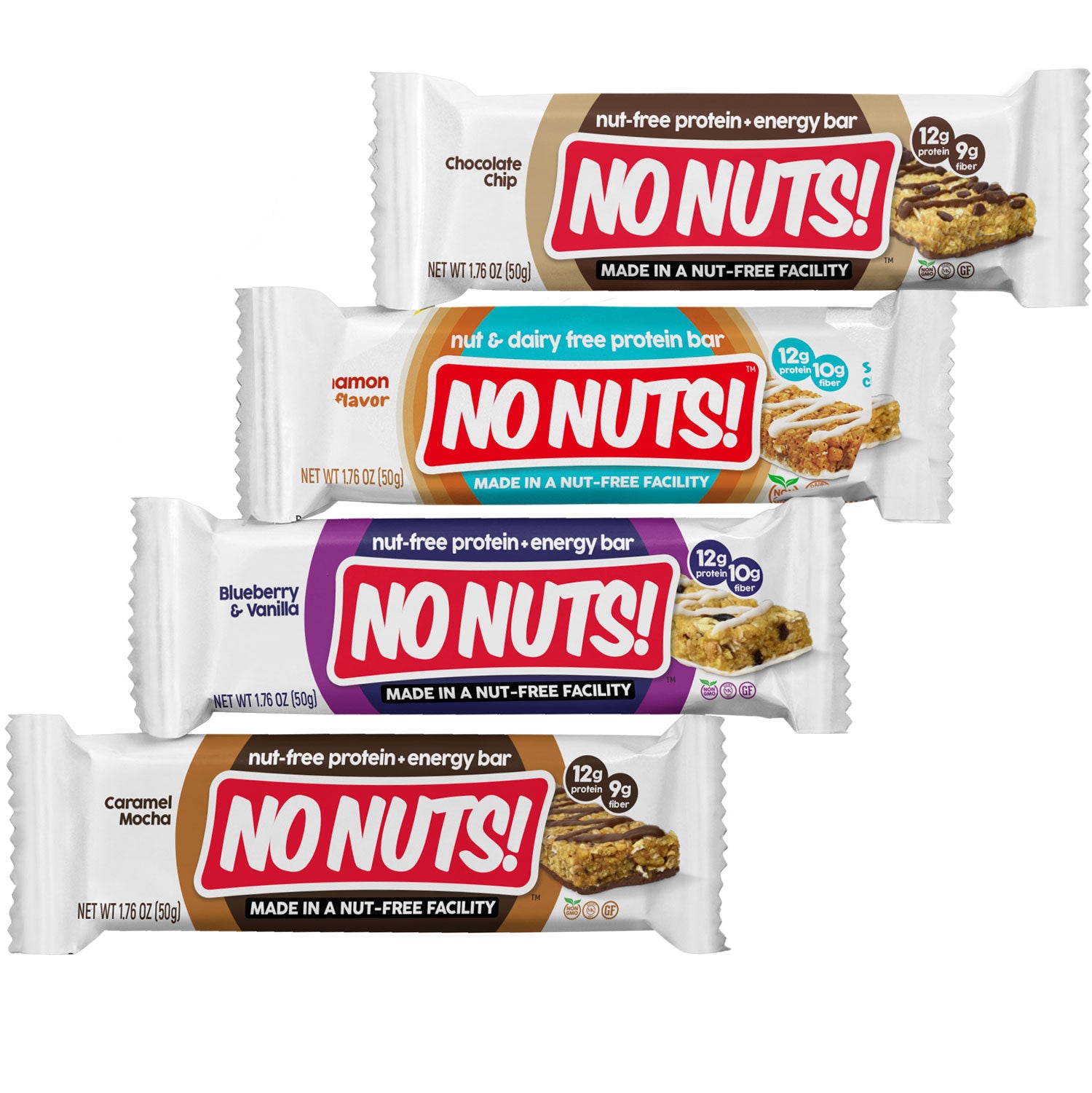
Not ready to commit to a full case? The 4-Pack Sampler lets you try all four flavors for $12.99 before buying in bulk.
How to Check Labels for Almond Flour and Hidden Almonds
Reading ingredient labels carefully is the only reliable way to answer what foods contain almond flour when you're standing in a grocery aisle.
Look for these terms on the ingredient panel, since manufacturers don't always use the exact words "almond flour":
- Almond meal or ground almonds
- Marzipan or almond paste (common in pastries and candy)
- Natural flavoring, which can sometimes derive from almond extract
- "May contain tree nuts" allergen warnings, even if almonds aren't listed directly
We publish a full breakdown of hidden almond ingredients in our guide on what foods contain almonds, which covers products beyond just flour, including almond milk, almond butter, and almond oil.
Almond Flour Foods vs Nut-Free Snacks: Quick Comparison
Here's a simple side-by-side to help you compare typical almond-flour-based snacks against nut-free alternatives.
| Feature | Typical Almond Flour Snack Bar | No Nuts! Snack Bar |
|---|---|---|
| Contains tree nuts | Yes | No, 100% nut-free facility |
| Dairy-free | Varies by brand | Yes, always dairy-free |
| Gluten-free | Usually | Yes |
| Protein per bar | Varies (often 8-15g) | 12g |
| Fiber per bar | Varies (often 3-8g) | 9g |
| School-safe | Rarely | Yes |
Where to Buy Dairy-Free, Nut-Free Snacks Without Almond Flour
Once you know what foods contain almond flour, the next step is finding safe replacements you can actually stock in your pantry.
Our full nut-free snack bar collection covers every flavor we make, and our complete product catalog includes wholesale case options for schools, offices, and gyms that need larger quantities. You can also check our store locator to find retailers near you carrying our bars in person.
For families managing multiple food allergies during holidays and parties, we also put together a guide on hosting nut-free holiday celebrations safely.
Global market values across almond-related segments
Frequently Asked Questions
What foods contain almond flour that people don't expect?
Beyond obvious baked goods, almond flour hides in granola bars, protein bars, pizza crusts, breaded chicken coatings, and even some smoothie mix-ins. Always check the ingredient panel rather than assuming a product is safe based on its category alone.
Is almond flour the same as almond meal?
No, almond flour is made from blanched, skinless almonds and has a finer texture, while almond meal is ground from whole almonds with the skin left on. Almond meal contains more fiber, averaging 12g per 100g, and has a coarser texture better suited to denser baked goods.
Are almond flour snack bars considered dairy-free?
Almond flour itself is naturally dairy-free, but many snack bars that use it also include dairy-based ingredients like whey protein or milk chocolate. You still need to check the full label, since "dairy-free" and "made with almond flour" aren't automatically the same claim.
What can I use instead of almond flour if I have a nut allergy?
Oat flour, sunflower seed flour, and coconut flour are common substitutes in baking. For ready-made snacks and bars, choosing brands like No Nuts! that are produced in a 100% nut-free facility removes the guesswork entirely.
Is almond flour worth using in 2026 compared to other flours?
For gluten-free and keto diets, almond flour remains a strong choice heading into 2026, especially with the gluten-free market projected to reach $33.59 billion by 2034. For anyone with a tree nut allergy, though, it's a hard no regardless of its nutritional benefits.
How do I know if a snack bar is truly nut-free and not just "may contain traces"?
Check whether the manufacturer states the product is made in a dedicated nut-free facility, not just a shared facility with a nut-free recipe. We list this clearly on our product FAQ page and on every bar's packaging.
What foods contain almond flour most commonly at grocery stores?
Bakery sections, gluten-free aisles, and keto-specific shelves carry the highest concentration of almond flour products, including bread, crackers, cookies, and cake mixes. Almonds are the #1 nut used across the global bakery category, which is why almond flour shows up so consistently in these sections.
Conclusion
Knowing what foods contain almond flour gives you real control over your grocery list, whether you're managing an allergy, following keto, or just curious about ingredient trends in 2026. From baked goods and gluten-free crackers to protein bars and granola clusters, almond flour has worked its way into a huge share of packaged foods on the market.
If almond flour isn't an option for your household, we built our entire No Nuts! snack bar lineup to be nut-free, dairy-free, and gluten-free from the very first ingredient. Check our full ingredient list anytime you want to see exactly what goes into every bar we make.