How to Read “Nut‑Free” Labels Like a Pro (So You Can Shop With Confidence Every Time)
Dec 06, 2025
Seeing “nut‑free” on a package can feel reassuring, but if you or your child live with nut allergies, you know that bold words on the front are only the beginning. The real safety check happens when you flip the package over and read the fine print like a pro. This guide walks you through exactly how to read nut‑free labels, what each claim really means, and how to use real product examples from No Nuts! snack bars to shop more confidently.
Key Takeaways
| Question | Core Answer (and Helpful Link) |
|---|---|
| 1. What does “100% nut‑free facility” actually mean? | It means no peanuts or tree nuts are used or stored in the manufacturing facility at all. For example, all No Nuts! bars are made in a 100% nut‑free facility, as described on their ingredients & nutrition facts page. |
| 2. How do I know if a “nut‑free” snack is also school‑safe? | Look for both a clear nut‑free statement and confirmation that the bars are peanut‑free and tree‑nut‑free. The No Nuts! nut‑free snack bar collection highlights that their energy bars are 100% nut‑free and suitable for school snacks. |
| 3. Where should I check for hidden allergens besides nuts? | Always read the full ingredient list and the “Contains” and “May contain” statements below it. The detailed breakdowns on the No Nuts! FAQ page (including allergen info) are a good model of how clear labeling should look. |
| 4. Can nut‑free snacks still contain dairy, eggs, or gluten? | Yes—“nut‑free” only addresses nuts. Look for extra callouts like “dairy‑free,” “egg‑free,” and “gluten‑free.” For instance, the No Nuts! Chocolate Chip bars are nut‑free, dairy‑free, egg‑free, gluten‑free, and non‑GMO. |
| 5. How can I compare nutrition facts between nut‑free bars quickly? | Use the Nutrition Facts panel to compare protein, fiber, sugar, and calories per bar. No Nuts! shares clear panels for each flavor on their ingredients & nutrition page, which is a helpful example of transparent labeling. |
| 6. What if I’m still unsure about a nut‑free label? | Contact the brand directly and ask about facility controls and cross‑contamination. Brands that welcome questions—like through a contact page—are usually more allergy‑aware. |
| 7. Is a “variety pack” as safe as single‑flavor boxes? | Yes, if all included flavors share the same nut‑free facility and allergen standards. The No Nuts! Variety Pack clearly notes that every flavor in the box is 100% nut‑free. |
1. Nut‑Free Labels 101: What Those Front‑of‑Pack Claims Really Mean
The front of the package is where brands try to earn your trust fast. You’ll often see big words like “100% Nut‑Free,” “Peanut‑Free,” or “School‑Safe.” These are helpful, but they’re marketing claims, not the whole story. To read nut‑free labels like a pro, treat them as a starting point—not a final verdict.
With No Nuts! bars, the front clearly calls out “Nut‑Free,” “Gluten‑Free,” and “Dairy‑Free,” which is exactly what you want to see before you even flip the box over. Their commitment to a 100% nut‑free facility means there are no peanuts or tree nuts anywhere in production, which can greatly reduce cross‑contact risk for allergy‑sensitive families.

Still, always confirm these big promises against the ingredient and allergen statements on the back. A box can say “nut‑free” while still being made in a mixed‑use facility, or while carrying a “may contain nuts” warning due to shared lines. That’s why your next step is learning where to look on the back panel.
2. The Ingredient List: Your First Line of Defense Against Hidden Nuts
The ingredient list is where you confirm whether nuts are truly absent. By law in the U.S., any peanuts or tree nuts must appear in plain language—no guessing, no Latin names. A pro reader scans from top to bottom for any obvious nut terms, and then looks again for less obvious ones like “almond flour,” “hazelnut paste,” or “pecan pieces.”
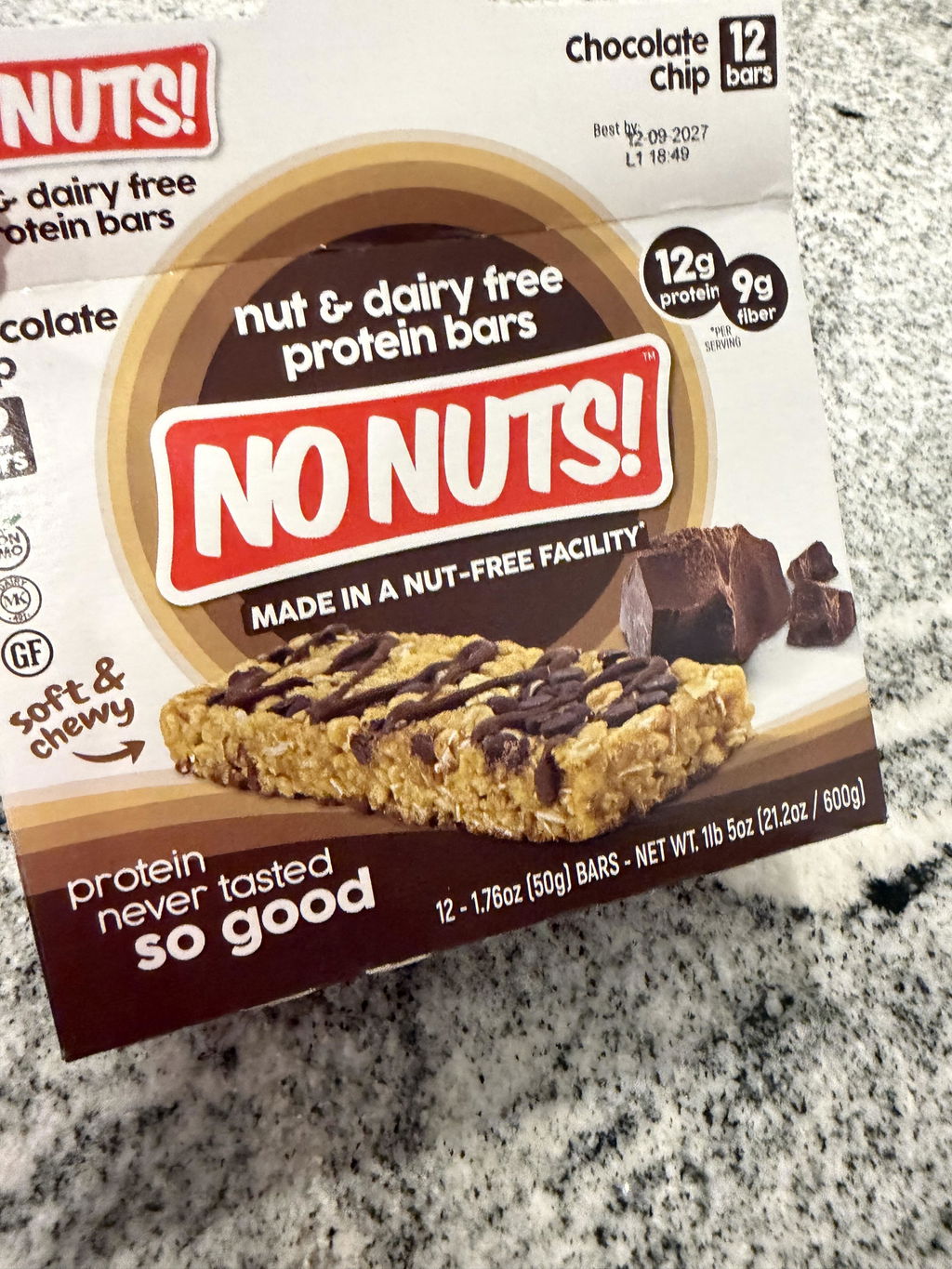
Take the No Nuts! Chocolate Chip Snack Bars as an example. On their product page, you’ll find a dedicated Ingredients section. There are no peanuts or tree nuts listed at all, and the bar is described as nut‑free, dairy‑free, egg‑free, vegan, kosher, and gluten‑free. That’s the combination of clear ingredient list and claims you want to see when evaluating a nut‑free snack.


It also helps to know the difference between main ingredients and minor add‑ins. Ingredients are listed in order of weight, so the first few make up the bulk of the bar. If you ever saw “peanuts” or “almonds” near the top of a list, you’d know immediately that product is unsafe. When you’re dealing with a trusted nut‑free brand, though, the absence of nuts in the list—combined with clear facility controls—gives you a much safer baseline.
3. Allergen Statements: “Contains,” “May Contain,” and Cross‑Contact Clues
Just below or near the ingredient list, you’ll often see an allergen statement starting with “Contains” or “May contain.” This is your second critical safety check. A product can be nut‑free in its recipe, yet still be risky if it’s made on shared lines with nut‑containing foods.
No Nuts! bars highlight that they are produced in a 100% nut‑free facility, which means there are no peanuts or tree nuts in the building—stripping away the main source of cross‑contact for nut allergies. However, some flavors, like Cinnamon Roll and Caramel Mocha, do contain soy protein, and that is clearly stated in the allergen information, so you can judge suitability if soy is also a concern.


When a package says “May contain peanuts or tree nuts,” it often means equipment or facilities are shared with nut‑containing products, and there is some risk of trace cross‑contact. For highly sensitive individuals, a pro approach is to avoid any product with that wording, and stick to brands that can state “100% nut‑free facility” and back it up with clear documentation and consistent labeling across flavors.
4. Comparing Nut‑Free Nutrition Facts: Protein, Fiber, and Calories
Once you’ve confirmed safety, nutrition is your next consideration. Nut‑free doesn’t have to mean low in protein or high in sugar. A smart label reader uses the Nutrition Facts panel to compare protein, fiber, sugar, and calories across different nut‑free options.
Most No Nuts! bars offer around 12g of protein and 9–10g of fiber, with roughly 180–190 calories per bar. For example, the Chocolate Chip, Cinnamon Roll, Blueberry & Vanilla, and Caramel Mocha bars all sit in this balanced range, letting you choose based on flavor and dietary needs without sacrificing macros.


| Flavor (No Nuts!) | Approx. Calories | Protein | Fiber | Nut Status |
|---|---|---|---|---|
| Chocolate Chip | ~190 | 12g | 9g | 100% nut‑free |
| Cinnamon Roll | ~190 | 12g | High | 100% nut‑free |
| Blueberry & Vanilla | ~180 | 12g | 10g | 100% nut‑free |
| Caramel Mocha | ~190 | 12g | 9g | 100% nut‑free |
Reading these panels side‑by‑side lets you choose a nut‑free bar that actually supports your goals—whether that’s higher protein for sports, more fiber for staying full, or lower calories for a lighter snack. It’s a small extra step that pays off in long‑term habit‑building and avoids equating “allergy‑safe” with “nutritionally weak.”
5. Understanding “Nut‑Free Facility” vs. “Nut‑Free Recipe”
One of the biggest label traps is assuming that a nut‑free recipe automatically means a nut‑free product. In reality, there are two separate questions: are nuts in the ingredients, and are nuts present anywhere in the facility? A pro label reader answers both before feeling safe.
No Nuts! makes this distinction easy by clearly stating that their bars are made in a 100% NUT‑FREE Facility. That phrase signals that neither peanuts nor tree nuts are used or stored in the production environment. It’s stronger than a “made on shared equipment” disclaimer and offers more reassurance for those with severe allergies or for schools with strict rules.


Pro tip: If a product only says “nut‑free recipe” but is made in a shared facility with nuts, that’s a red flag for anyone with a history of severe reactions. Always dig for explicit facility language.
When you shop, make a habit of separating these two ideas in your mind. First scan the ingredients for any nuts. Then, read all the way around the package for statements like “processed in a facility that also handles peanuts.” If you don’t see any facility statement at all, that’s a cue to check the brand’s website or contact them for more detailed allergen information.
6. Brand Deep‑Dive: No Nuts! Chocolate Chip & Cinnamon Roll Bars
No Nuts! Chocolate Chip Snack Bars
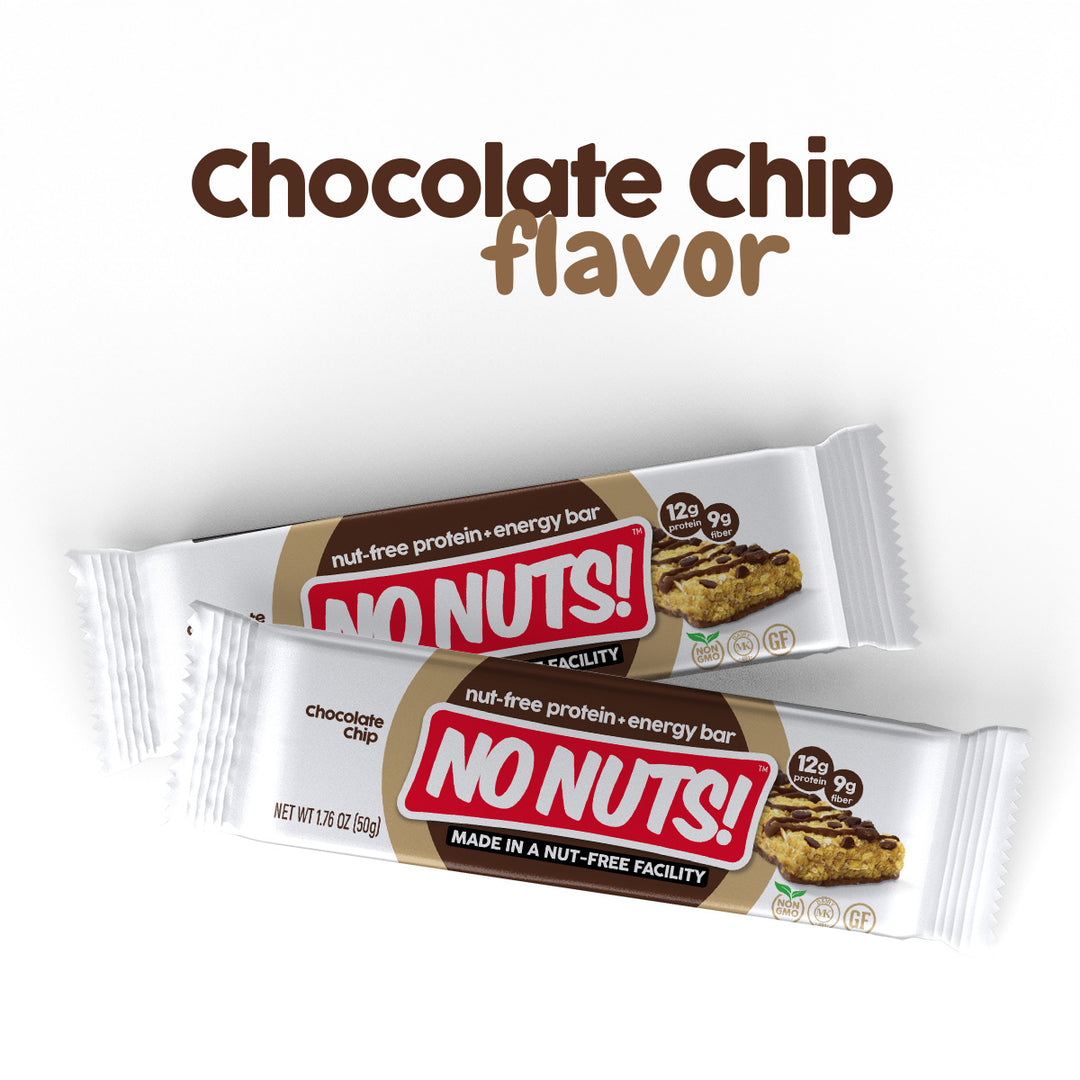
The No Nuts! Chocolate Chip Snack Bars show what clear, allergy‑aware labeling looks like. Each 12‑bar pack is priced at $32.99 (or $29.69 with Subscribe & Save), and every bar is nut‑free, dairy‑free, egg‑free, gluten‑free, vegan, non‑GMO, and kosher. The packaging highlights “nut‑free” prominently, backed up by ingredient and facility details that confirm there are no peanuts or tree nuts involved at any step.
The Nutrition Facts panel shows around 190 calories per bar with 12g of protein and 9g of fiber—proof that a nut‑free bar can still offer substantial protein and fiber. When you’re reading labels, this combination of strong allergen control and solid nutrition is exactly what you’re aiming to find.

No Nuts! Cinnamon Roll Snack Bars
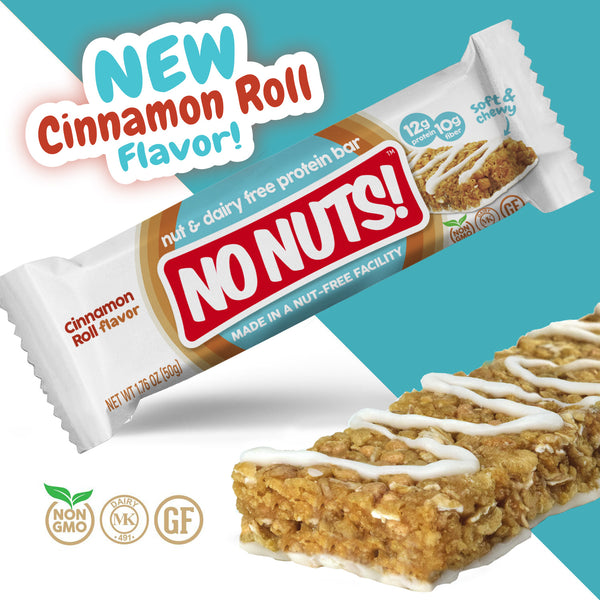
The Cinnamon Roll Snack Bars offer another clear example. Also priced at $32.99 for a 12‑bar box (or $29.69 on subscription), these bars are nut‑free, dairy‑free, egg‑free, gluten‑free, vegan, and non‑GMO. The label notes they are made in a 100% nut‑free facility and clearly lists soy protein in the ingredients, giving soy‑allergic shoppers the information they need.
From a label‑reading standpoint, Cinnamon Roll shows how flavors and inclusions can change while the allergy standards stay consistent. Every time you pick up a new flavor—even from the same brand—scan the full ingredient list and allergen statement. Good brands make it easy; you’re just doing your due diligence each time.


7. Fruity vs. Coffeehouse Flavors: Blueberry & Vanilla and Caramel Mocha
No Nuts! Blueberry & Vanilla Snack Bars
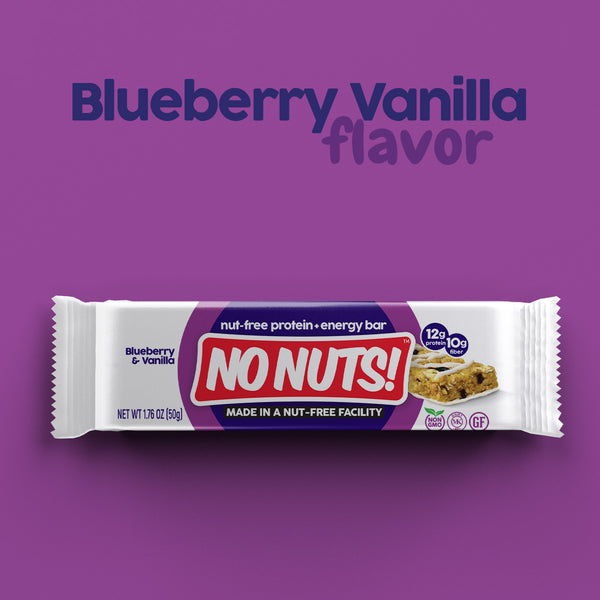
The Blueberry & Vanilla bars are a good example of how fruit flavors show up on labels. The front highlights “Nut Free” and the flavor description, while the back confirms that there are no peanuts or tree nuts in the ingredients and that the bars are made in a 100% nut‑free facility. At around 180 calories with 12g of protein and 10g of fiber, they are slightly lighter than some other flavors.
From a label‑reading standpoint, look for mentions of real blueberry components and check that no nut‑based oils or flavorings sneak into the mix. The clear breakdown of ingredients and nutrition here again helps you quickly confirm both safety and nutritional fit.

No Nuts! Chocolate Caramel Mocha Snack Bars
The Chocolate Caramel Mocha bars show how more complex dessert‑style flavors are still compatible with strict nut‑free standards. These bars pair caramel and mocha espresso notes with a chocolate base, yet the ingredients list remains free from peanuts and tree nuts. The product page emphasizes again: made in a 100% nut‑free facility, with allergen information flagging soy where relevant.
Nutritionally, these bars come in around 190 calories with 12g of protein and 9g of fiber, similar to the Chocolate Chip flavor. As you compare labels among flavors, you’ll see how a well‑structured nut‑free line can keep allergen, protein, and calorie profiles consistent while still offering variety in taste.


8. Variety Packs & Samplers: Reading Labels When Multiple Flavors Are in One Box
Variety packs and samplers can be confusing to read because multiple flavors share one outer package. The key is to confirm that every flavor listed on the box is made in the same nut‑free facility and follows the same allergen rules. Then, if needed, check flavor‑specific panels for additional allergens like soy or dairy substitutes.
The No Nuts! Variety Pack includes four flavors—Chocolate Chip, Cinnamon Roll, Blueberry & Vanilla, and Caramel Mocha—each one 100% nut‑free, dairy‑free, egg‑free, gluten‑free, vegan, and kosher. A 12‑bar variety pack is priced at $32.99 (or $29.69 via subscription), and the packaging features a clear nutrition facts panel and nut‑free statements for the entire assortment.


The No Nuts! 4‑Pack Sampler is another useful example for label reading. Priced at $14.99, it offers one bar of each of the four main flavors, all under the same nut‑free, gluten‑free, dairy‑free standard. When buying any mixed box from any brand, your pro move is to scan the box for a single, consistent nut‑free facility statement and then spot‑check individual flavor wrappers for matching allergen information.

9. Decoding Extra Claims: Gluten‑Free, Dairy‑Free, Vegan, and Non‑GMO
Nut‑free is just one piece of the puzzle. Many families juggling nut allergies are also watching dairy, eggs, or gluten. That’s where extra claims like “gluten‑free,” “dairy‑free,” “egg‑free,” “vegan,” and “non‑GMO” matter. A pro label reader confirms these claims against the ingredient list and any certification logos.
All No Nuts! snack bars are marketed as gluten‑free, dairy‑free, egg‑free, vegan, non‑GMO, and kosher, which you can verify across their flavor pages. That means you won’t find hidden milk powders, whey, or egg whites in the fine print—common places where non‑nut allergens often show up. Still, your habit should be to double‑check the ingredients for each new product or flavor, even within the same brand.


Remember that “vegan” and “dairy‑free” don’t automatically mean nut‑free, and “nut‑free” doesn’t automatically mean gluten‑free. Each claim addresses a separate concern. The safest routine is to read every part of the back panel: ingredient list, allergen statement, nutrition facts, and any additional certifications. Over time this becomes quick and almost automatic.
10. Price vs. Safety: Is a Dedicated Nut‑Free Brand Worth It?
Nut‑free products can sometimes cost more than conventional snacks, especially when they’re made in dedicated facilities with strict controls. A 12‑bar box of No Nuts! flavors like Chocolate Chip, Cinnamon Roll, Blueberry & Vanilla, or Caramel Mocha runs about $32.99, compared with some cheaper mainstream bars made in shared facilities that carry “may contain nuts” warnings.
For many families managing serious allergies, the premium reflects more than branding—it funds separate equipment, controlled sourcing, and extra testing. When you compare prices, factor in not only the cost per bar, but also the reassurance of a true 100% nut‑free facility. You’re not just buying calories and protein; you’re buying reduced risk and peace of mind.
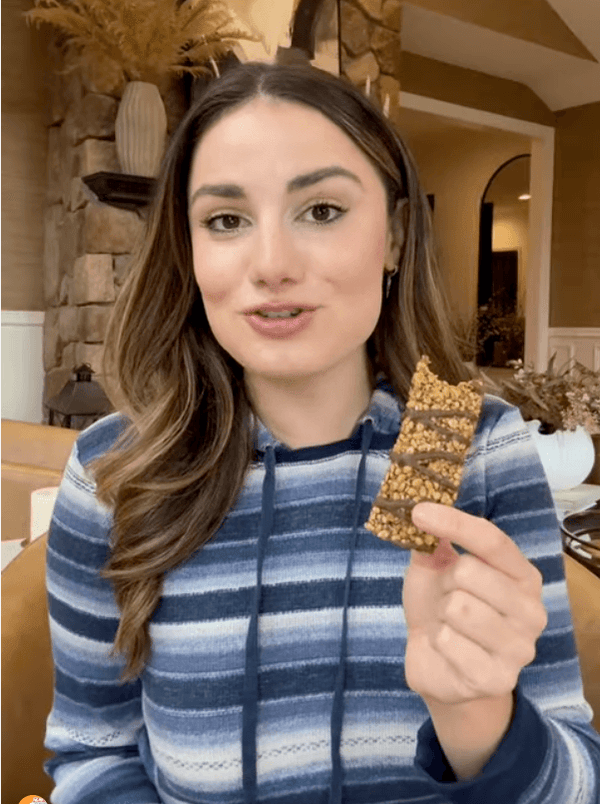
One way to test whether a dedicated nut‑free brand fits your budget and routine is to start with a sampler. With the No Nuts! 4‑Pack Sampler at $14.99, you can check label clarity, taste, and how your body responds before committing to a full 12‑bar case. That’s a practical, low‑risk strategy for integrating any new nut‑free product into your home or school snack rotation.
Conclusion
Reading nut‑free labels like a pro means going beyond bold front‑of‑box claims and digging into the details that actually keep you safe. You now know how to check the ingredient list for nuts, scan allergen statements for cross‑contact warnings, interpret “100% nut‑free facility,” compare nutrition facts, and verify extra claims like gluten‑free and dairy‑free.
Brands like No Nuts! show what good labeling looks like: clear nut‑free facility statements, consistent allergen info across flavors, and honest nutrition panels for options like Chocolate Chip, Cinnamon Roll, Blueberry & Vanilla, and Caramel Mocha. Armed with this checklist and a little practice, you can walk any snack aisle—physical or online—and quickly sort truly nut‑free products from risky maybes, giving you more confidence in every bite.