Cashew Allergy Symptoms: What They Are, How to Recognize Them, and What to Do Next
Jun 03, 2026
Cashew allergy symptoms affect millions of people worldwide, and the stakes are high: cashew allergy sufferers are 25.1 times more likely to experience severe symptoms like respiratory distress or collapse than peanut allergy sufferers. Whether you are newly diagnosed, managing a child's allergy, or simply trying to understand what reactions look like, knowing how to recognize and respond to cashew allergy symptoms can be lifesaving.
Key Takeaways
| Question | Quick Answer |
|---|---|
| What are the most common cashew allergy symptoms? | Hives, swelling, vomiting, stomach cramps, and in severe cases, anaphylaxis with breathing difficulty. |
| Can cashew allergy symptoms be life-threatening? | Yes. Cashew allergies can trigger anaphylaxis, which requires immediate epinephrine and emergency medical care. |
| How quickly do cashew allergy symptoms appear? | Symptoms typically appear within minutes to two hours of exposure. |
| Are cashews related to other tree nuts I should avoid? | Yes. Cashews are closely related to pistachios; many people with a cashew allergy react to both. |
| What nut-free snacks are safe for people with cashew allergies? | Look for certified nut-free bars and snacks made in dedicated nut-free facilities, like No Nuts! nut-free snacks. |
| Do children outgrow cashew allergy symptoms? | Rarely. Tree nut allergies, including cashew, are largely lifelong conditions. |
| What should I do when symptoms appear? | Use an epinephrine auto-injector if available and call emergency services immediately for any severe reaction. |
Understanding Cashew Allergy Symptoms: The Basics
A cashew allergy is an immune system response to proteins found in cashew nuts. When someone with this allergy eats cashews, touches them, or sometimes even inhales particles, their immune system triggers a reaction.
Cashew allergy symptoms can range from mild skin irritation to full-body anaphylaxis. Understanding the full spectrum of reactions is the first step in protecting yourself or someone you love.
If you manage a cashew allergy, switching to nut-free snacks and being vigilant about cross-contamination is critical for daily safety. Many people find that stocking reliable dairy-free, nut-free bars and snacks helps them avoid risky situations entirely.
This infographic highlights four common cashew allergy symptoms to help readers recognize reactions early.
The 4 Most Common Cashew Allergy Symptoms
Cashew allergy symptoms most commonly fall into four main categories. Each one can appear on its own or alongside other reactions.
1. Skin Reactions (Hives and Swelling)
Hives (urticaria) are one of the most recognizable cashew allergy symptoms. They appear as raised, red, itchy welts on the skin that can develop anywhere on the body.
Swelling (angioedema) often accompanies hives, particularly around the lips, face, tongue, and throat. Throat swelling is especially dangerous because it can restrict the airway.
2. Gastrointestinal Distress
Stomach pain, cramping, nausea, vomiting, and diarrhea are very common cashew allergy symptoms. These reactions often occur within 30 minutes to two hours of eating cashews.
GI symptoms can be mistaken for food poisoning or a stomach bug, which is why knowing a person's history is so important for accurate diagnosis.
3. Respiratory Symptoms
Wheezing, shortness of breath, nasal congestion, and a runny nose are frequent cashew allergy symptoms affecting the respiratory system. These can escalate quickly and become part of a more severe anaphylactic reaction.
Any difficulty breathing after cashew exposure should be treated as a medical emergency.
4. Oral Allergy Syndrome (Mouth Tingling)
Some people experience tingling, itching, or mild swelling in the mouth or lips immediately after eating cashews. This is known as oral allergy syndrome and is often an early warning sign of cashew allergy symptoms.
While oral allergy syndrome can be mild, it should never be ignored, as it may escalate into more severe reactions over time.
Severe Cashew Allergy Symptoms: Recognizing Anaphylaxis
Anaphylaxis is the most dangerous form of cashew allergy symptoms and requires immediate medical attention. It can develop within seconds or minutes of exposure.
Signs of anaphylaxis include:
- Severe drop in blood pressure
- Loss of consciousness or collapse
- Severe throat swelling cutting off the airway
- Rapid or weak pulse
- Skin turning pale or blue
- Dizziness or confusion
- Vomiting combined with difficulty breathing
If any of these symptoms occur, use an epinephrine auto-injector immediately and call emergency services. Do not wait to see if symptoms improve on their own.
This data makes clear that most people around someone experiencing severe cashew allergy symptoms are not prepared to act. Carrying and knowing how to use an epinephrine auto-injector is non-negotiable for anyone with a confirmed cashew allergy.
Cashew Allergy Symptoms in Children
Children are particularly vulnerable to cashew allergy symptoms because they may not be able to communicate what they are feeling. Parents and caregivers need to watch for behavioral and physical signs that something is wrong.
In young children, cashew allergy symptoms can look like:
- Sudden crying or unusual irritability after eating
- Rubbing the face, eyes, or mouth repeatedly
- Sudden vomiting without obvious cause
- Skin flushing or the sudden appearance of hives
- Refusing food after a first bite
School environments are especially high-risk settings. Many parents and schools now rely on nut-free snack options to reduce the risk of accidental exposure. Our school-safe nut-free variety pack is designed specifically for this purpose, offering a reliable option for lunchboxes and classroom parties.
For a deeper guide on navigating these challenges, our article on childhood nut allergy management for parents covers expert guidance in detail.
How Cashew Allergy Symptoms Compare to Other Tree Nut Allergies
Cashew allergy symptoms tend to be more severe than those associated with many other tree nuts. The proteins in cashews (Ana o 1, Ana o 2, and Ana o 3) are potent allergens capable of triggering intense immune responses even in very small amounts.
Cashews are botanically related to pistachios, so cross-reactivity is common. Many people who experience cashew allergy symptoms will also react to pistachios without ever having eaten them before.
Unlike milk or egg allergies, which children often outgrow, cashew and other tree nut allergies tend to persist throughout life. Understanding this helps set realistic expectations for long-term management, which includes consistently choosing nut-free foods and snacks.
To understand how to spot hidden cashews in food products, we recommend reading our guide on how to read food labels and identify hidden nuts.
Is a Cashew Allergy Lifelong? What the Data Shows
One of the most important questions people ask after being diagnosed is whether cashew allergy symptoms will ever go away. The current research is sobering.
In follow-up studies, only 14% of children passed a cashew re-challenge after 3 years, confirming that cashew allergy symptoms rarely resolve on their own. This means that most individuals will need to manage their allergy for the rest of their lives.
This makes consistent avoidance strategies and access to safe food options more important than ever. Building habits around trusted nut-free brands and certified safe facilities is essential for long-term wellbeing.
Managing Cashew Allergy Symptoms Day to Day
Managing cashew allergy symptoms requires a combination of avoidance, preparedness, and education. Here is what we recommend for day-to-day management:
- Always carry epinephrine. Anyone with a known cashew allergy should have an epinephrine auto-injector accessible at all times.
- Read every food label. Cashews can appear in unexpected products, including sauces, dairy-free cheeses, and baked goods.
- Ask about preparation methods when eating out. Cross-contamination in kitchens is a common trigger for cashew allergy symptoms.
- Inform schools, workplaces, and caregivers. Everyone who spends time with someone who has a cashew allergy should know the signs and how to respond.
- Choose certified nut-free products. When buying packaged snacks and bars, look for products made in dedicated nut-free facilities to eliminate cross-contact risk.
Our complete overview of nut allergy essentials after diagnosis is a helpful resource for anyone building their management plan from the ground up.
Best Nut-Free, Dairy-Free Snacks and Bars for People With Cashew Allergies
Finding snacks that are genuinely safe when managing cashew allergy symptoms is one of the biggest daily challenges. "May contain nuts" labels, shared facilities, and unclear ingredient lists create constant uncertainty.
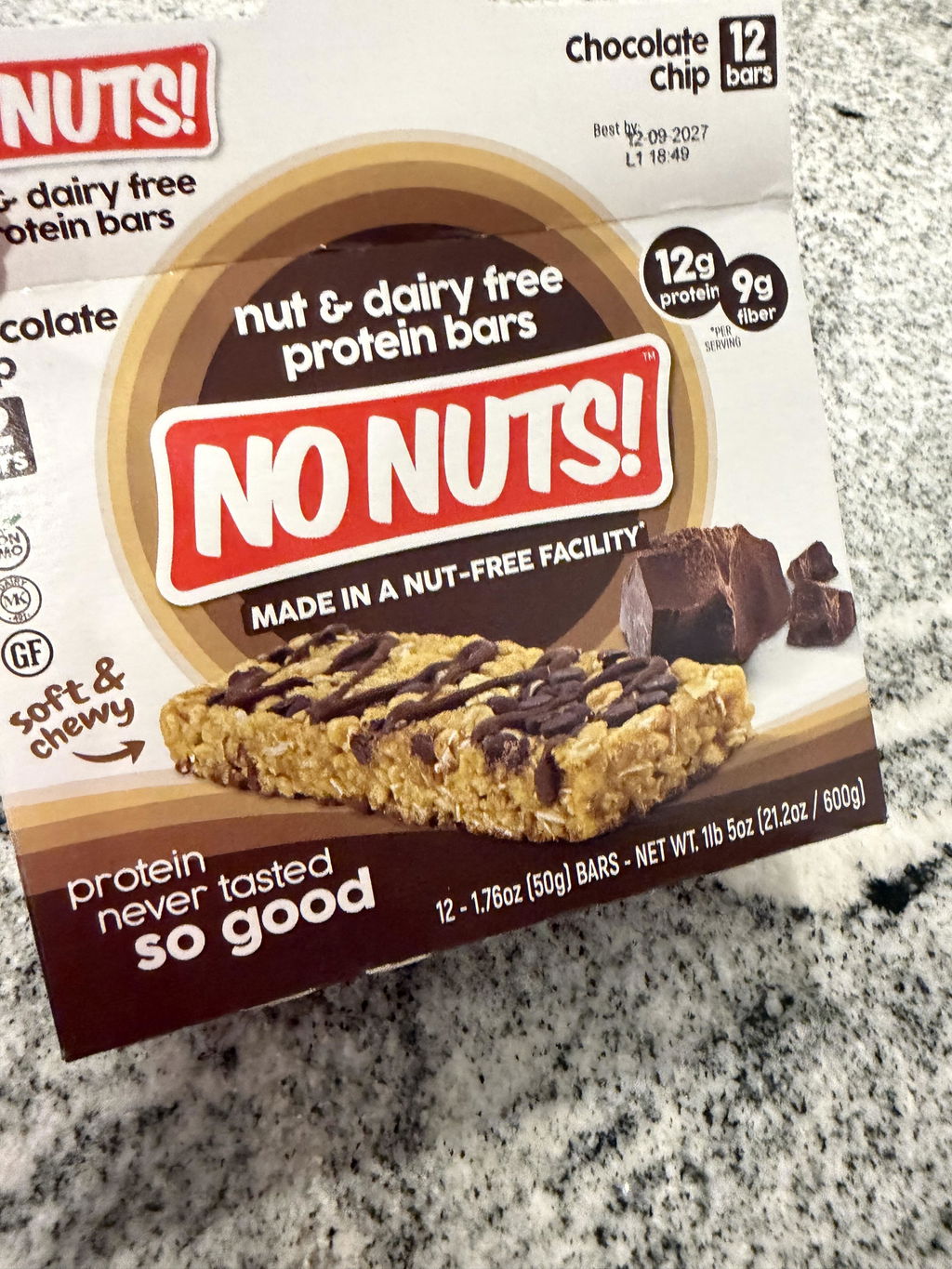
We make all of our No Nuts! bars in a 100% certified nut-free facility with no peanuts or tree nuts ever present. Every bar is also dairy-free, gluten-free, and school-safe, making them suitable for the widest range of dietary needs.
Here is a look at our current lineup of nut-free bars and snacks:
| Product | Protein | Price (12-Pack) | Key Features |
|---|---|---|---|
| No Nuts! Chocolate Chip | 12g | $32.99 | Nut-free, dairy-free, gluten-free, school-safe |
| No Nuts! Blueberry Vanilla | 12g | $32.99 | Nut-free, dairy-free, gluten-free, school-safe |
| No Nuts! Caramel Mocha | 12g | $32.99 | Nut-free, dairy-free, gluten-free, school-safe |
| No Nuts! Cinnamon Roll | 12g | $32.99 | Nut-free, dairy-free, gluten-free, school-safe |
| No Nuts! Variety Pack (12-pack) | 12g | $32.99 | All flavors, nut-free facility, school-safe |
| No Nuts! 4-Pack Sampler | 12g | $12.99 | Try all flavors, nut-free, perfect starter |
All of these bars are certified nut-free and dairy-free, which makes them a genuinely safe choice for anyone managing cashew allergy symptoms in themselves or their family. You can browse the full range on our nut-free snack bars collection page.
For schools, camps, or organizations needing larger quantities, we also offer wholesale cases of 72 bars starting at $197.94. Visit our wholesale page to learn more about bulk ordering options.
When to See a Doctor About Cashew Allergy Symptoms
You should see an allergist if you or your child has experienced any reaction after eating cashews, even a mild one. Cashew allergy symptoms can worsen with repeated exposure, and what starts as a mild rash can become a life-threatening reaction over time.
An allergist can confirm the diagnosis through skin prick tests or blood tests measuring cashew-specific IgE antibodies. They can also help you create an emergency action plan and prescribe the correct dose of epinephrine for your body weight.
Do not attempt to self-diagnose or test reactions at home by eating cashews again. Always work with a qualified medical professional when managing cashew allergy symptoms.
For any product-specific questions or to learn more about our ingredients, visit our ingredients page or check out our FAQ page for detailed information.
Conclusion
Cashew allergy symptoms are serious, wide-ranging, and in many cases lifelong. From hives and vomiting to life-threatening anaphylaxis, knowing what to look for and how to respond makes an enormous difference in outcomes.
The key to living well with cashew allergy symptoms is consistent avoidance, proper emergency preparedness, and reliable access to safe food. Choosing nut-free, dairy-free snacks and bars made in certified nut-free facilities removes one of the biggest daily risks for people with cashew allergies.
We built No Nuts! specifically for people who need to eat without fear. Every bar we make is produced in a 100% nut-free facility, so you never have to second-guess what is in your snack. Browse our full range of nut-free snacks and start snacking with confidence today.
Frequently Asked Questions
What are the first signs of a cashew allergy?
The first cashew allergy symptoms are often tingling or itching in the mouth, followed quickly by hives, swelling, stomach cramps, or vomiting. In some people, respiratory symptoms like wheezing appear within the first few minutes of exposure.
Can cashew allergy symptoms appear hours after eating?
Most cashew allergy symptoms appear within 30 minutes to two hours of exposure. In rare cases, a delayed reaction called a late-phase allergic response can occur 4 to 8 hours later, though immediate reactions are far more common and typically more severe.
Is cashew allergy the same as a tree nut allergy?
Cashews are classified as tree nuts, so a cashew allergy is a specific type of tree nut allergy. Many people with cashew allergy symptoms are also reactive to pistachios due to shared proteins, and some may react to other tree nuts as well.
How do I know if a snack bar is safe for someone with cashew allergy symptoms?
Look for bars that are certified nut-free and manufactured in a dedicated nut-free facility to eliminate cross-contact risk. "Dairy-free" and "gluten-free" labels are a bonus, but the most critical certification for cashew allergy sufferers is confirmed nut-free manufacturing.
Can you develop cashew allergy symptoms as an adult even if you ate cashews before?
Yes, adults can develop cashew allergy symptoms at any age even without a prior reaction. Food allergies can develop after years of tolerance, which is why any new reaction to cashews should be evaluated by an allergist regardless of your history.
Are cashew allergy symptoms worse than peanut allergy symptoms?
Research published in 2026 indicates that cashew allergy sufferers are significantly more likely to experience severe systemic symptoms than peanut allergy sufferers, making cashew allergies particularly dangerous among tree nut and legume allergies overall.
What should I keep in my child's school bag if they have cashew allergy symptoms?
Children with cashew allergy symptoms should always have a prescribed epinephrine auto-injector, an antihistamine for mild reactions, a written emergency action plan, and a supply of safe nut-free snacks to avoid any risk of accidentally eating something that contains cashews.