Are Oats Nut-Free? Understanding Oats, Snacks, and Safe Bars for Sensitive Diets
Jul 17, 2026
Are oats nut-free? The honest answer is: not always, and that surprises a lot of shoppers. ConsumerLab once tested a popular oat product and found gluten contamination levels near 700 parts per million, a number that is 35 times higher than the FDA's 20 ppm threshold for "gluten-free" labeling, and it shows just how unpredictable shared-facility processing can be for oats in general.
That same unpredictability applies to nut cross-contact. If you or your family are managing a peanut or tree nut allergy alongside a dairy-free diet, understanding oats matters just as much as understanding the label on the bag.
Key Takeaways
- Oats themselves contain no nuts, but many are processed in facilities that also handle peanuts or tree nuts.
- Are oats nut-free? Only if they're grown, harvested, and packaged in a dedicated nut-free facility.
- "Gluten-free" and "nut-free" are two separate claims; a bag can be one without being the other.
- Reading the allergen statement is more reliable than reading the ingredient list alone. See our guide on how to read nut-free labels like a pro.
- Nut-free snack bars made from oats can also be dairy-free, making them a solid option for school lunches and shared classrooms.
- Certified nut-free bars go through third-party verification, which is different from a simple "may contain" disclaimer.
- Demand for allergy-friendly oat snacks and bars continues to grow through 2026 as more families look for school-safe options.
Are Oats Nut-Free? The Short Answer Explained
Oats, in their raw agricultural form, do not contain nuts. Oats are a grain, harvested from the plant Avena sativa, and they share no botanical relationship with peanuts or tree nuts.
So why does the question "are oats nut-free" come up so often? The issue isn't the oat itself. It's what happens to the oat between the field and your pantry.
Many large processing facilities handle multiple crops, including nuts, on the same equipment. Without dedicated lines or rigorous cleaning protocols, trace amounts of nut protein can end up in a bag of oats that never touched a nut plant.
Understanding Oats: How Cross-Contamination Happens
Understanding oats means understanding the supply chain behind them. Oats are typically grown in rotation with wheat, barley, and other grains, and they're often trucked, stored, and milled using shared equipment.
This is why a product can be labeled "oats" with no nut ingredient listed, yet still carry a "may contain tree nuts" warning. The warning reflects the facility's history, not the recipe.
Cross-contamination is a serious risk for allergy sufferers when oats aren't grown in dedicated facilities.
Cross-contact isn't limited to nuts. It affects gluten as well, and the same facility risks apply across both categories.
The takeaway: growing conditions, harvest equipment, and processing facilities all play a role in whether a batch of oats stays truly nut-free or gluten-free from year to year.
Are Oats Nut-Free? Reading Labels the Right Way
The label is your best tool, but only if you know what to look for. A clean ingredient list doesn't guarantee a nut-free product.
Look specifically for statements like "produced in a dedicated nut-free facility" or "certified nut-free," rather than relying on the absence of nut words in the ingredients themselves.
- Ingredient list: confirms what's intentionally added.
- Allergen statement: confirms what else runs through the same facility.
- Certification seals: confirm third-party verification, not just a manufacturer's claim.
We break this down step-by-step in our article on reading nut-free labels with confidence, which is worth a bookmark if you shop for a nut allergy household.
No Nuts! Nut-Free and Dairy-Free Snack Bars Made With Oats
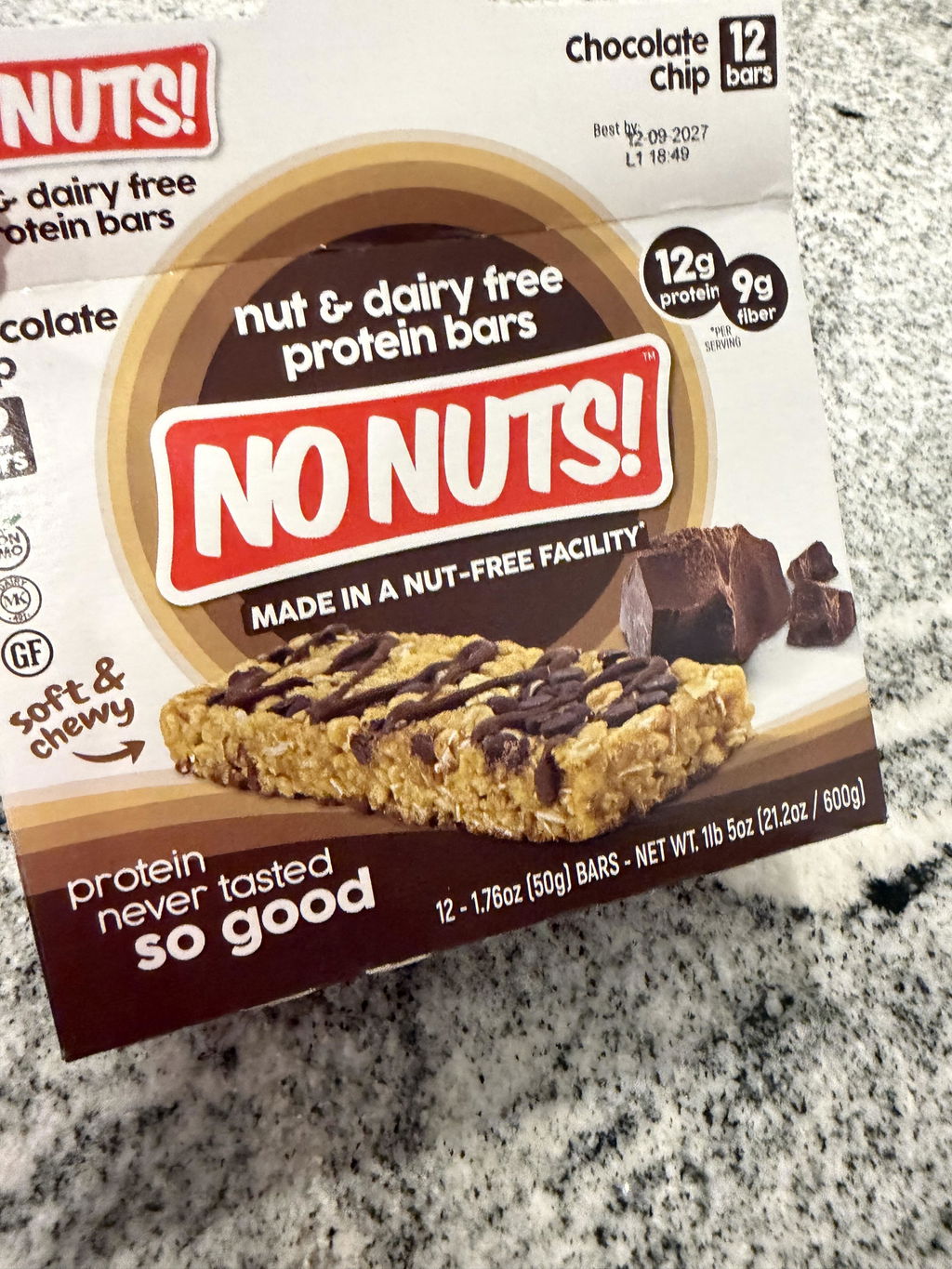
This is exactly the gap we set out to fill. Our oat-based bars are made in a dedicated nut-free facility, so there's no guessing game at the grocery store or in the lunchbox.
Every flavor we make is also dairy-free, which means one bar covers two of the most common allergy concerns families deal with at school and at home.
Our lineup includes Chocolate Chip, Cinnamon Roll, Blueberry & Vanilla, and Chocolate Caramel Mocha, each built around oats as the base ingredient rather than nut butters or nut flours.
For families who want to sample everything before committing to a full case, the No Nuts! variety pack lineup lets you try all four flavors in one box.
Are Oat-Based Bars Safe for Nut Allergies?
Oat-based snack bars can be a great option for nut allergies, but only when the manufacturer controls the entire production environment. A bar made with clean, uncontaminated oats and produced without nuts anywhere in the building is a very different product from a mainstream granola bar that shares a factory line with almonds or cashews.
This is why we manufacture our bars in a facility that is 100% free of peanuts and tree nuts. Every batch is made without exposure to the eight major allergens most commonly found in mainstream snacks, so parents packing lunches don't have to cross their fingers.
Snacks and bars marketed as "nut-free" should always specify whether that claim covers the ingredients only, or the entire facility. The difference matters more than the label size suggests.
If you're new to shopping for allergy-safe snacks, our piece on No Nuts notes and real customer experiences covers what families are actually finding when they switch to dedicated nut-free bars.
Oats vs Other Snack Bases: A Nut-Free Comparison
Not every snack base offers the same level of protection for a nut allergy household. Here's how oats stack up against other common bar ingredients.
| Base Ingredient | Naturally Nut-Free? | Common Cross-Contact Risk | Dairy-Free Friendly? |
|---|---|---|---|
| Oats (dedicated facility) | Yes | Low, when facility-controlled | Yes |
| Oats (shared facility) | Ingredient yes, product uncertain | High | Depends on facility |
| Granola with nut butter | No | N/A, nuts are an ingredient | Often no |
| Almond or cashew flour bars | No | N/A | Sometimes |
| Seed-based bars (sunflower, pumpkin) | Yes | Moderate, seeds share lines with nuts too | Usually yes |
Oats processed in a dedicated nut-free facility come out on top for families who need both nut-free and dairy-free assurance in the same snack.
Choosing the Best Nut-Free, Dairy-Free Bars for 2026
Demand for allergy-safe oat snacks keeps growing heading into 2026, as more parents look past generic granola bars toward products built specifically for nut allergy households.
When comparing bars, it helps to check three things every time: the facility statement, the certification, and whether the product is also free of dairy if that's a concern in your household.
That statistic is about gluten, but it underscores a broader point: oats need dedicated handling to stay reliably safe, whether the concern is gluten or nuts.
Bars like our Cinnamon Roll and Blueberry & Vanilla flavors were built with this in mind, offering the same nut-free, dairy-free guarantee across every flavor in the lineup.
Conclusion: Are Oats Nut-Free, and Which Bars Should You Choose?
So, are oats nut-free? Oats are nut-free by nature, but the final product is only as safe as the facility it comes from.
Understanding oats means looking past the ingredient list and checking whether the manufacturer controls for nut cross-contact, gluten contact, and dairy exposure all at once. That's the standard we hold our own snacks and bars to, and it's the standard we'd recommend you look for no matter which brand ends up in your pantry.
Frequently Asked Questions
Are oats nut-free by default?
Yes, oats are botanically nut-free since they're a grain and unrelated to peanuts or tree nuts. The risk comes from processing, not the oat itself, so always check whether a product was made in a dedicated nut-free facility.
Can oats be both nut-free and dairy-free?
Yes, oats can absolutely be both nut-free and dairy-free at the same time. Our No Nuts! bars, for example, are made without any of the eight major allergens, including dairy and nuts, in every flavor we sell.
Why do some oat products say "may contain tree nuts" if there are no nuts in the ingredients?
That warning reflects the shared equipment or facility history, not the recipe itself. It's a precaution manufacturers add when their oats are processed alongside nuts, even if none end up in the final ingredient list.
Are gluten-free oats the same as nut-free oats?
No, these are two separate claims that address different allergens. A bag of oats can be certified gluten-free while still being processed in a facility that handles nuts, so it's worth checking both statements separately.
What should I look for on a label to confirm a snack bar is truly nut-free?
Look for a facility statement confirming the product was made without any nut exposure, plus a third-party certification if one is available. Our guide on reading nut-free labels breaks down exactly what to check before you buy.
Are nut-free oat bars a good school snack option in 2026?
Yes, nut-free oat bars remain one of the safest snack and bar choices for classrooms in 2026, especially as more schools enforce nut-free policies. Bars made in dedicated nut-free, dairy-free facilities give parents a reliable option without needing to read every label from scratch.
Do all oat-based snacks and bars carry the same cross-contamination risk?
No, the risk varies significantly depending on where and how the oats were processed. Snacks and bars made in shared facilities carry higher risk than those made in a facility that never handles nuts at all.