What Is Cross-Contamination? How Nut Allergies Can Be Triggered (And How to Stay Safe)
Oct 30, 2026
Understanding what cross-contamination is and how nut allergies can be triggered by it could genuinely save a life. Undeclared allergens are a leading cause of food recalls, according to the FDA, meaning cross-contamination is not just a kitchen inconvenience but a serious, documented public health issue. For anyone managing a nut allergy, whether for themselves, a child, or someone in their care, knowing the difference between direct exposure and hidden cross-contact is the foundation of staying safe.
Key Takeaways
| Question | Answer |
|---|---|
| What is cross-contamination with nut allergies? | It is the unintended transfer of nut proteins onto a food or surface that is supposed to be nut-free, often through shared equipment, utensils, or airborne particles. |
| Can trace amounts of nuts trigger a reaction? | Yes. Even microscopic nut proteins can trigger severe allergic reactions, including anaphylaxis, in highly sensitive individuals. |
| What does "may contain nuts" mean on a label? | It is a precautionary allergen label warning that the product was made in a facility or on equipment also used with nuts, meaning cross-contact is possible. |
| What snacks are truly safe for nut allergies? | Products made in a dedicated nut-free facility offer strong protection because the risk of cross-contact is greatly reduced at the source. |
| Where does cross-contamination most commonly happen? | In restaurant kitchens, shared home cooking surfaces, food manufacturing lines, and bulk food bins at grocery stores. |
| Are dairy-free and nut-free often paired together? | Yes. Many people managing multiple food allergies look for products that are both nut-free and dairy-free, since both allergens are common in snack and bar formulations. |
| How do nut-free bars help manage cross-contamination risk? | Nut-free bars made in dedicated facilities remove the possibility of shared equipment exposure, making them a reliable option for school lunches, travel, and daily snacking. |
What Is Cross-Contamination and Why Does It Matter for Nut Allergies?
Cross-contamination, in the context of food allergies, refers to the unintended transfer of an allergen from one food or surface to another. The FDA defines cross-contact as the unintended incorporation of an allergen into food, which can happen through shared equipment, ineffective cleaning, or even dust and airborne particles.
For people with nut allergies, this is a daily reality. A food does not need to have nuts listed as an ingredient to cause a reaction. The protein from a peanut or tree nut can transfer invisibly during manufacturing, preparation, or even packaging.
This is precisely why the distinction between "nut-free ingredients" and "made in a nut-free facility" matters so much. A product can have no nuts in its recipe but still contain nut proteins if it was produced on shared equipment.
The Most Common Sources of Cross-Contamination for Nut Allergies
Cross-contamination with nut allergens can happen at almost every step in the food chain. Knowing where it occurs helps you identify the highest-risk scenarios in your daily routine.
- Shared manufacturing equipment: A production line that processes nut-containing products and then switches to a different snack without thorough cleaning can leave behind residual nut proteins.
- Restaurant kitchens: Shared cooking oil, utensils, fryers, cutting boards, and grills are all common transfer points. A chef who handles a peanut sauce and then prepares another dish without washing their hands introduces risk immediately.
- Bulk food bins: Grocery store bulk sections where customers scoop their own items are high risk because scoops and bins are frequently shared between different foods, including nuts and nut-free options.
- Home kitchens: Countertops, mixing bowls, baking trays, and knives that have been used with nuts and not cleaned properly can transfer allergens to the next food prepared on them.
- Airborne particles: In environments where nuts are heavily used, such as bakeries or snack facilities, fine particles can become airborne and settle on other foods or surfaces.
- Packaging and transport: Nuts stored near other food items during transport or in warehouse settings can transfer proteins through packaging contact or leaks.
Understanding these pathways makes it clear why choosing nut-free snack bars made in a dedicated facility is not overcaution but a genuinely protective choice.

Discover how cross-contamination can trigger nut allergies. Learn practical steps to prevent it in your kitchen and while dining out.
How Nut Allergies Are Triggered by Cross-Contamination: The Biology
A nut allergy is an immune system response to specific proteins found in tree nuts or peanuts. When the immune system identifies these proteins as threats, it releases chemicals such as histamine that cause allergic symptoms.
The critical point is that the immune system does not need a large dose to react. For highly sensitive individuals, exposure to just a few milligrams, or even micrograms, of nut protein is enough to trigger a reaction. Cross-contamination delivers exactly this kind of low-level, invisible exposure.
Symptoms can range from mild itching and hives to severe anaphylaxis, which involves throat swelling, difficulty breathing, and a dangerous drop in blood pressure. The fact that cross-contact can cause the same reaction as direct ingestion is why it must be treated with the same seriousness.

Reading Labels: What Cross-Contamination Warnings Actually Mean
Food labels carry specific language to communicate cross-contact risk, but this language is often misunderstood. Knowing what each phrase means helps you make informed choices when shopping for nut-free snacks.
- "May contain nuts" or "may contain traces of nuts": This is a precautionary allergen label. It means the product was made in a facility or on equipment that also processes nuts, and cross-contact is possible even if nuts are not in the recipe.
- "Produced in a facility that also processes nuts": The same warning, stated differently. The entire facility handles nuts, raising the risk of airborne particles and shared surface contamination.
- "Made on shared equipment with nut products": This is a narrower warning. The manufacturing line is shared but other parts of the facility may not be. Risk is lower than a facility-wide warning but still present.
- "Made in a nut-free facility": Nuts aren't processed in the building. This greatly reduces the risk of cross-contact at the manufacturing level and is the strongest label claim for nut allergies.
The FDA notes that precautionary allergen labeling exists specifically to alert consumers about possible presence due to cross-contact. However, these labels are voluntary, which means not every manufacturer uses them consistently. This makes the "nut-free facility" claim the most reliable marker to look for.
For people shopping for nut-free, dairy-free snacks for school lunches or everyday use, verifying the facility status is as important as checking the ingredient list.
Cross-Contamination in Restaurants: A Real and Ongoing Risk
Dining out is one of the highest-risk scenarios for people with nut allergies. Restaurant kitchens are fast-moving, high-pressure environments where allergen protocols can easily break down.
Common restaurant cross-contamination scenarios include shared cooking oil used for both nut-coated items and other dishes, garnishes added at the last moment that contain nuts, kitchen staff handling nuts and then preparing other items, and sauces or marinades made from shared batches that include nut-based ingredients.
Even when a customer clearly communicates their nut allergy to a server, that information does not always reach every person who touches their food. The training gap among food service workers, as reflected in CDC data, is a real structural problem that affects how reliably allergen protocols are followed.
When eating out is unavoidable, choosing a restaurant with dedicated allergen protocols and always communicating your allergy clearly and repeatedly throughout the meal process remains essential.
Cross-Contamination in the Home Kitchen: What You Need to Know
Home kitchens are often overlooked as a source of cross-contamination, but they carry significant risk when one household member has a nut allergy and others do not. Even thoroughly cleaned surfaces can harbor residual allergen if the right cleaning method is not used.
Studies have shown that wiping surfaces with water alone does not adequately remove peanut protein. Soap and water is far more effective, though the FDA notes that even commercial cleaning methods vary in their effectiveness for allergen removal.
Practical home kitchen steps to reduce cross-contamination risk:
- Designate separate cutting boards, utensils, and mixing bowls for nut-free food preparation.
- Store nut products in sealed containers away from nut-free items.
- Wash hands thoroughly with soap and water after handling any nut product before touching other foods or surfaces.
- Clean surfaces with soap and water, not just a dry wipe, before preparing nut-free meals.
- Consider maintaining a fully nut-free kitchen if someone in the household has a severe allergy.
For households managing multiple food allergies, keeping a stock of reliable nut-free variety pack bars that are also dairy-free reduces the daily burden of checking every snack label before it goes into a lunchbox.
Why "Nut-Free Facility" Bars Are the Safest Snack Choice for Allergy Management
When it comes to packaged snacks, the strongest protection against cross-contact comes from products made in a nut-free facility. Nuts aren't processed in the building, which greatly reduces the risk of shared equipment contamination, airborne particles, or cross-contact from facility-wide production runs.
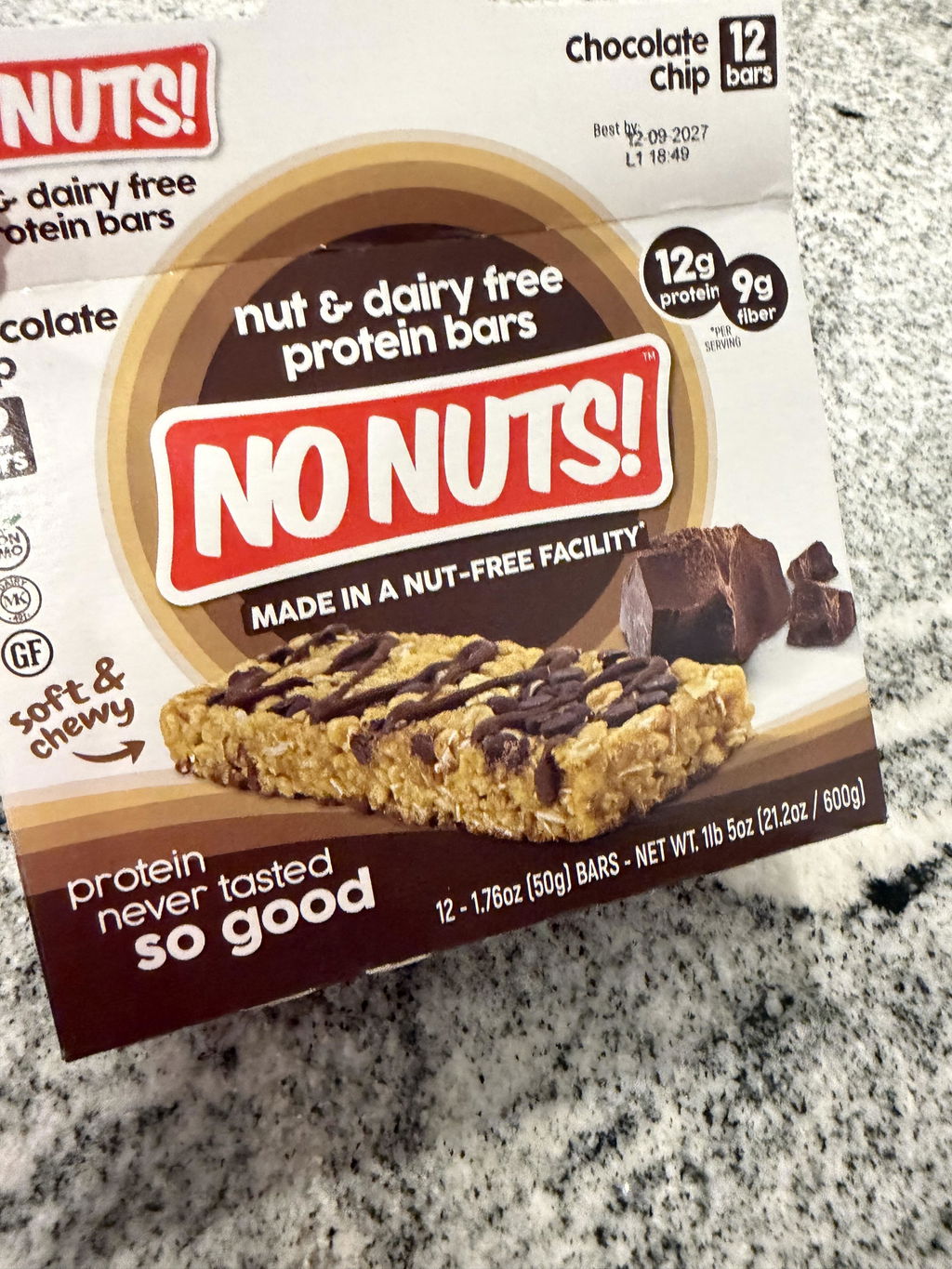
No Nuts! bars are produced in exactly this kind of environment. Every flavor, including the Chocolate Chip, Blueberry Vanilla, Caramel Mocha, and Cinnamon Roll, is made without nuts in the ingredients and in a dedicated nut-free facility.
Each bar also delivers 12 grams of protein and 9 to 10 grams of fiber, and every product is both nut-free and dairy-free, as well as gluten-free. This combination makes them a practical choice for parents packing lunches, individuals managing multiple food allergies, and schools with strict nut-free policies.
| Flavor | Protein | Dairy-Free | Gluten-Free |
|---|---|---|---|
| Chocolate Chip | 12g | Yes | Yes |
| Blueberry Vanilla | 12g | Yes | Yes |
| Caramel Mocha | 12g | Yes | Yes |
| Cinnamon Roll | 12g | Yes | Yes |
For schools, camps, and organizations needing bulk quantities, wholesale 72-pack options are available for each flavor, making it cost-effective to keep nut-free, dairy-free bars on hand in large quantities.
Cross-Contamination in Schools: Why Nut-Free Snacks and Bars Matter Most
Schools are one of the most important environments to get allergen safety right. Children with nut allergies face cross-contamination risk not just from food but from shared surfaces like desks, shared art supplies, and cafeteria tables where other children eat nut-containing foods.
Many schools now maintain nut-free classroom or cafeteria policies, and parents of children with allergies often need to provide snacks that comply with these rules. The challenge is finding snacks that are genuinely safe, not just marketed as "natural" or "healthy" while still carrying cross-contact risk from shared production lines.
Nut-free bars made in dedicated nut-free facilities take much of the guesswork out of school snack choices. When a product carries a genuine nut-free facility claim alongside being dairy-free and gluten-free, it's an easier pick for parents, who should still check the label each time they buy.
How to Choose Genuinely Nut-Free Snacks and Bars in 2026
In 2026, the market for allergy-friendly snacks has grown significantly, but the volume of products claiming to be "free from" certain allergens has also created confusion about which claims are actually meaningful.
Here is a practical framework for evaluating whether a snack is genuinely safe from nut cross-contamination:
- Look for "made in a nut-free facility", not just "nut-free ingredients." The facility claim is the meaningful one.
- Check for precautionary allergen labels like "may contain" or "produced on shared equipment." If present, the product carries cross-contact risk.
- Verify dairy-free status separately if managing multiple allergies. Many nut-free bars still contain dairy, which is a problem for those with multiple food sensitivities.
- Consider the full allergen profile of the product, including gluten, soy, and egg, especially for children with multiple diagnosed allergies.
- Check brand transparency on their website. Brands that clearly explain their facility protocols and ingredient sourcing are more trustworthy than those with vague "free from" marketing language.
We recommend reading the full ingredient and facility information for any bar you are considering for regular use by someone with a nut allergy.
Practical Steps to Prevent Cross-Contamination with Nut Allergies Every Day
Preventing cross-contamination is an ongoing practice, not a one-time setup. Here is a practical daily checklist for managing nut allergy risk across common settings.
At home:
- Use dedicated cookware and utensils for the allergic person's food.
- Store all nut products in sealed containers on a separate shelf.
- Clean all surfaces with soap and water before preparing nut-free meals.
- Keep pre-packaged nut-free, dairy-free snacks readily available to avoid last-minute improvisation.
At school or work:
- Pack snacks in sealed containers from home rather than relying on cafeteria options.
- Inform staff or colleagues about the allergy and what cross-contact means in practice.
- Carry an epinephrine auto-injector at all times in case of accidental exposure.
When traveling:
- Pack nut-free bars for transit to avoid relying on airport or convenience store options.
- Research restaurants at your destination in advance for allergen policies.
- Always carry written documentation of the allergy in the local language if traveling internationally.
For reliable on-the-go snacking, keeping a supply of nut-free, dairy-free bars in your bag, desk drawer, or car means you always have a safe option without needing to read labels under pressure. You can explore the full range of options at the No Nuts! complete product collection.
Conclusion: What Cross-Contamination Means for Nut Allergy Safety in 2026
Understanding what cross-contamination is and how nut allergies can be triggered by it is one of the most important pieces of knowledge for anyone living with or caring for someone with a nut allergy. Cross-contact is invisible, often unintentional, and can cause reactions just as severe as direct ingestion.
The practical takeaway is straightforward. Choose snacks and bars made in dedicated nut-free facilities, read precautionary allergen labels carefully, apply consistent kitchen hygiene practices, and communicate your allergy clearly in every food service environment.
In 2026, nut-free, dairy-free snacks made with full facility transparency are available and accessible. We make our bars in a dedicated nut-free facility so you can snack with less second-guessing. Whether you need individual packs for daily use or bulk wholesale bars for a school or organization, the best choice starts with knowing how your food was made.
Frequently Asked Questions
What exactly is cross-contamination with nut allergies and how does it happen?
Cross-contamination with nut allergies happens when nut proteins are unintentionally transferred to a food that does not contain nuts as an ingredient. This can occur through shared kitchen equipment, unwashed hands or utensils, airborne particles in production facilities, or shared cooking surfaces in restaurant kitchens. Even microscopic amounts of nut protein transferred this way can trigger a severe allergic reaction.
Can you have a nut allergy reaction from cross-contamination alone?
Yes, absolutely. Cross-contamination can trigger the same range of allergic reactions as directly eating a nut-containing food, including anaphylaxis. The immune system reacts to the nut protein itself, regardless of whether it arrived via a deliberate ingredient or accidental cross-contact. This is why precautionary allergen labels should never be ignored by someone with a diagnosed nut allergy.
What does "made in a nut-free facility" mean and is it actually safer?
A nut-free facility means nuts aren't brought into or processed in the production building, which greatly reduces the risk of shared equipment, airborne particles, or cross-contact at the manufacturing level. It is significantly safer for people with nut allergies than products made on "shared equipment" or in facilities that process both nut and nut-free products.
Are "may contain nuts" labels legally required and what should I do if I see one?
Precautionary allergen labels like "may contain nuts" or "produced in a facility with nuts" are voluntary in the United States and are not mandated by law, though the FDA strongly encourages their use where cross-contact risk exists. If you see this label and you or someone you care for has a nut allergy, treat it as a genuine warning and avoid the product. The variability of cross-contact means you cannot predict whether any given item from that batch contains detectable nut protein.
What are the best nut-free snack bars for school in 2026?
The best nut-free snack bars for school in 2026 are those made in a dedicated nut-free facility, free from nuts in both ingredients and production environment, and ideally also dairy-free and gluten-free to accommodate broader classroom allergy policies. No Nuts! bars meet all of these criteria and come in four flavors, each with 12 grams of protein, making them a nutritious option for school lunchboxes and snack time.
How is cross-contamination different from a food allergy ingredient?
A food allergy ingredient is a nut or nut-derived component intentionally included in a recipe, clearly listed in the ingredients. Cross-contamination refers to unintended transfer of nut proteins that is not listed as an ingredient but arrives through shared surfaces, equipment, or airborne exposure. Both can trigger an allergic reaction, which is why managing nut allergy safety requires addressing both the ingredient list and the production and preparation environment.
Is it safe to eat dairy-free and nut-free bars if I have multiple food allergies?
Yes, nut-free and dairy-free bars made in a dedicated facility are one of the most practical snack options for people managing multiple food allergies. When a product is also gluten-free, it covers the most common allergy combinations in a single convenient format. Always verify the full allergen and facility information directly with the manufacturer if you have severe or multiple diagnosed allergies, and consult your allergist for personalized guidance.
A note on allergies: This article is general information, not medical advice. Ingredients and facility practices can change, so always read the full label and allergen statement before eating any food, and talk with your doctor or allergist about your own needs.
No Nuts! protein bars (Chocolate Chip, Blueberry & Vanilla, Caramel Mocha and Cinnamon Roll) are made in a nut-free facility, and every ingredient is listed on our ingredients page. Our Chewy Chocolate Chip Granola Bars are made without the 9 major U.S. allergens (including soy); the facility also processes coconut.