Nut-Free Labels: What a Package Can and Cannot Tell You
Oct 08, 2026
Nut-Free Labels: What a Package Can and Cannot Tell You is a practical guide to reading ingredient lists, allergen declarations, and precautionary warnings with more confidence. We want you to have useful answers, not more worry, so let’s separate what the package says from what it cannot establish about cross-contact.
Key Takeaways
| What to check | What it tells you |
|---|---|
| Ingredient list and Contains statement | These can identify peanut or tree-nut ingredients and other major allergens used in the food. |
| Nut-free claim or symbol | It communicates the maker’s claim, but does not by itself prove a dedicated facility or explain cleaning controls. |
| Precautionary warning | May contain, shared equipment, and shared facility wording do not use a consistent scale of risk. |
| No warning present | It does not establish that cross-contact is impossible or explain how it is controlled. |
| Peanut versus tree nut | They are distinct allergens. Check for the specific one relevant to your allergy plan. |
| Brand and school policies | Check the exact product and package against the rules that apply to your household, school, or other shared-food setting. |
| More product detail | Our safety commitments and nut-free snack options are starting points for understanding our approach. |
What Does a Nut-Free Claim Mean?
A nut-free claim tells you how a maker describes a product, but the phrase alone does not give you a complete account of its ingredients, production lines, or cleaning procedures. A nut-free symbol works the same way: look for the claim’s meaning and the manufacturer’s explanation, rather than treating an icon as proof of a dedicated nut-free facility.
Peanut and tree-nut allergies are distinct. Peanuts are legumes, while tree nuts include foods such as almonds, cashews, walnuts, and pecans, so check for the specific allergen relevant to you instead of treating “nut” as one interchangeable category.
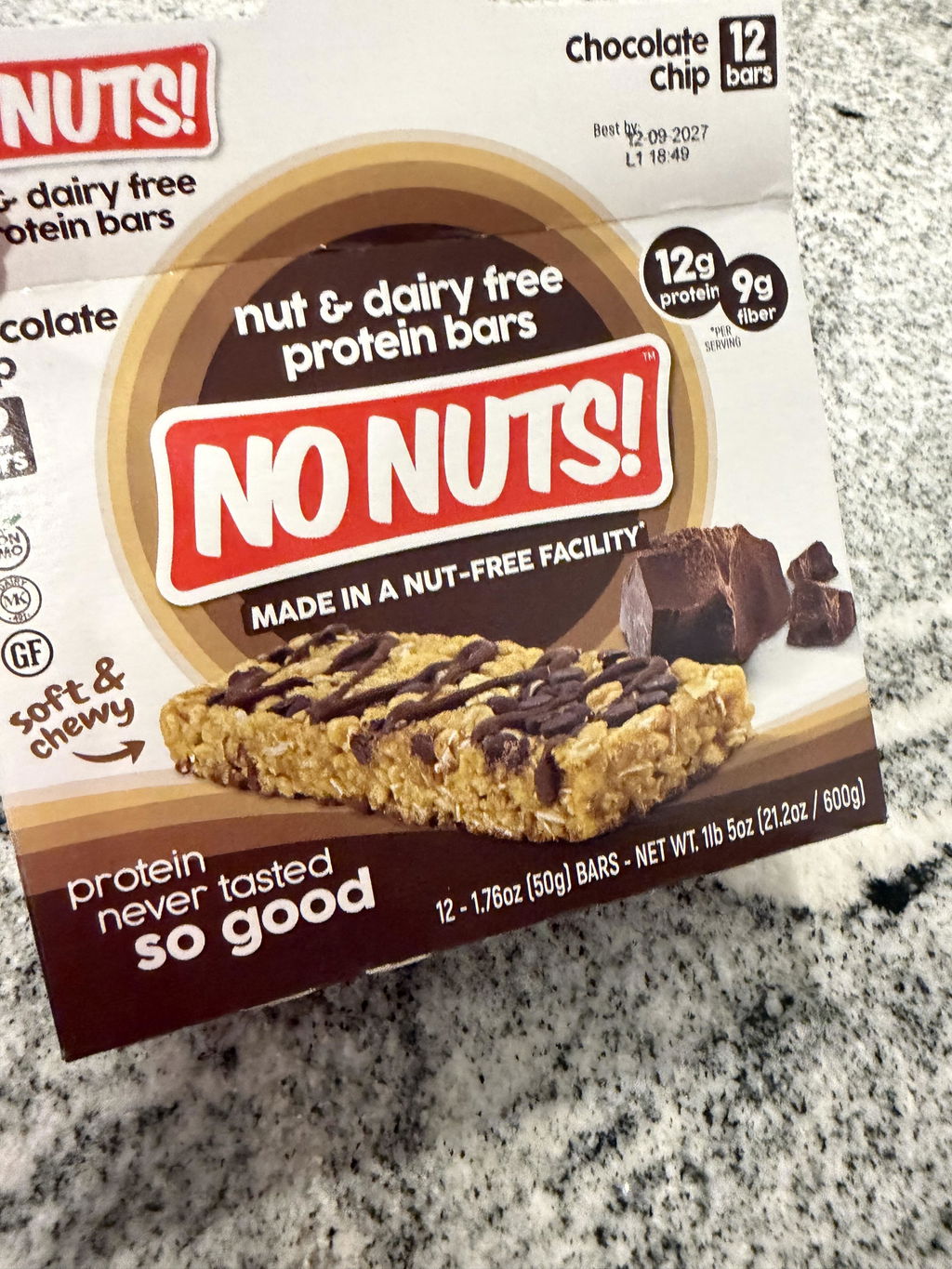
Our No Nuts! Variety Pack and Blueberry & Vanilla bars show how a package can present nut-free claims alongside other product information. The package claims are useful, but they are only one part of the label-reading picture.


The No Nuts! Variety Pack contains Chocolate Chip, Cinnamon Roll, Blueberry & Vanilla, and Caramel Mocha bars, and the Blueberry & Vanilla Snack Bars 12 Bar Pack carries the same nut-free claims.
Both products are described as made in a dedicated nut-free facility. That is more useful detail than a front-of-pack symbol alone, but you still need to match the claim to the allergen that matters to you and your family.
How Ingredient Lists and Contains Statements Help
The ingredient list shows ingredients used to make the food, while a separate Contains statement can call out major allergens present in the product. For tree nuts, look for the specific type of nut, and check for peanut separately.
A label can also reveal ingredients that are important for other allergies. If your allergy plan includes foods beyond nuts, read the full ingredient list and allergen statement separately from the nut-free claim.
Nutrition Facts panels and allergen declarations answer different questions. Nutrition Facts describe nutrients and serving information; use the ingredient list and allergen statement to look for declared ingredients and allergens.


The Chocolate Chip Snack Bars 12 Bar Pack lists every ingredient on the package and on its product page, so you can check each one against your own allergy plan.
Ingredient statements can be especially helpful when a recipe includes compound ingredients, which may contain several components. Read the complete list, not only the bold allergen callout or the short description on the front.
What May Contain and Shared-Facility Warnings Tell You
May contain, shared equipment, and shared facility warnings are forms of precautionary allergen labeling, often shortened to PAL. They point to possible cross-contact during manufacturing, but the phrases are not standardized measurements of how likely exposure is or how much allergen could be present.
Cross-contact can happen when allergen residue transfers from equipment, utensils, surfaces, ingredients, or handling practices to a food that was not meant to contain that allergen. Shared equipment refers to a production line or tools used for different products; shared facility means products are made in the same building, which may or may not mean they share a line.
A Journal of Food Allergy article reports peanut residues in 2 of 51 “may contain” products, 3 of 57 “shared equipment” products, and 7 of 68 “shared facility” products. These findings do not turn PAL wording into a risk scale for an individual product.
A warning can help you decide what to ask next, but it does not report the amount of residue or the chance of a reaction. Likewise, the absence of a may-contain warning does not prove that cross-contact is impossible; precautionary allergen labeling is not a uniform reporting system.
What U.S. Allergen-Labeling Rules Do and Do Not Establish
In the United States, ingredient lists and allergen declarations can help identify declared allergens in packaged foods. The FDA explains food-allergen labeling on its food allergies page.
That is why an allergen declaration and a precautionary statement serve different purposes. The first identifies ingredients that are present; the second may describe a possible manufacturing cross-contact concern.
A No Nuts! Package Example: Check the Exact Product
When you assess any snack bar, read the exact package in front of you, including its flavor, ingredient list, Contains statement, and precautionary wording. Similar products from one maker can use different recipes, suppliers, production lines, or packaging versions, so a label from one flavor does not automatically describe another.
Our No Nuts! Variety Pack contains three bars each of Chocolate Chip, Cinnamon Roll, Blueberry & Vanilla, and Caramel Mocha, and the product information describes the bars as made in a dedicated nut-free facility.


We make nut-free snack bars to support flavor without fear and more inclusive eating. Our product information describes the bars as nut-free, and our package-labeling information explains how we handle ingredient and allergen details.
If a nut-free claim appears alongside a precautionary warning that concerns you, do not try to decide which phrase overrides the other. Contact the maker about that exact item and follow your family’s allergy-management plan while you resolve the discrepancy.
Questions to Ask a Manufacturer
When the package does not answer your question, a clear, product-specific conversation can help. Have the exact name, flavor, package size, and any lot or version details available.
- Ingredients: Does this exact product contain peanut, or any specific tree nut relevant to my allergy?
- Production: Is it made on shared equipment or in a shared facility with the allergen I am asking about?
- Cleaning: What cleaning steps are used between runs, and how is cleaning validation performed?
- Verification: Does your answer apply to this flavor and package, and does it cover the current recipe and production site?
- Warnings: What does the precautionary wording on this package refer to?
A direct answer about the exact product is more helpful than a broad statement about a brand. If the answer is unclear or conflicts with the package, use your allergy-care professional’s guidance to decide what fits your plan.
Checking Snacks Against a School Food Policy
A school’s written food policy determines what can be packed, even when a product is described as school-safe. Some policies address peanuts specifically, while others cover tree nuts or set wider rules for shared snacks and classrooms.
Compare the exact package with the school’s policy, including ingredient and precautionary statements. If the policy is unclear, ask the school what its terms mean before packing the snack, and keep the original wrapper available so staff can see the label information.
Packing a safe, nut-free lunchbox should not feel like a daily stress test. A clear policy and carefully chosen nut-free staples can give staff a consistent foundation and give parents a little more peace of mind when the bus leaves.
Frequently Asked Questions
What brands are nut free?
A brand name alone cannot establish that every product suits every allergy; check the ingredient list and allergen statement for the exact item.
How do I know if something is made in a nut-free facility?
Look for a clear manufacturer statement about the facility and ask whether it applies to the exact product and production location. If you need detail, ask about shared lines, cleaning validation, and how the maker verifies its allergen controls.
Can sunflower seed butter cause a problem for someone with a tree-nut allergy?
Sunflower seeds are seeds, not tree nuts, but an individual may have a separate seed allergy or a personal medical instruction about particular foods. Follow the allergy plan made for that person rather than relying on a broad category name.
Does cooking or baking make a food with peanut safe?
No. Heating does not reliably remove the allergenic proteins that can trigger a reaction, so cooking is not a safe way to change an allergen-containing food for someone with a peanut allergy.
Does a nut-free manufacturing claim cover food after the package is opened?
No. A manufacturing claim concerns production before the product reaches you; shared hands, utensils, counters, or containers can introduce cross-contact later. Use clean preparation surfaces and follow the handling steps in your allergy-management plan.
How to tell if a product is nut free?
Read the full ingredient list and Contains statement, checking for peanut and the specific tree nuts relevant to the allergy. Also review any nut-free claim and precautionary warnings, but remember that a claim or the absence of a warning does not prove that cross-contact is impossible.
What do food labels not tell you?
Labels may not tell you how likely cross-contact is, how much allergen residue could be present, or what cleaning and verification controls are used during production. A nut-free claim or the absence of a precautionary warning does not by itself establish that a product was made in a dedicated nut-free facility.
Conclusion
Nut-Free Labels: What a Package Can and Cannot Tell You comes down to reading the whole package and understanding the limits of each claim. Ingredients and Contains statements reveal declared allergens, while facility descriptions and precautionary warnings offer different kinds of manufacturing information.
Check peanut and tree nuts separately, reread familiar products, and ask the maker focused questions when wording leaves you uncertain. With a clear label-reading routine and the right support, you can make more informed choices and keep snacking safe, simple, and welcoming.
A note on allergies: This article is general information, not medical advice. Ingredients and facility practices can change, so always read the full label and allergen statement before eating any food, and talk with your doctor or allergist about your own needs.
No Nuts! protein bars (Chocolate Chip, Blueberry & Vanilla, Caramel Mocha and Cinnamon Roll) are made in a nut-free facility, and every ingredient is listed on our ingredients page. Our Chewy Chocolate Chip Granola Bars are made without the 9 major U.S. allergens (including soy); the facility also processes coconut.