Foods That Secretly Contain Cashews: The Hidden Sources You Need to Know in 2026
Jul 12, 2026
Cashew-allergy reactions turn into full anaphylaxis at a rate of 74.1 percent, far higher than the 30.5 percent rate seen with peanut allergies. That single number explains why we spend so much time researching foods that secretly contain cashews, because the stakes for missing a hidden ingredient are simply higher with this particular nut.
Cashews show up in places you'd never expect: pesto, vegan cheese, "nut-free" trail mixes, and even some ice creams. We put together this guide to help you spot the foods that secretly contain cashews before they end up on your plate, and to point you toward nut-free, dairy-free snack alternatives that don't require a label-reading marathon every time you're hungry.
Key Takeaways
| Question | Quick Answer |
|---|---|
| What foods most often hide cashews? | Pesto, vegan cheese, Asian-style sauces, granola, energy bars, and some ice creams |
| Why is cashew cross-contamination so risky? | Cashew allergies trigger anaphylaxis at a much higher rate than most other nut allergies |
| Can pistachio allergy sufferers react to cashews? | Yes, the two nuts share nearly identical proteins, so reactions frequently overlap |
| Do cashew allergies go away over time? | Rarely. Only a small percentage of people ever outgrow it |
| What's a safe snack bar option? | Bars made in a certified nut-free facility with clear allergen labeling |
| How do I verify a product is truly nut-free? | Check the nut-free snack bar label and look for "may contain" disclaimers |
| Is cashew use in packaged food increasing? | Yes, EU cashew consumption alone has grown nearly 30% over the past decade |
Why Foods That Secretly Contain Cashews Are So Common
Cashews are cheap to source, creamy in texture, and easy to blend into other ingredients. Food manufacturers love that combination.
That's exactly why cashews turn up in items that don't say "nut" anywhere on the front label. A dairy-free cheese sauce, a "creamy" salad dressing, or a smooth dessert filling can all lean on cashew paste for texture without ever putting the word "cashew" in large print.
Global cashew demand keeps climbing too. The EU alone now consumes more than 2 million tonnes of cashews annually, and that volume has to go somewhere, usually into baked goods, sauces, and snack products where consumers least expect it.
Common Foods That Secretly Contain Cashews
We've grouped the most frequent offenders below. If you or someone in your household has a tree nut allergy, treat every item on this list as a "check the label first" food.
- Pesto sauce (some recipes swap pine nuts for cashews to cut cost)
- Vegan cheese and cream cheese alternatives
- Dairy-free ice cream and frozen desserts
- Asian-inspired stir-fry sauces and satay
- Granola, trail mix, and "protein" clusters
- Some protein powders and meal-replacement shakes
- Certain energy and snack bars marketed as "healthy"
- Baked goods like muffins, cookies, and granola bars
Notice how many of these fall into the snacks and bars category. That's not a coincidence, since manufacturers frequently use cashew butter or cashew flour as a binder in that entire product segment.
Snacks and Bars: Where Hidden Cashew Traces Show Up Most
When we talk about foods that secretly contain cashews, snack bars deserve their own spotlight. Many "protein" or "energy" bars rely on a nut butter base, and manufacturers often blend almond, peanut, and cashew butters interchangeably depending on cost and availability that week.
Even bars labeled "may be produced on shared equipment" carry real risk. Shared production lines are one of the most common ways cashew traces end up in a bar that never lists cashews as an ingredient.
This is exactly the gap that No Nuts! snack bars were built to close. Every bar comes out of a facility that's certified 100% nut-free, so there's no shared-equipment guessing game involved.
How Cross-Contamination Makes "Nut-Free" Labels Tricky
A package that says "nut-free" doesn't always mean cashew-free in practice. Facilities that process multiple nut types on the same lines can leave behind trace amounts, and that's enough to trigger a reaction in someone with a severe allergy.
Roughly 30 percent of people with a tree nut allergy are actually allergic to more than one type of nut. That overlap raises the risk of cross-contamination in foods like pesto, mixed sweets, or bulk-bin trail mixes where cashews sit right next to other allergens.
The proteins in cashews and pistachios are so similar that an allergic reaction to one frequently triggers a reaction to the other, making hidden cashew traces in processed foods especially dangerous.
Reading Labels: How to Spot Hidden Cashew Ingredients
Ingredient labels don't always spell out "cashew" in plain English. Watch for terms like "tree nut," "Anacardium," or vague phrases such as "natural flavoring" and "nut butter blend."
We recommend checking three things every time: the ingredient list itself, the allergen statement below it, and any "may contain" disclaimer. Our food allergen database walks through how to interpret precautionary labeling for cashews and other tree nuts in more detail.
Peanut allergies and tree nut allergies overlap more than most people realize too. Between 20 and 30 percent of people with a peanut allergy also react to tree nuts like cashews, which is one more reason "nut-free" verification matters so much.
Nut-Free, Dairy-Free Snack Bars: A Safer Alternative to Guessing
Instead of decoding every label at the grocery store, many families with allergies simply switch to snack bars built from the ground up to be nut-free and dairy-free. That's the entire premise behind No Nuts! bars, each one made with 12 grams of plant-based protein and zero cashew, peanut, or tree nut content.
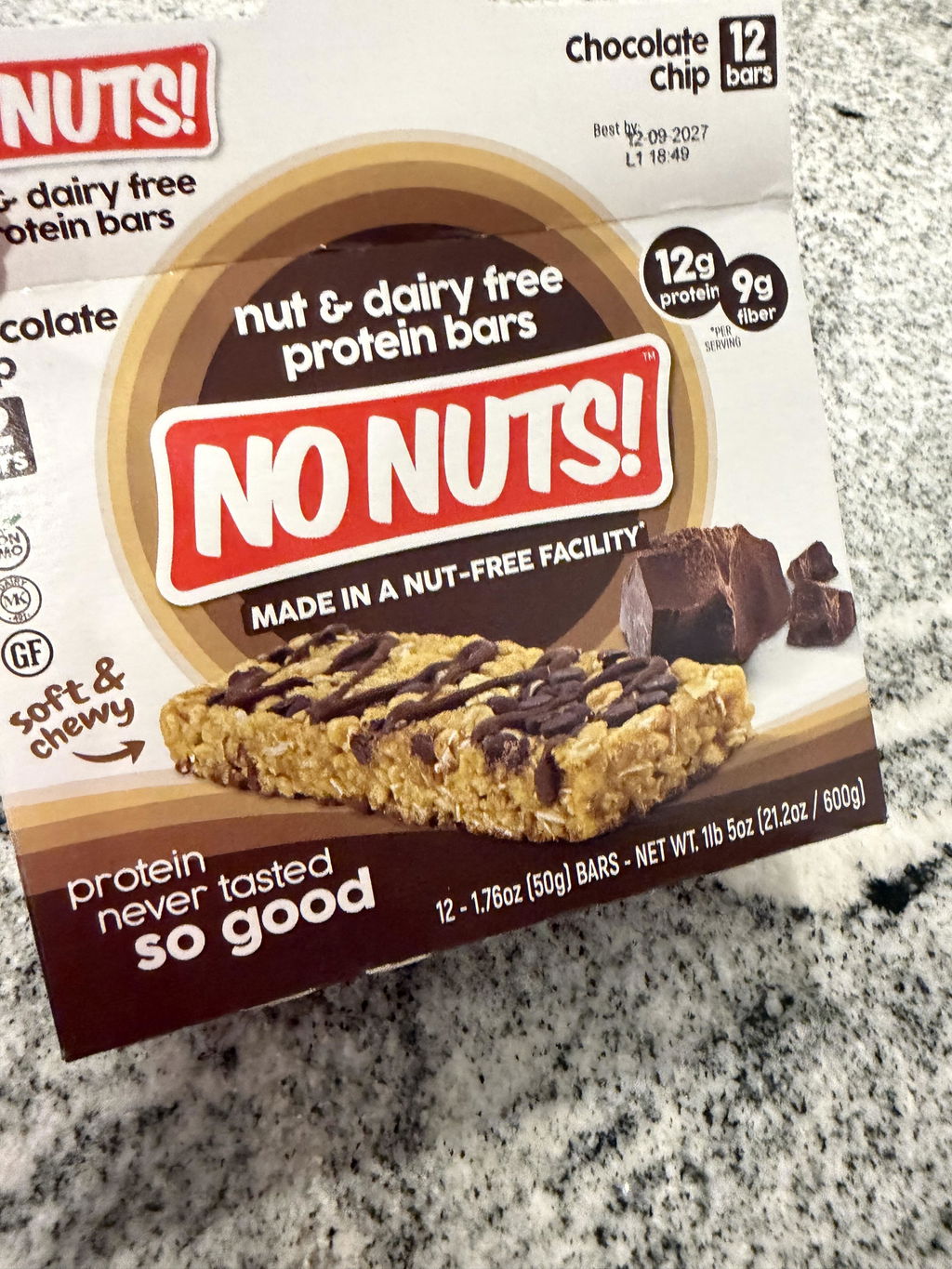
Chocolate Chip Snack Bars
The Chocolate Chip bar is the brand's classic flavor, combining rich chocolate chips with a nut-free, dairy-free, gluten-free base.
A 12-pack runs $12.99, and it's produced entirely in a certified nut-free facility.
Cinnamon Roll Snack Bars
The Cinnamon Roll flavor delivers a warm, bakery-style taste while staying dairy-free and gluten-free.
This 12-pack is also priced at $12.99 and is designed for school-safe snacking.
Blueberry & Vanilla Snack Bars
The Blueberry & Vanilla bar offers a lighter, fruit-forward option for anyone who wants variety without sacrificing safety.
Like the rest of the lineup, it costs $12.99 per 12-pack and skips dairy and gluten entirely.
Caramel Mocha Snack Bars
For anyone craving a coffee-flavored pick-me-up, the Caramel Mocha bar delivers that without a single trace of cashew or other tree nuts.
This flavor rounds out the four-flavor lineup at $12.99 per 12-pack.
Building a Safer Snack Drawer with Variety Packs and Samplers
If you're not sure which flavor to commit to, sampler packs solve that problem without adding any risk from foods that secretly contain cashews. Both options below pull from the same certified nut-free production line as the individual flavors.
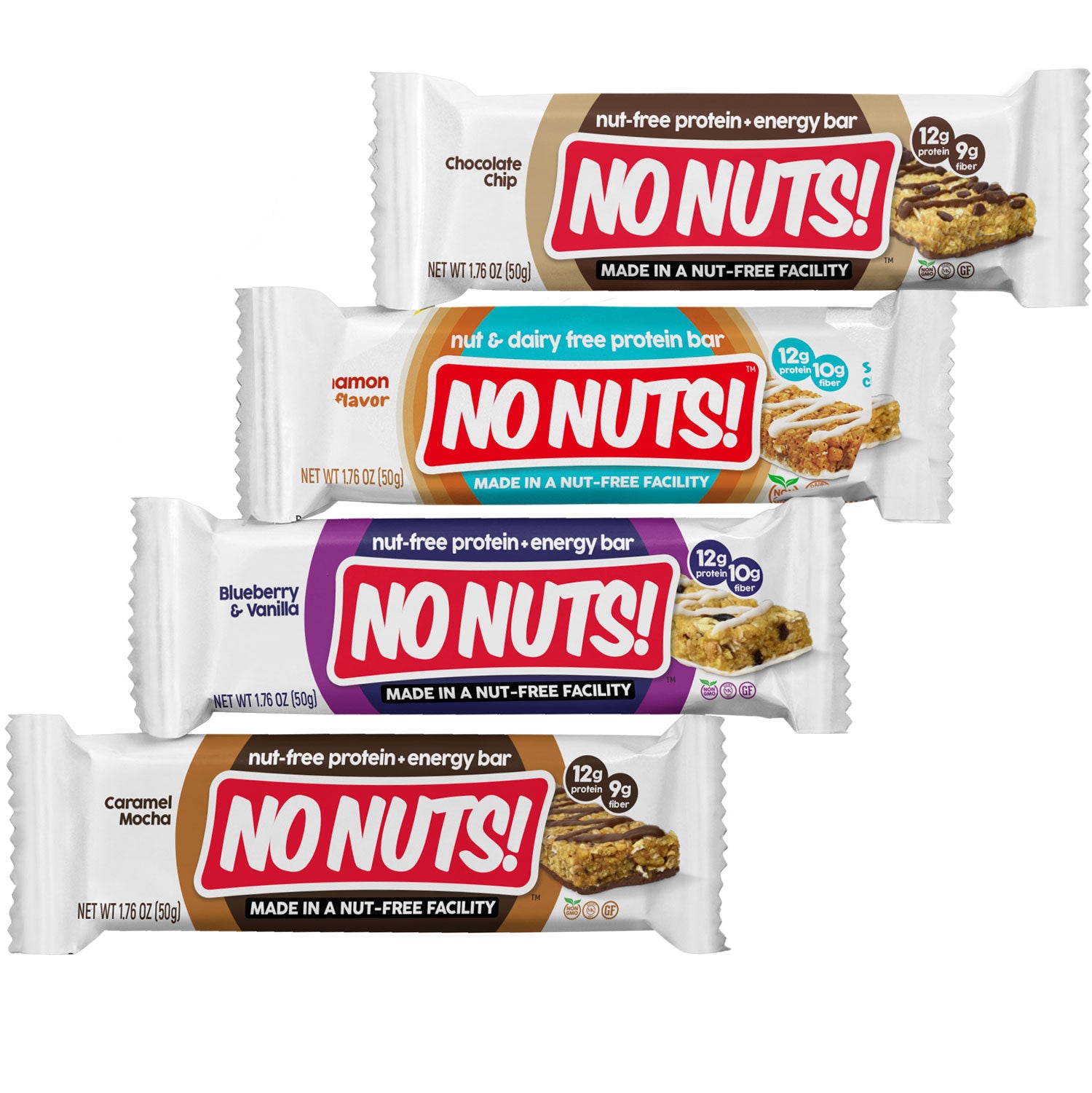
- No Nuts! Variety Pack 12-Pack: $12.99, includes all four flavors
- Nut-Free Snack Bar Sampler 4-Pack: $9.99, a smaller taste-test option
Both packs make it easy to stock a diaper bag, desk drawer, or classroom snack bin with something you don't have to double-check every single time.
Tips for Avoiding Foods That Secretly Contain Cashews When Shopping or Eating Out
Restaurants are often the riskiest environment for hidden cashew exposure, especially anywhere serving Southeast Asian, Indian, or Mediterranean cuisine. Ask directly whether sauces, curries, or desserts use cashew paste or cashew flour as a thickener.
At the grocery store, always flip the package over rather than trusting front-label marketing claims. "Plant-based," "vegan," and "dairy-free" are not the same thing as nut-free, and plenty of dairy-free products lean on cashew cream specifically because it mimics dairy so well.
Since almost all serious allergic reactions come from peanuts and tree nuts combined (an estimated 70 to 90 percent of food-related anaphylactic fatalities), it's worth keeping an emergency plan in place even when you think you've done everything right.
Finally, keep a rotation of trusted, verified snacks and bars on hand so you're not forced to gamble on an unfamiliar product when hunger strikes.
Conclusion
Foods that secretly contain cashews are far more common than most shoppers assume, hiding in everything from pesto to protein bars to dairy-free desserts. The safest approach combines careful label reading with stocking verified nut-free, dairy-free snacks and bars you already trust.
We built the No Nuts! lineup specifically to remove that guesswork, giving families, schools, and workplaces a reliable option whenever foods that secretly contain cashews might otherwise be a concern.
Frequently Asked Questions
What are the most common foods that secretly contain cashews?
Pesto, vegan cheese, dairy-free ice cream, Asian sauces, granola, and many protein or energy bars are among the most common foods that secretly contain cashews. Always check the ingredient list rather than relying on front-label claims.
Is it safe to eat "nut-free" snack bars if I have a cashew allergy?
Only if the bar is made in a certified nut-free facility, since some "nut-free" labels still allow shared-equipment production with other nuts. No Nuts! bars are produced in a 100% nut-free facility specifically to remove that risk.
Why do cashews cause more severe reactions than other nuts?
Cashew allergy reactions trigger anaphylaxis at a rate of 74.1 percent, notably higher than the 30.5 percent rate seen with peanut allergies. That severity is exactly why identifying foods that secretly contain cashews matters so much.
Can someone with a pistachio allergy also react to cashews?
Yes, cashews and pistachios share nearly identical proteins, so an allergic reaction to one nut frequently triggers a reaction to the other. This cross-reactivity makes hidden cashew traces particularly dangerous for pistachio-allergic individuals.
Are cashew allergies becoming more common in 2026?
Global cashew consumption has grown significantly over the past decade, with EU consumption alone rising nearly 30 percent, which means more processed foods now contain cashews than before. That growth is part of why more people are actively searching for foods that secretly contain cashews before they shop.
Do cashew allergies ever go away on their own?
Rarely. Only around 10 percent of people with a cashew or tree nut allergy ever outgrow it, so long-term label vigilance is usually necessary.
What snack and bar options are actually safe for nut allergies?
Look for snacks and bars produced in a certified 100% nut-free facility with clear dairy-free and gluten-free labeling, like the full No Nuts! wholesale snack bar lineup. Checking for third-party allergen certification is the most reliable way to avoid foods that secretly contain cashews.