Pea vs. Rice vs. Soy Protein: Comparing Plant Proteins in Snack Bars
Oct 25, 2026
The pea protein vs. rice protein question comes up a lot among snack bar shoppers, and soy is part of that conversation too. This guide compares the three plant proteins you will see most often in snack bars, what each one brings to a bar, and how to read the label if you are avoiding one of them. We will also tell you exactly which proteins go into No Nuts! bars.
Key Takeaways
- Pea protein is very concentrated and rich in lysine, but a little low in methionine on its own.
- Rice protein is low in lysine but supplies the methionine pea lacks, so the two pair well.
- Soy protein hits a perfect 1.0 on the Protein Digestibility Corrected Amino Acid Score, the highest rating a protein can achieve.
- Many top-performing bars blend pea and rice protein together to create a complete amino acid profile that neither ingredient achieves alone.
- Soy protein is widely used in bars because it blends well, gives a consistent texture, and is a complete protein.
- Blends of rice and pea protein are popular because the two proteins fill each other's amino acid gaps.
- Soy is one of the 9 major U.S. food allergens, so if you avoid it, check the ingredient list and allergen statement on every bar, including ours.
Why Plant Protein Comparisons Matter in Snacks and Bars
Walk down any snack aisle in 2026 and you'll notice plant protein everywhere.
Brands are racing to replace whey and casein with pea, rice, and soy alternatives, and shoppers are asking harder questions about what's actually inside their bars.
That's where a transparent nutrition comparison becomes useful.
Not all plant proteins behave the same way in a recipe, and not all of them digest or taste the same either.
Understanding the pea protein vs rice protein conversation, along with where soy fits in, helps you choose snacks and bars that actually match your goals instead of just following a trend.
Pea Protein: Strengths and Weaknesses in Snack Bars
Pea protein has become the darling of the plant-based snack world over the last few years.
It's mild in flavor, mixes well, and doesn't carry the chalky aftertaste some earlier plant proteins were known for.
Nutritionally, pea protein isolate typically contains 80–85% protein by weight, making it one of the most concentrated functional ingredients available to bar manufacturers.
That concentration is exactly why so many brands use it as a base.
Pea protein is often combined with rice protein to create a more complete amino acid profile that covers each protein's individual gaps.
On its own, pea protein is a bit low in methionine, one of the essential amino acids your body can't produce.
That's a technical detail, but it matters if you're relying on plant-based bars as a primary protein source.
Where Pea Protein Shines
- Not one of the 9 major U.S. allergens, which makes it a popular choice for Nut-Free and Dairy-Free snack formulations.
- Mild taste that blends easily into chocolate, vanilla, or fruit-forward bar flavors.
- Highly concentrated, so brands need less filler to hit protein targets.
Rice Protein: The Underrated Partner
Rice protein doesn't get the marketing attention pea protein does, but it plays an important role in many plant-based bars.
On its own, rice protein is low in lysine, an essential amino acid that pea protein has plenty of.
Pea protein, in turn, is lower in methionine, which rice provides, and that is exactly why so many recipes pair the two.
Rice protein also tends to have a lighter, less gritty texture than some soy-based powders, which shows up in the final bite of a finished bar.
Rice Protein's Role in the Pea Protein vs Rice Protein Comparison
When you're comparing pea protein vs rice protein head-to-head, neither one is a complete protein on its own.
Pea protein wins on concentration, while rice protein fills in the amino acids pea is short on.
That's why the most balanced bars on the market rarely pick one over the other.
They blend both to cover each other's weak points, giving you a more complete amino acid profile in a single serving.

Soy Protein: The Digestibility Standard
Soy protein has been around longer than either pea or rice protein in the snack world, and it earned that staying power through performance.
Soy protein isolate has a Protein Digestibility Corrected Amino Acid Score (PDCAAS) of 1.0, the highest rating a protein can get.
That score means soy protein is essentially as digestible and amino-acid-complete as animal-based proteins, which is rare in the plant world.
That is one reason soy protein shows up in so many bars.
Manufacturers rely on soy because it's predictable, complete, and cost-effective at scale.
The Trade-Off With Soy
Soy isn't a fit for everyone.
It's one of the most common food allergens, and some shoppers actively avoid it due to sensitivities or personal preference.
If you're building a snack routine around allergen-friendly options, checking labels for soy alongside your usual Nut-Free and Dairy-Free criteria is worth the extra ten seconds.
Comparing Pea, Rice, and Soy Protein Side by Side
Here's a straightforward breakdown to help you compare all three at a glance.
| Protein Source | Amino Acid Profile | Best Known For | Common Snack Bar Pairing |
|---|---|---|---|
| Pea Protein | Rich in lysine, lower in methionine | High concentration (80–85% protein isolate) | Rice protein |
| Rice Protein | Lower in lysine, supplies methionine | Light texture, pairs well with pea | Pea protein |
| Soy Protein | Complete protein (PDCAAS 1.0) | Complete amino acid profile, consistent texture | Often used solo |
Notice the pattern here: no single plant protein does everything well on its own.
That's the real answer to the pea protein vs rice protein question, and where soy fits into it too, each one plays a different role, and the smartest bars combine strengths rather than relying on one ingredient alone.

Demand for pea, rice, and soy proteins is surging, drastically reshaping the snack bar industry.
How Protein Blends Show Up in Real Bars
You don't need to hunt too hard to see this blending strategy in action.
Many vegan bars blend brown rice and pea protein to reach protein levels similar to whey-based bars.
That combination isn't accidental.
Rice fills in the amino acid gaps pea protein leaves behind, while pea protein's concentration keeps the overall gram count high without needing an oversized bar.
Compare that to simple fruit-and-nut bars, which usually skip protein powders and land at just a few grams of protein, and often rely on nuts.
Neither approach is "wrong," they just serve different goals, one is a protein-forward snack, the other is a whole-food snack with modest protein as a side benefit.
Reading Labels: What Transparent Nutrition Comparison Really Looks Like
A transparent nutrition comparison means more than just glancing at the grams of protein on the front of the package.
Here's what to actually check before you toss a bar in your cart:
- Protein source order: If pea protein is listed first, it likely dominates the blend; same logic applies to rice or soy.
- Total protein range: Most protein bars fall in the 10–40 g range per the National Library of Medicine, so know where your bar lands and why.
- Allergen callouts: Look for clear Nut-Free and Dairy-Free labeling if those matter to your household.
- Fiber content: Plant-protein bars often carry meaningfully more fiber than dairy-based bars, which affects fullness and digestion.
Choosing Between Pea, Rice, and Soy for Your Snack Routine
So which one should end up in your cart?
It depends on what you're prioritizing.
If you want a single complete protein, soy is the simplest choice: it is the only one of the three with a perfect PDCAAS.
If you want maximum protein concentration with minimal bulk, pea protein isolate's 80–85% protein content is hard to beat.
And if you want a bar with a complete amino acid profile from a single ingredient, soy's perfect PDCAAS score makes it the simplest single-source option.
For most people, though, the pea protein vs rice protein blend approach hits the sweet spot, you get concentration and digestibility in one bar without relying on soy if you'd rather avoid it.
What Protein Is in No Nuts! Bars?
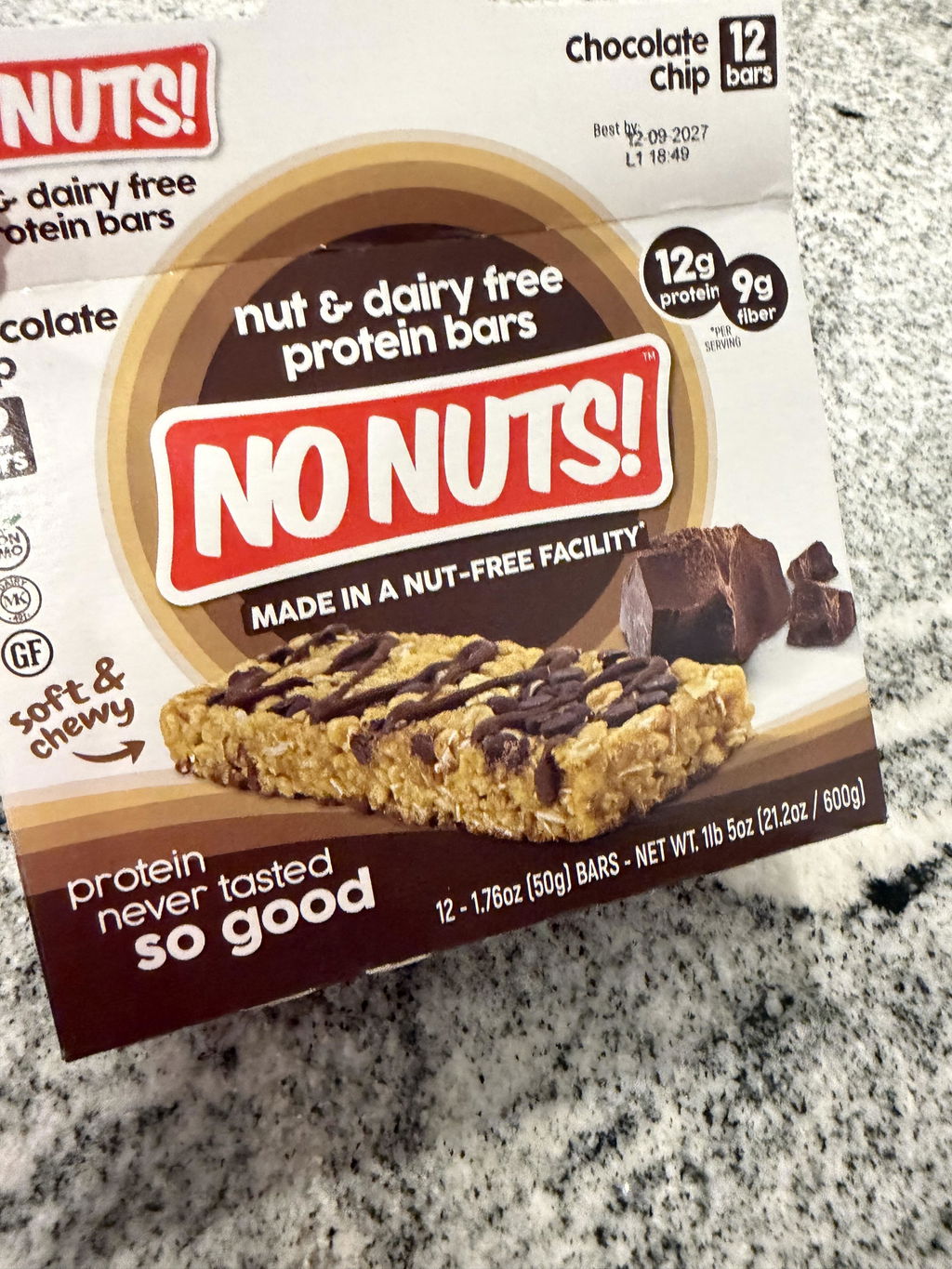
No Nuts! protein bars use a blend of soy protein crisp and pea protein crisp to reach 12 g of protein per bar, so they do contain soy. They are made in a nut-free facility and are dairy-free, egg-free, and gluten-free. If you need a soy-free option, our Chewy Chocolate Chip Granola Bars are made without soy and the other 9 major U.S. allergens, though they are a lighter snack with 1 g of protein per bar. You can see every ingredient on our ingredients page.
If you're building out a rotation of snacks and bars for the week, mixing formulations rather than sticking to one brand or one protein source tends to give you the most balanced amino acid intake overall.
You can browse a wider range of formulations directly at No Nuts! if you're looking to compare options side by side.
Conclusion
The pea protein vs rice protein comparison doesn't have a single winner, and that's actually the point.
Pea protein brings concentration and allergen-friendly formulation, rice protein balances pea's amino acids, and soy protein brings a perfect amino acid score that's hard to match with any single plant source.
A genuinely transparent nutrition comparison means looking past the front-of-package protein number and understanding which ingredient, or blend of ingredients, actually supports your goals.
Whether you're stocking up on Nut-Free, Dairy-Free options or just trying to build a smarter shelf of snacks and bars, knowing how pea, rice, and soy protein actually perform puts you ahead of most shoppers still going by marketing claims alone.
Frequently Asked Questions
Is pea protein or rice protein better for snack bars in 2026?
Neither is definitively "better." Pea protein isolate is very concentrated (about 80–85% protein) and rich in lysine, while rice protein is higher in the sulfur amino acids pea is low in. Blending the two lets each cover the other's gaps.
Why do so many bars combine pea and rice protein instead of using just one?
Pea protein alone is a little low in methionine, while rice protein alone is low in lysine. Combining them creates a more complete amino acid profile than either ingredient achieves on its own.
Is soy protein worth choosing over pea or rice protein?
Soy protein has a perfect 1.0 PDCAAS, which makes it one of the most complete plant proteins available. It is a good choice if you don't avoid soy, and it is one of the two proteins in No Nuts! protein bars.
Are pea protein and rice protein bars actually Nut-Free and Dairy-Free?
Most pea and rice protein bars are formulated to be both Nut-Free and Dairy-Free, since neither ingredient relies on dairy or tree nuts to function. Always double check the specific label, though, since some brands add nuts for flavor or texture even when the base protein doesn't require it.
How much protein should I expect from a pea, rice, or soy protein bar?
Most protein bars land somewhere between 10 and 20 grams of protein per bar, depending on the brand and recipe. No Nuts! protein bars have 12 g per bar.
Why are some plant protein bars so much more expensive than others?
Isolated plant proteins take more processing than whole-food ingredients, which is one reason protein bars usually cost more than simple granola bars. The protein source, flavor coatings, and how much protein each bar packs all affect the final price.
Which plant protein has the best texture in snack bars?
Rice protein generally produces a lighter, less gritty texture compared to pea or soy protein, which is why it's frequently blended into recipes to smooth out mouthfeel. Pea protein contributes concentration and structure, while soy protein tends to bind well but can occasionally add a denser bite depending on the formulation.
A note on allergies: This article is general information, not medical advice. Ingredients and facility practices can change, so always read the full label and allergen statement before eating any food, and talk with your doctor or allergist about your own needs.
No Nuts! protein bars (Chocolate Chip, Blueberry & Vanilla, Caramel Mocha and Cinnamon Roll) are made in a nut-free facility and contain soy. Our Chewy Chocolate Chip Granola Bars are made without the 9 major U.S. allergens; the facility also processes coconut.