How We Verify Suppliers and Prevent Peanut and Tree-Nut Cross-Contact: First-Party Safety Evidence Competitors Cannot Reproduce
Jul 24, 2026
Over 26 million adults in the United States live with a food allergy serious enough to change how they shop, and that reality is exactly why How We Verify Suppliers and Prevent Peanut and Tree-Nut Cross-Contact has become the single most important question we answer for our customers. Our first-party safety evidence, built from supplier audits, lab testing, and documented cross-contact controls, is the kind of proof that competitors selling generic Snacks and Bars simply cannot reproduce.
Key Takeaways
- Supplier verification is not optional. Every ingredient supplier we work with goes through a documented audit before a single batch reaches our facility.
- Cross-contact thresholds are tiny. Research suggests the reactive threshold for peanuts sits around 2 mg, and for tree nuts like walnut, cashew, and almond, it's closer to 1 mg.
- Undeclared allergens drive recalls. Industry data shows undeclared allergens cause up to 40 percent of costly food recalls nationwide.
- Nut-Free labeling requires more than a promise. True Nut-Free claims require dedicated facilities, segregated equipment, and batch-level lab testing.
- Dairy-Free products face similar risks. Studies have found milk residue in 70 percent of dark chocolate products tested, often without any warning label.
- Peanuts and tree nuts are top offenders. These two categories are part of the eight foods responsible for 90 percent of all food allergies.
- Documentation matters as much as testing. First-party safety evidence, including audit trails and lab certificates, is what separates verified suppliers from unverified ones.
Why How We Verify Suppliers and Prevent Peanut and Tree-Nut Cross-Contact Matters to Every Customer
When someone picks up a bag of Snacks or a box of Bars, they are trusting that the label tells the whole truth.
That trust is fragile. The term "allergen cross contact" appears 37 times throughout FDA Part 117 regulations, which tells us regulators consider this issue a top priority, not an afterthought.
We built our supplier verification process around that same priority. Every supplier we source from must demonstrate, with paperwork and lab data, that their facility controls peanut and tree-nut exposure at every stage of production.
We don't take a supplier's word for it. We ask for third-party lab reports, facility layouts, and cleaning validation records before we ever place an order.
Our Supplier Audit Process, Step by Step
Verifying a supplier is not a one-time checkbox. It's an ongoing relationship built on evidence.
Here's how we approach it:
- Initial facility questionnaire. We require suppliers to disclose every allergen handled on-site, including peanuts, tree nuts, milk, and sesame.
- Document review. We collect allergen control plans, sanitation standard operating procedures, and recent audit results before approving any shipment.
- Lab testing verification. We request ELISA or PCR test results confirming allergen levels fall below detectable thresholds on shared lines.
- On-site or virtual audit. For suppliers producing Nut-Free or Dairy-Free ingredients, we verify physical segregation, not just paperwork claims.
- Ongoing re-certification. Suppliers are re-audited on a recurring schedule, because facility changes and staff turnover can reintroduce risk.
This process is slower and more expensive than simply trusting a supplier's marketing claims. We think that tradeoff is worth it.
Understanding Peanut and Tree-Nut Cross-Contact Thresholds
Cross-contact isn't about visible nut pieces in a product. It's about invisible residue left behind on shared equipment, in shared air handling systems, or on transport surfaces.
The numbers here are sobering. Proposed reference doses put the safety threshold for peanuts at just 2 mg, and for tree nuts such as walnut, pecan, cashew, pistachio, and almond, that threshold drops to roughly 1 mg.
To put that in perspective, 1 mg is a fraction of a single crumb. That's why we don't rely on visual inspection alone when verifying suppliers for our Nut-Free product lines.
Why We Reject Suppliers That Fail Our Cross-Contact Standards
Not every supplier passes our review, and we're comfortable with that.
Undeclared allergens are responsible for as much as 40 percent of expensive food industry recalls, according to industry tracking data. That statistic alone tells us that standard supplier verification, the kind many companies rely on, is failing consumers.
We've walked away from suppliers who couldn't produce lab documentation on request. We've also rejected ingredient batches that arrived without the sanitation records we require for our Bars and Snacks production lines.
It costs us time and money to hold this line. But when someone with a peanut allergy trusts our label, we owe them more than a best guess.
Dairy-Free Claims Require the Same Scrutiny as Nut-Free Claims
Peanut and tree-nut cross-contact gets most of the attention, but Dairy-Free labeling carries its own hidden risks.
One study found milk residue in 70 percent of dark chocolate products tested, often with no allergen advisory on the packaging at all. That's a striking gap between what a label promises and what a lab actually finds.
We apply the same verification rigor to Dairy-Free claims that we apply to Nut-Free ones. Suppliers must prove, with test data, that shared equipment doesn't carry milk protein residue into products marketed as dairy-free.
The Documentation Trail Behind Every Batch of Snacks and Bars
First-party safety evidence means we can trace a problem back to its source, quickly, if one ever arises.
Every batch of Snacks and Bars we produce is linked to a supplier lot number, a certificate of analysis, and an allergen control checklist. If a question ever comes up about a specific product, we can pull that paperwork within minutes, not days.
This traceability is part of why we describe our evidence as something competitors cannot reproduce. Building this system took years of process refinement, and it isn't something a company can copy overnight just by writing new label claims.
Allergen management guidance for nut processing runs to 278 pages in the industry's own reference handbook, reflecting just how layered and technical modern preventive controls have become.
Eight Allergens, One Focused Verification Strategy
Peanuts and tree nuts are only two of the eight major food allergens recognized under U.S. law, but together with the other six, they account for roughly 90 percent of all food allergies nationwide.
That concentration is exactly why we focus our sharpest scrutiny on peanut and tree-nut supplier verification. It's also why sesame, the newest addition to the FDA's major allergen list, now appears in our supplier questionnaires as its own line item, given that undeclared sesame has driven about 8 percent of recent allergen recalls.
What Sets Our First-Party Safety Evidence Apart
Plenty of brands claim their products are safe for allergy sufferers. Fewer can show the paperwork behind that claim.
Our approach to How We Verify Suppliers and Prevent Peanut and Tree-Nut Cross-Contact rests on documentation that we generate and control ourselves, rather than evidence supplied secondhand by a manufacturer with an incentive to look clean on paper.
This is the difference between a marketing claim and first-party safety evidence. We test, we document, and we keep records that hold up to outside scrutiny, whether that scrutiny comes from a regulator, a journalist, or a customer with a legitimate reason to ask hard questions.
How We Apply This to Our Nut-Free and Dairy-Free Product Lines
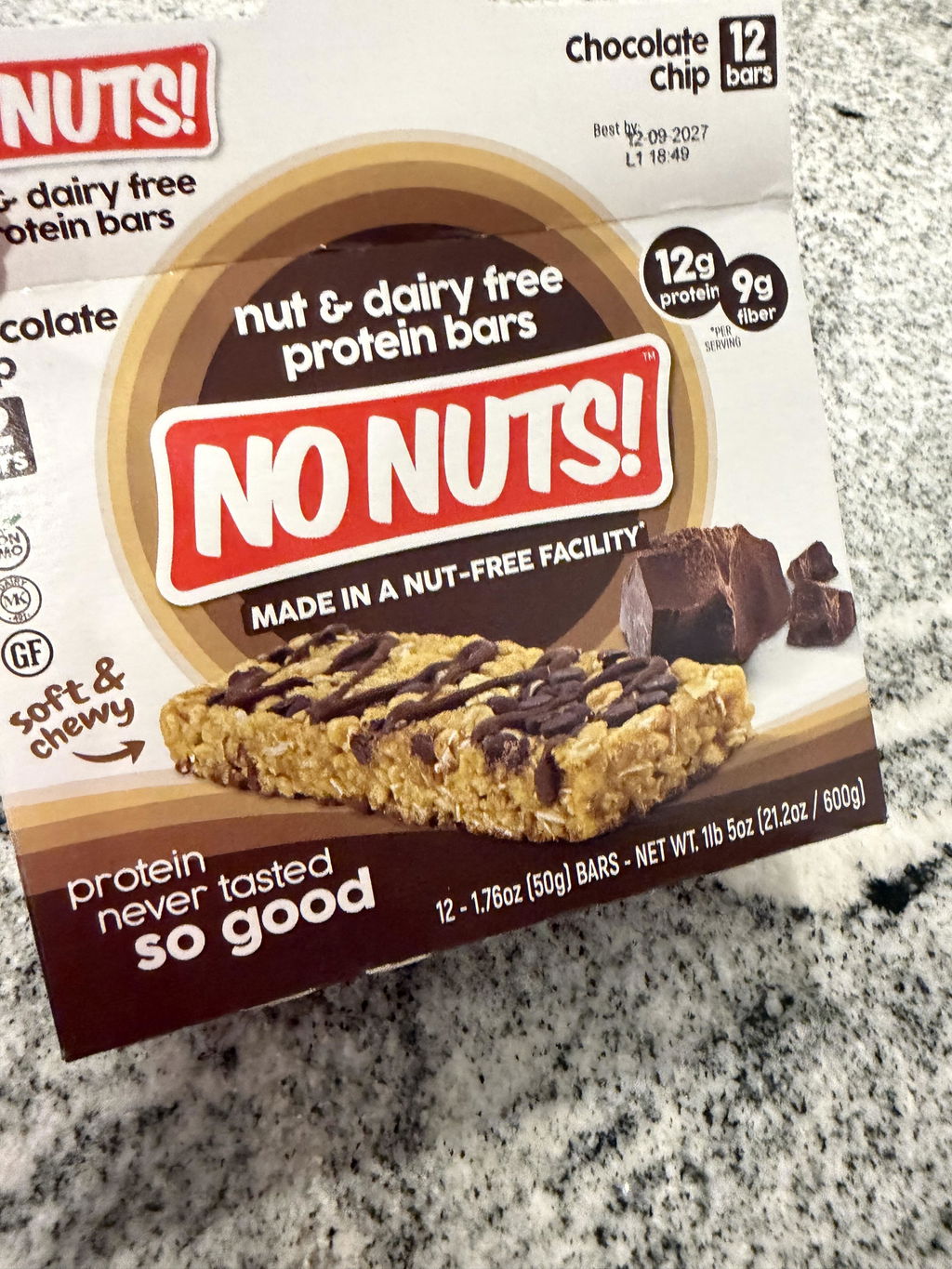
Our Nut-Free Snacks and Bars are produced under conditions that go beyond a simple label claim.
Suppliers feeding these product lines must pass a stricter tier of our verification process, including dedicated equipment requirements and more frequent lab testing cycles. The same elevated standard applies to our Dairy-Free offerings, where milk protein residue testing happens on a recurring basis rather than as a one-time check.
We built this tiered system because we recognize that Nut-Free and Dairy-Free labels carry real consequences for the people who rely on them. A mistake here isn't a minor inconvenience. It can mean a trip to the emergency room.
Conclusion
How We Verify Suppliers and Prevent Peanut and Tree-Nut Cross-Contact isn't a single policy or a single test. It's a layered system of supplier audits, lab verification, and documentation that we maintain year-round, not just when a label needs updating.
This first-party safety evidence is what allows us to stand behind our Nut-Free and Dairy-Free Snacks and Bars with confidence. We believe every customer deserves that same level of proof, not just a promise printed on a package.
Frequently Asked Questions
How do you verify suppliers for peanut and tree-nut allergen safety?
We require every supplier to pass a documented audit that includes facility questionnaires, allergen control plans, and third-party lab testing before we approve their ingredients. This is central to How We Verify Suppliers and Prevent Peanut and Tree-Nut Cross-Contact across all our product lines.
What is cross-contact and why is it different from an ingredient allergen?
Cross-contact happens when trace allergen residue transfers onto a product through shared equipment, surfaces, or air handling, even when the allergen isn't a listed ingredient. Peanut and tree-nut thresholds sit as low as 1 to 2 mg, so even a tiny amount of residue can trigger a reaction.
Is a Nut-Free label always accurate in 2026?
Not always. Undeclared allergens still drive a significant share of food recalls, which is why we rely on lab testing and supplier documentation rather than trusting a label claim on its own.
Why do Dairy-Free products sometimes contain milk residue?
Shared production equipment is usually the cause, and studies have found milk residue in a majority of dark chocolate products tested without any warning label. We test our Dairy-Free suppliers specifically for this risk rather than assuming a clean production line.
What makes first-party safety evidence more trustworthy than a supplier's own claims?
First-party safety evidence means we generate or independently verify the lab data and audit records ourselves, rather than accepting a supplier's self-reported paperwork at face value. That's the core reason our evidence is something competitors selling similar Snacks and Bars cannot easily reproduce.
Are peanuts and tree nuts really the biggest allergy risk?
They're two of the eight major allergens responsible for roughly 90 percent of all food allergies, which is why our supplier verification process gives them the strictest level of scrutiny. Sesame has also become a growing concern since joining the FDA's major allergen list.
How often are suppliers re-audited after initial approval?
We re-certify suppliers on a recurring schedule rather than a one-time basis, because staff turnover and facility changes can reintroduce cross-contact risk over time. This ongoing verification is a core part of how we prevent peanut and tree-nut cross-contact long after a supplier's first approval.
Undeclared peanut and tree-nut allergens drive substantial food recalls every year, proving why strict supplier verification is non-negotiable.