

How to Read a Protein Bar Label: Protein Content, Sugar, and Ingredients Explained
Nov 04, 2026
Learning how to read a protein bar label starts with one number most shoppers skip right past: the percentage of calories that actually come from protein. Plenty of bars qualify as "high protein" on paper and still pack in sugar, fillers, and allergens that never make it onto the front-of-package marketing.
That gap between what a wrapper promises and what the nutrition facts panel actually says is exactly why we're breaking this down. Whether you're grabbing snacks for a gym bag, packing bars for a school-safe lunch, or just trying to stop guessing, knowing how to read a protein bar label protects your wallet and your health goals.
Key Takeaways
| What to Check | Why It Matters |
|---|---|
| Protein per calorie | Aim for bars where 15-20% of total calories come from protein, not just a big gram number on the front |
| Added sugar | More than 8 grams of added sugar is considered a red flag on most protein bar labels |
| Ingredient count | Bars with more than 5 ingredients often fall into the ultra-processed category |
| Allergen statements | Look for clear Nut-Free, Dairy-Free, and gluten-free callouts, not just "may contain" disclaimers |
| Protein source | Plant-based, whey, and casein proteins digest differently and affect how "full" the label numbers really are |
| Serving size math | Always check protein grams against the actual bar weight, not a rounded-up serving size |
| Facility and other claims | Kosher, gluten-free, and dedicated-facility claims add useful information beyond the ingredient list |
For a closer look at specific flavors, our full ingredients and nutrition facts page breaks down every panel we discuss below.
Why Reading a Protein Bar Label Matters More in 2026
The snacks and bars aisle has exploded over the last few years, and 2026 shoppers have more options than ever.
Lots of shoppers are actively trying to eat more protein, and that demand has pushed brands to market almost every bar as a "protein bar," even when the actual macros don't back it up.
At the same time, people are getting more skeptical about ultra-processed ingredients hiding behind big protein claims.
Knowing how to read a protein bar label protein-first, rather than marketing-first, is the only way to cut through that noise.
How to Read a Protein Bar Label: Protein Content First
Start with the protein line on the nutrition facts panel, then do a quick gut-check calculation.
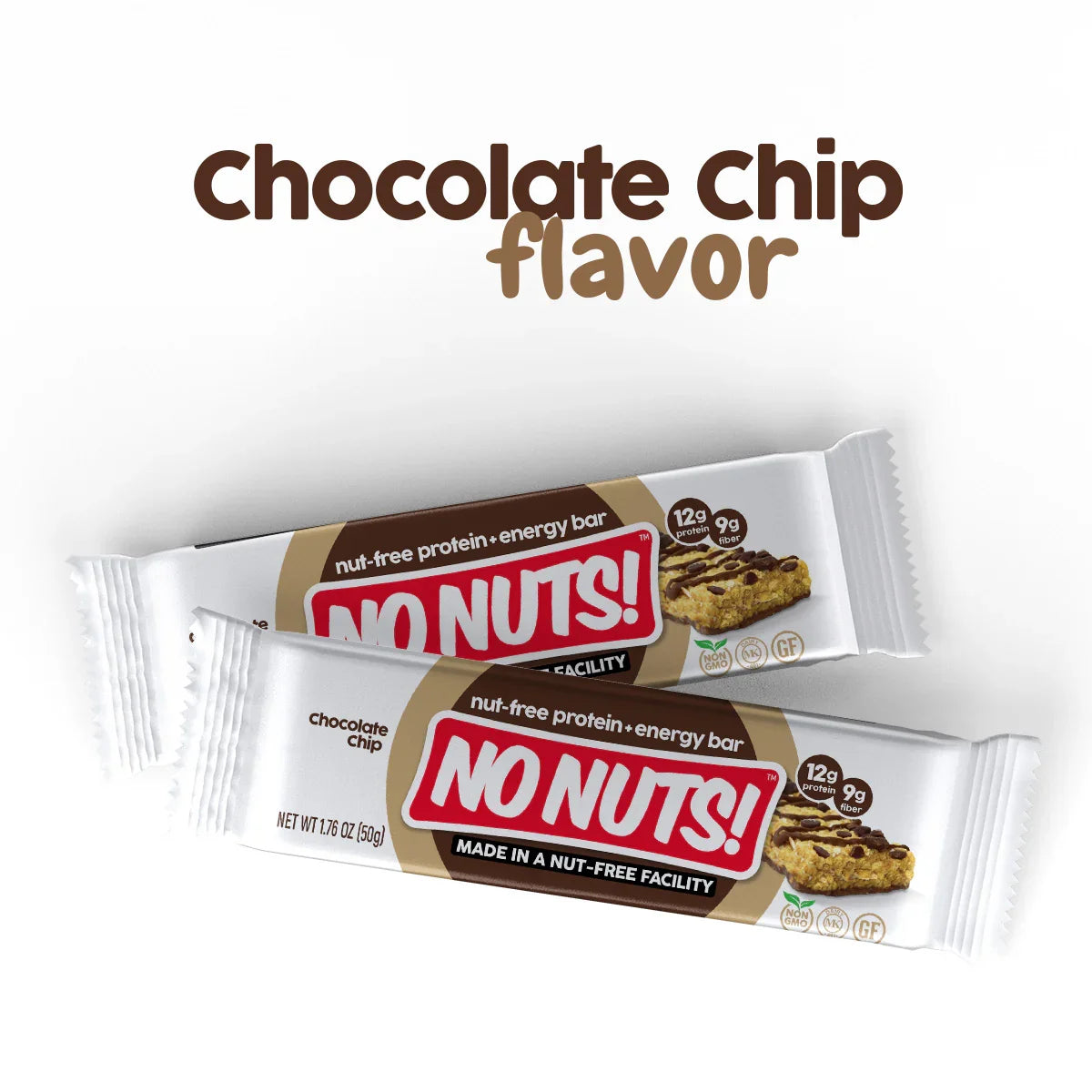
Multiply the grams of protein by 4 (calories per gram of protein), then divide by the total calories in the bar. A common rule of thumb is to look for at least 15% to 20% of total calories from protein. A No Nuts! bar, with 12g of protein and about 190 calories, gets about 25% of its calories from protein.
Our No Nuts! Chocolate Chip bar is built around 12 grams of plant-based protein per bar, which we designed to sit comfortably in that everyday snacking range rather than chase extreme numbers that come with a heavier ingredient list. You can see the full panel on our Chocolate Chip bar product page.
Checking Nut-Free, Dairy-Free, and Allergen Statements
Protein content is only half the label story if you or someone in your house has a food allergy.
Look past the ingredient list itself and check the allergen statement below it. This is where you'll see whether a bar is truly Nut-Free, whether it's produced in a facility that also processes tree nuts or peanuts, and whether it carries a "may contain" warning that changes everything for a school lunch box.
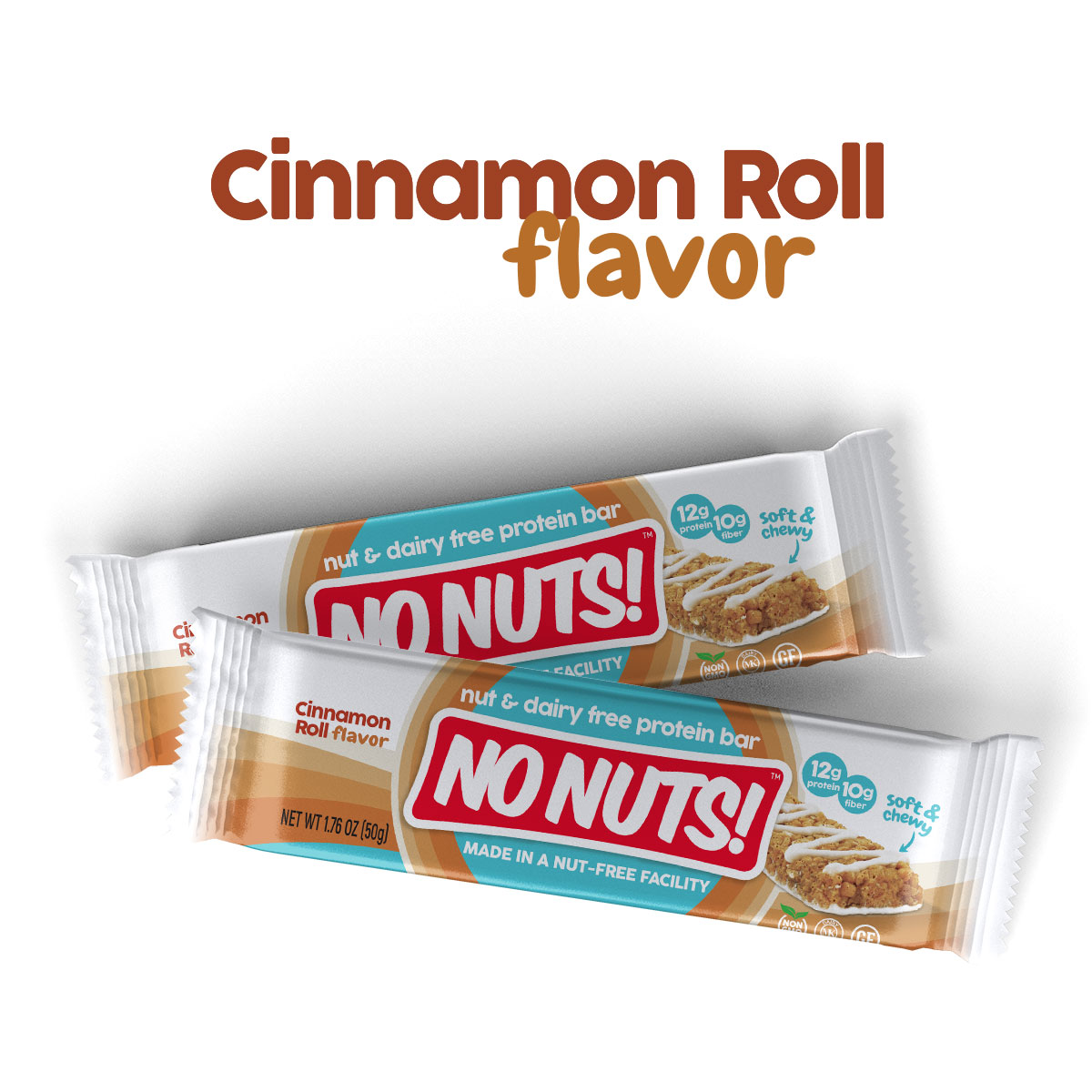
Every protein bar flavor we make, including Chocolate Chip, Cinnamon Roll, Blueberry & Vanilla, and Chocolate Caramel Mocha, comes from a dedicated nut-free facility. That means the nut-free claim covers the facility, not just the recipe.
All four flavors are also Dairy-Free, gluten-free, and kosher, so the allergen statement stays short across the board.
Added Sugar and the Ingredient List: Red Flags to Watch
Once you've checked protein and allergens, scan the sugar line and the ingredient list together.
Keep an eye on the added sugar line on a protein bar label. Many bars marketed as "healthy" hide sugar in syrups, coatings, or flavored chips that don't sound like sugar at first glance.
Next, count the ingredients. The Nova food classification system defines ultra-processed foods as those with more than 5 ingredients, often including additives you can't pronounce.
A shorter ingredient list generally means fewer stabilizers, gums, and artificial flavors standing between you and the actual food.
Reading a protein bar label isn't about memorizing numbers. It's about training your eye to check protein-per-calorie, added sugar, and ingredient count in under 15 seconds, every time you shop.
How to Read a Protein Bar Label: Protein Quality and Digestibility
Grams on a label don't always equal grams your body absorbs.
This is one reason baking and processing methods matter as much as the raw protein source. Heat, moisture, and long shelf life can all reduce how well your body actually uses the protein listed on the panel.
Comparing Snacks and Bars: No Nuts! Nutrition Facts by Flavor
Not every bar in the snacks and bars category is built the same, even within one brand's lineup.
Here's a quick look at how our flavors stack up so you can compare labels side by side before choosing what goes in your bag.
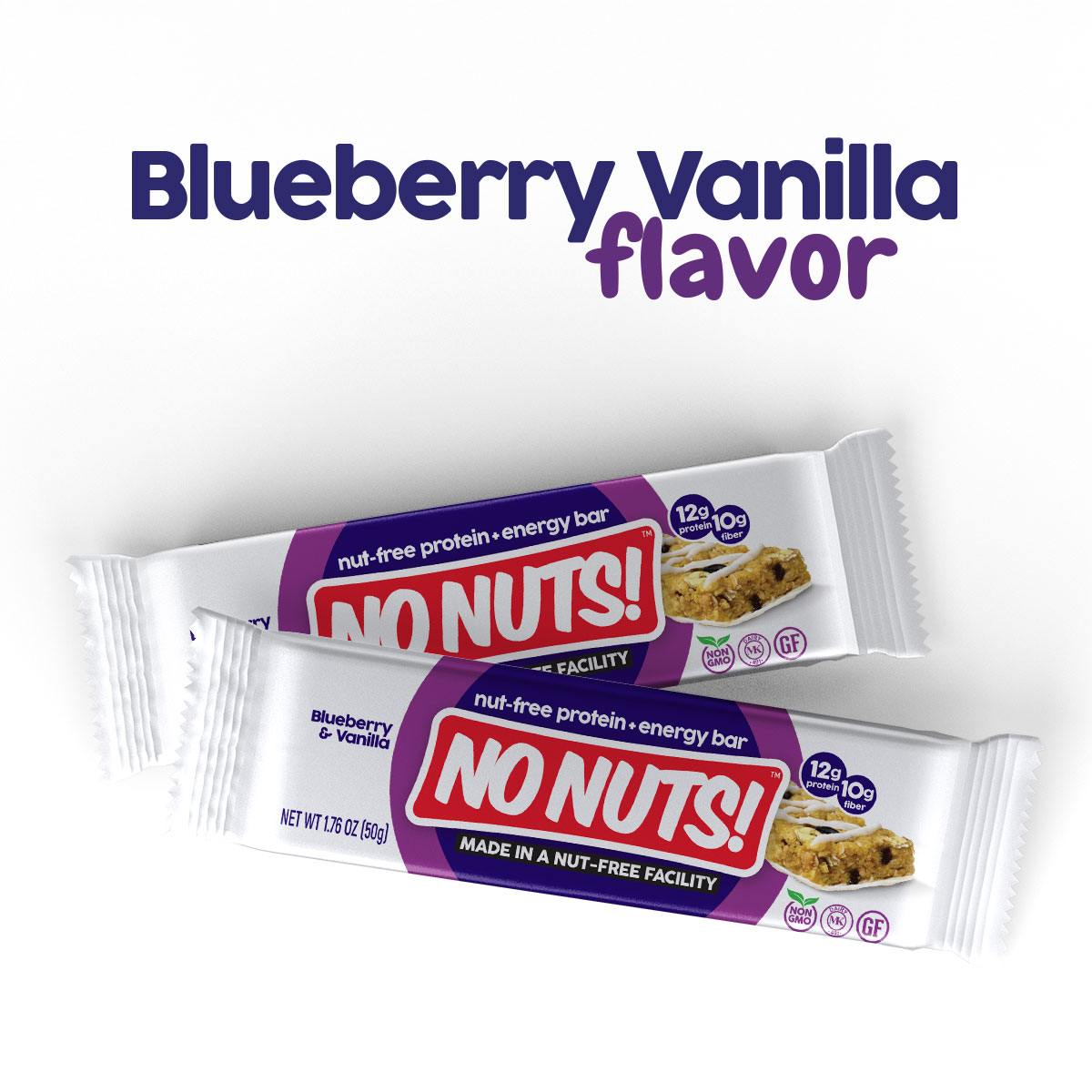
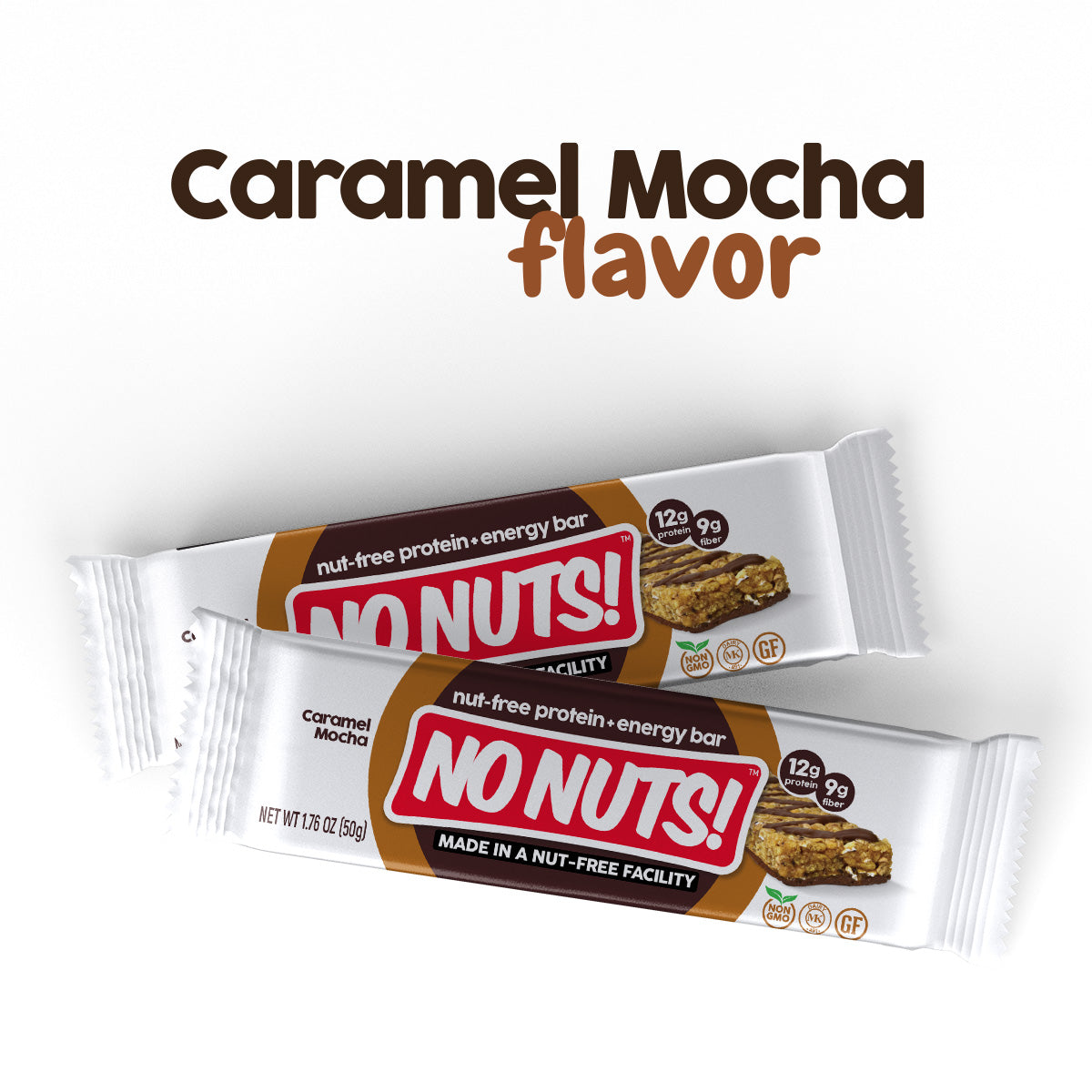
Both the Blueberry & Vanilla and Caramel Mocha bars carry the same nut-free, dairy-free, gluten-free foundation as the rest of our lineup, just with different flavor profiles built around fruit or coffee notes instead of chocolate.
If you want to try everything at once, the variety pack lets you compare all four nutrition panels in one box before committing to a favorite.
Nut-Free Protein Bars from a Dedicated Nut-Free Facility
We built our entire production process around one question parents and allergy-conscious shoppers ask constantly: is this bar actually safe, or just labeled that way?
Our bars are made in a dedicated nut-free facility, which is different from simply avoiding nuts as an ingredient. That distinction matters when you're reading a label and trying to figure out whether "nut-free" means "nut-free ingredients" or "nut-free facility."
You can read our own breakdown of allergen labeling in this guide to reading nut-free labels like a pro, which goes deeper into the exact wording to look for on any package, not just ours.
How to Read a Protein Bar Label: Protein Per Calorie Ratio for Post-Workout Snacks
If you're grabbing a bar specifically for recovery after a workout, timing and quantity matter as much as the label itself.
Sports nutrition guidelines often suggest about 20 grams of protein or more after exercise. That's a useful benchmark to hold any bar against before assuming it covers your post-workout needs.
This is exactly why label reading matters for athletes and casual gym-goers alike. A single bar with 12 grams of protein makes a solid everyday snack, but you may need two or a paired meal to hit true post-workout recovery targets.
Also worth noting: whey and casein-based bars tend to digest differently than plant-based options, so the type of protein source matters too.
Ingredients List and Nutrition Facts: What We Put on Our Own Labels
We built our own ingredients list and nutrition facts breakdown because we think transparency should be easy to find, not buried in fine print.
Every flavor's panel lists plant-based protein sources, the full sugar count, and a short ingredient list designed to stay well under the ultra-processed threshold.
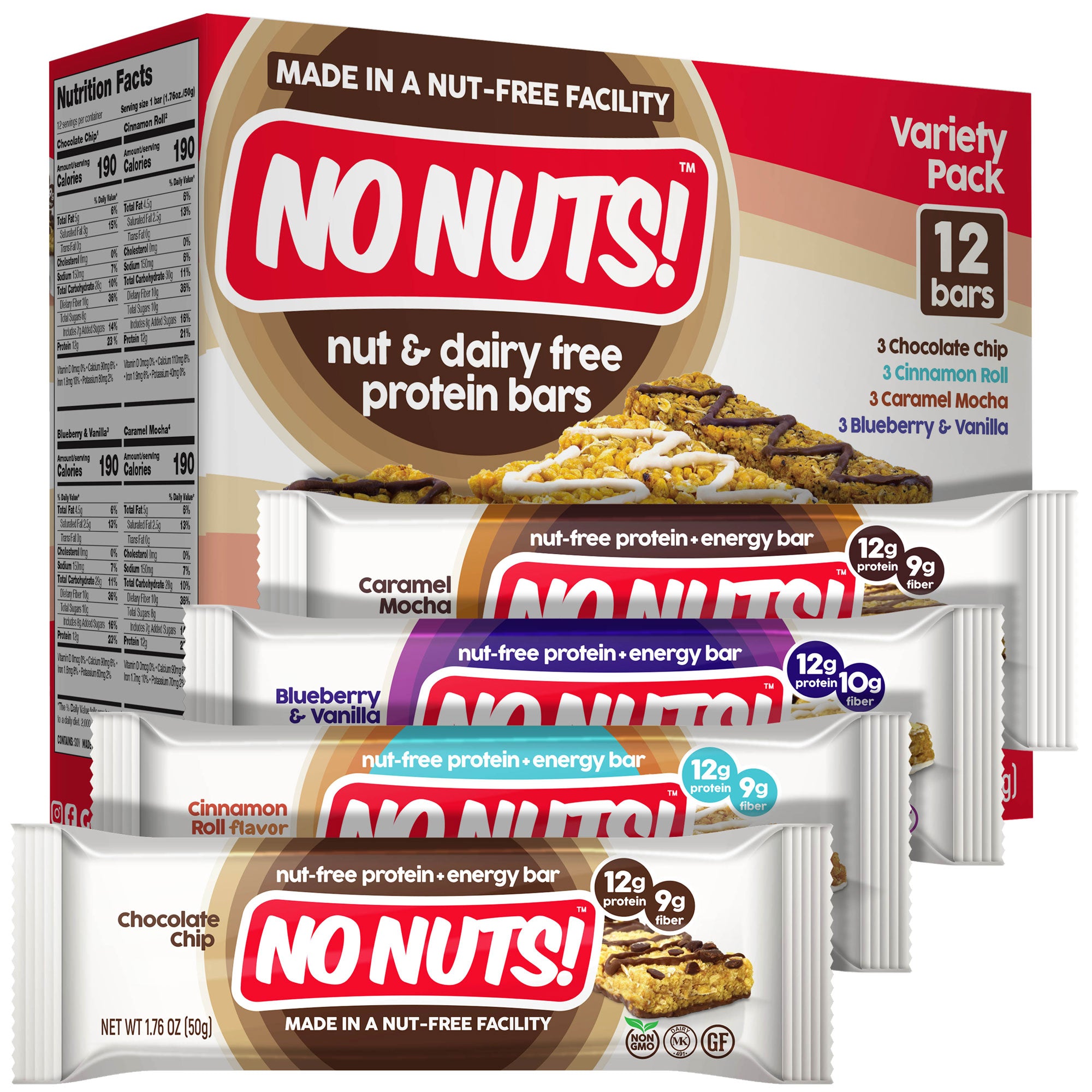

If you'd rather browse everything at once, our full nut-free protein bars collection lists every flavor's nutrition facts side by side.
Conclusion
Learning how to read a protein bar label protein-first changes how you shop for snacks and bars for good.
Once you know to check the protein-per-calorie ratio, check the added sugar line, count ingredients, and confirm true Nut-Free and Dairy-Free status, the front-of-package marketing stops mattering as much as the panel underneath it.
We built every flavor in our lineup around that same standard, from a dedicated nut-free facility down to a short, readable ingredient list. Check our frequently asked questions page if you still have questions about a specific flavor or allergen concern.
Frequently Asked Questions
How do I know if a protein bar actually has enough protein?
Multiply the grams of protein by 4 to get protein calories, then divide by the bar's total calories. Many people aim for at least 15-20% of calories from protein when judging whether a bar's protein claim holds up.
What ingredients should I avoid when reading a protein bar label?
Watch for added sugar above 8 grams, ingredient lists longer than 5 items, and vague allergen statements that say "may contain" instead of confirming a dedicated facility. These are the clearest red flags on any protein bar label in 2026.
Are nut-free protein bars as high in protein as regular bars?
Yes, plant-based nut-free bars can absolutely match traditional protein levels. Our own nut-free protein bars deliver 12 grams of plant-based protein per bar from a dedicated nut-free facility, without relying on peanuts or tree nuts as the protein source.
Is the protein on a bar's label the same as what my body actually absorbs?
Not always. Protein quality and digestibility vary by source and processing, so two bars with identical label numbers can still deliver different real-world results.
What's the difference between Nut-Free and Dairy-Free claims on a label?
Nut-Free means the product avoids peanuts and tree nuts (and a dedicated facility claim means the facility does too), while Dairy-Free means no milk-derived ingredients are used. A bar can carry one claim without the other, so check both separately rather than assuming they go together.
How much protein should a post-workout snack bar have?
Sports nutrition guidelines often suggest about 20 grams of protein or more after a hard workout. Many everyday snack bars fall below that number, so you may need to pair a bar with another protein source after an intense workout.
Are ultra-processed protein bars worth avoiding in 2026?
Not automatically, but many shoppers are cutting back on heavily processed snacks. A short, readable ingredient list is a fast way to judge how processed a bar is before buying.
A note on allergies: This article is general information, not medical advice. Ingredients and facility practices can change, so always read the full label and allergen statement before eating any food, and talk with your doctor or allergist about your own needs.
No Nuts! protein bars (Chocolate Chip, Blueberry & Vanilla, Caramel Mocha and Cinnamon Roll) are made in a nut-free facility, and every ingredient is listed on our ingredients page. Our Chewy Chocolate Chip Granola Bars are made without the 9 major U.S. allergens (including soy); the facility also processes coconut.

