

Hanukkah Treats With a Nut Allergy: Latkes, Sufganiyot, Gelt and More
Nov 23, 2026
Hanukkah treats with a nut allergy can still bring everyone to the table. With clear label checks, thoughtful ingredient swaps and a plan for serving, you can make room for familiar favorites and new family traditions.
Key takeaways
- Start with the person’s allergy plan. Peanut-free does not mean tree-nut-free, and “allergy-friendly” may not address the specific allergy.
- Read the package each time. Look at the ingredient list, allergen statements and any shared-facility or shared-equipment warnings.
- Keep homemade treats simple. Latkes, kugel and sufganiyot can be adapted with ingredients that suit the people who will eat them.
- Prevent cross-contact. Use clean hands, utensils, pans and serving dishes. Avoid shared fryers and buffet utensils with uncertain histories.
- Make decorating a group activity. Set out ingredients with labels available and let children decorate individual portions.
Check labels before choosing gelt or candy
For chocolate gelt, lollipops, dreidel candy and other packaged Hanukkah treats, read the current package rather than relying on a familiar brand or an old label. Ingredients and manufacturing details can change.
Check the full ingredient list and allergen statement, including any advisory wording about shared equipment or facilities. Peanut-free and tree-nut-free are different claims, so look for information that addresses the specific allergy you’re managing.
A “vegan” or “gluten-free” label does not tell you whether a treat is suitable for a nut allergy. Those terms describe other ingredients or qualities, not the full allergen picture.
If a package mentions a shared facility or shared equipment, the wording alone may not tell you what happens on the production line. Contact the manufacturer with specific questions about the product, equipment and cleaning procedures, then follow the person’s care plan when deciding whether it belongs on the table.
Homemade sweets: sufganiyot, cookies and more
Sufganiyot can be made at home with a recipe and ingredients that fit your gathering. If you fry them, use a clean pan and fresh oil selected for the people eating, based on their allergy needs.
Shared fryers are a separate concern. Oil may be used for many foods, so ask about the fryer and its previous use before serving food prepared outside your kitchen.
For Hanukkah cookies or cupcakes, choose a recipe that does not rely on almond flour or cashew cream. All-purpose wheat flour can work in recipes designed for it; oat flour is another option when the recipe is built around its texture. A direct one-for-one swap can change how a baked treat holds together, so use a recipe designed for the flour you choose.
For creamy fillings or toppings, dairy cream, cream cheese or yogurt may work when dairy is suitable for everyone at the table. Sunflower seed butter can bring a smooth, rich texture to some recipes, but it is not right for someone with a seed allergy, and it may change a recipe’s flavor or consistency.
Latkes and kugel without nut-based ingredients
Traditional Hanukkah foods such as latkes and kugel can be adapted without almond flour or cashew cream. Potato latkes commonly use grated potato, onion, egg and a binder such as flour or matzo meal; choose versions that fit the guests’ other food needs.
For crisp latkes, squeeze excess moisture from the grated potatoes and cook them in a clean pan with oil you have selected for the meal. Keep the cooked latkes on a clean tray, away from shared utensils and other foods.
Kugel recipes vary; check the noodles, dairy, eggs, seasonings and toppings for the guests’ needs. Leave off nut toppings, and serve the kugel with its own clean spoon.
When several dishes are on the table, label each one and set aside a serving utensil for it. That small step helps guests avoid confusing dishes or moving crumbs and toppings between plates.
Make cross-contact prevention part of the plan
Cross-contact happens when an allergen is transferred to food that was not meant to contain it. It can happen through hands, utensils, cutting boards, pans, shared fryers, serving spoons or crumbs on a table.
- Wash hands with soap and water before preparing food and between handling different ingredients.
- Clean work surfaces, pans, knives and utensils before starting.
- Keep ingredients and finished treats covered and separate from foods that may contain the person’s allergen.
- Use separate serving spoons, and avoid shared bowls where guests may dip or reach across foods.
- Ask guests to bring ingredient packaging if they are sharing a homemade dish.
For a school, camp or workplace celebration, ask about the venue’s food policy before planning the menu. Always review the current package before consuming. School and facility food policies may vary.
Easy packaged snacks for a shared celebration
Individually wrapped treats can be helpful when you’re setting out snacks for a group, since each person can keep their portion separate until it’s time to eat. One option from No Nuts! is Chewy Chocolate Chip Granola Bars, made in a nut-free facility. Each bar is 24g and has 100 calories.
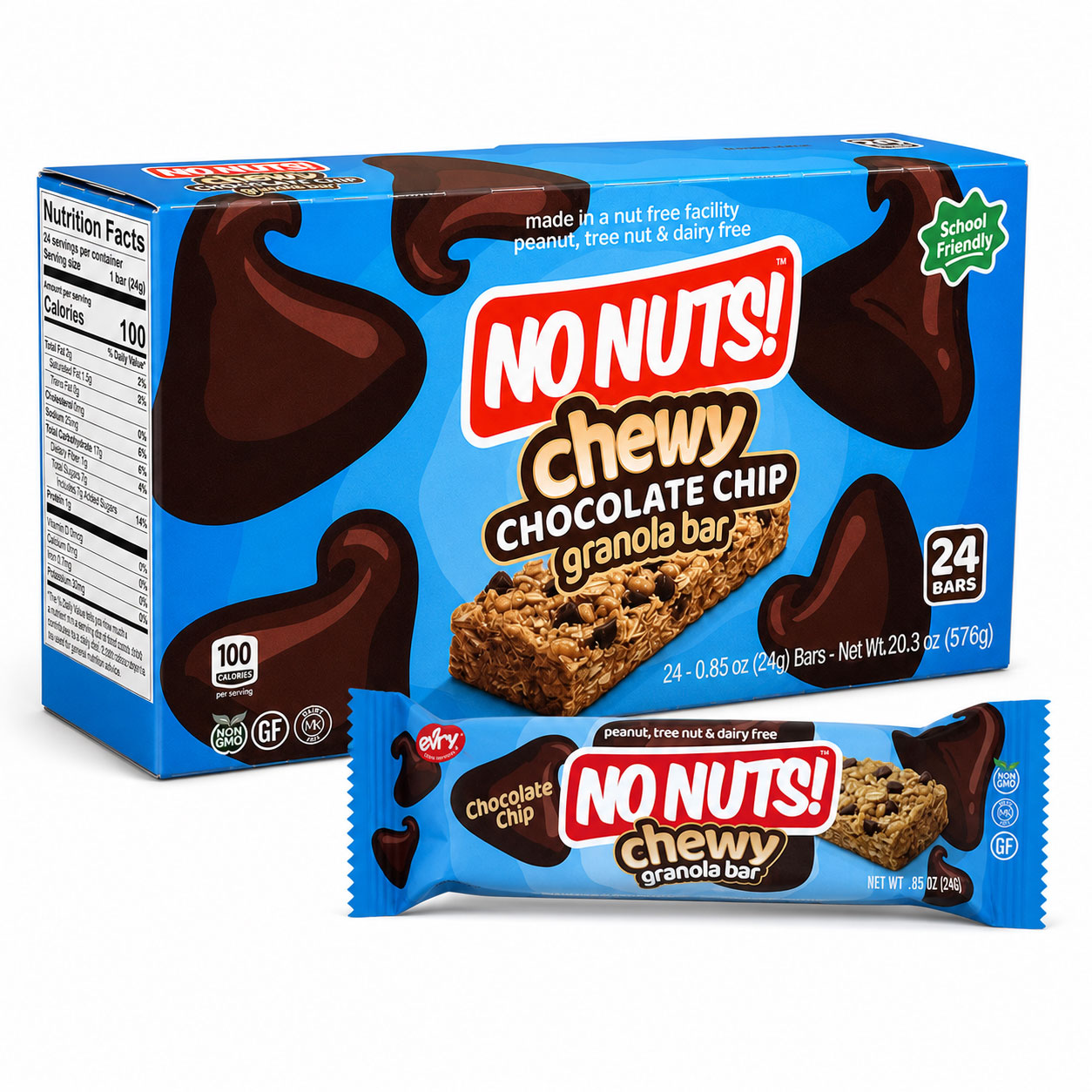
The Chewy bars are made without peanuts or tree nuts. The facility also processes coconut. As with any packaged snack, review the current package and consider the needs of the person who will eat it.
For children, put wrapped snacks beside homemade treats rather than opening everything into one shared bowl. That gives families a chance to read each label and decide what works for them.
Kid-friendly ways to make and decorate treats
Children can help decorate cupcakes, cookies or individual sufganiyot with toppings chosen for the gathering. Set out each topping in its own labelled dish, keep the packages nearby and give each child a clean spoon or small plate.
Another simple activity is arranging fruit into a star or dreidel shape on individual plates. If children help prepare food, assign one person to handle the shared ingredients and keep allergy-aware portions separate from the start.
Make the activity about choosing colors, shapes and flavors together. A little preparation lets children take part without asking them to guess what is in a topping or treat.
Conclusion
Hanukkah treats with a nut allergy can include sweets, latkes, kugel and packaged snacks when you choose ingredients carefully and plan how food will be prepared and served. Read labels, ask manufacturers clear questions when shared equipment or facilities are mentioned, and follow the person’s allergy plan. That’s how we make more room for everyone to celebrate together.
Frequently asked questions
Are crispy rice cereal treats suitable for someone with a nut allergy?
Not automatically. Check the cereal, marshmallows, mix-ins and package allergen statements, and ask about shared equipment if the label raises a question.
What are some peanut-free snack brands?
No Nuts! makes peanut-free snack bars.
Does a peanut-free label also mean a treat is tree-nut-free?
No. Peanut and tree-nut information are not interchangeable, so look for wording that addresses the specific allergen. If the package is unclear, contact the manufacturer before serving it.
Can I use sunflower seed butter instead of almond butter in every Hanukkah recipe?
No single swap works in every recipe. Sunflower seed butter can suit some fillings and batters, but it changes flavor and texture and is not appropriate for someone who must avoid sunflower seeds.
What should I do if a guest brings an unlabelled homemade treat?
Ask what ingredients were used and how the treat was prepared, including whether shared utensils, pans or surfaces were involved. If you cannot get the details needed for the person’s allergy plan, offer another clearly labelled option.
A note on allergies: This article is general information, not medical advice. Ingredients and facility practices can change, so always read the full label and allergen statement before eating any food, and talk with your doctor or allergist about your own needs.
No Nuts! protein bars (Chocolate Chip, Blueberry & Vanilla, Caramel Mocha and Cinnamon Roll) are made in a nut-free facility, and every ingredient is listed on our ingredients page. Our Chewy Chocolate Chip Granola Bars are made without the 9 major U.S. allergens (including soy); the facility also processes coconut.

